
Venice
 Italy
Italy
A car-free city of canals and courtyards where daily life still moves by boat and on foot.
Overview
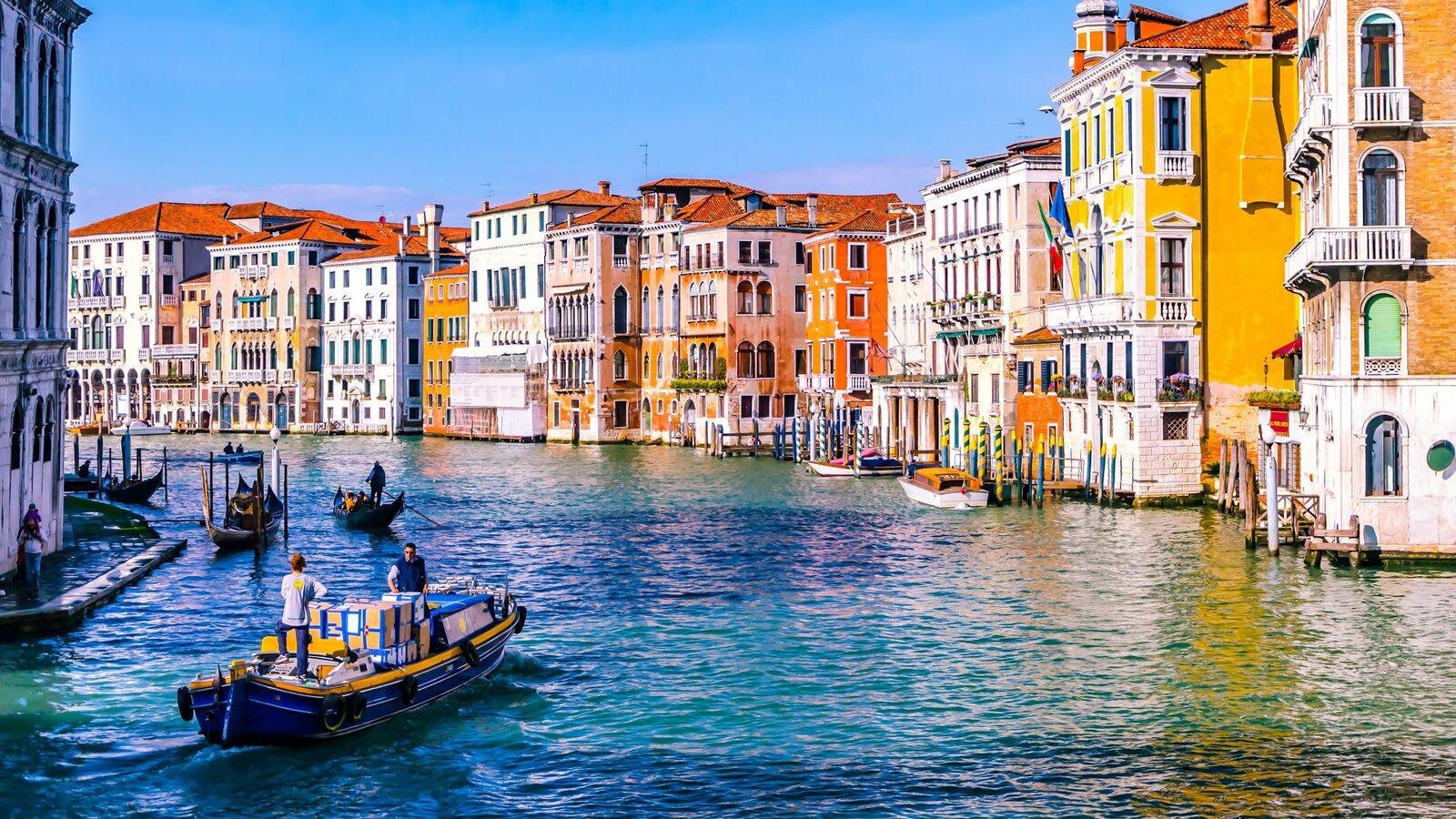
Venice is built across 118 small islands in a shallow lagoon, connected by more than 400 bridges and threaded by canals instead of roads. The historic centre is entirely car-free, so residents walk everywhere or use the vaporetto water buses that run like a surface metro. Beyond the crowded corridor between the railway station and Saint Mark's Square, the city divides into six sestieri, each with its own rhythm: Cannaregio is residential and full of neighbourhood bacari, Dorsoduro holds the universities and the best museums, and Castello stretches east into quiet working streets that most visitors never reach. Long-stay foreigners tend to be academics, restorers, glass and textile artisans, and remote workers who want a small walkable base with fast rail links to Milan, Florence and Vienna.
Why Expats Love It
The appeal is a genuinely car-free daily life in a city small enough to cross on foot in an hour, surrounded by art and architecture that no other place matches. Costs outside the tourist core are lower than Milan or Rome, the university keeps a young population in Dorsoduro, and the Venice Marco Polo airport plus high-speed rail put most of Europe within easy reach. Residents also get access to the lagoon itself, with boat culture, island villages and a food scene built on seafood and cicchetti bar snacks.
Must Dos
The essential, top gem experiences for the full tourist experience.
Basilica di San Marco and the Loggia
Go inside for the golden mosaics that cover 8,000 square metres of ceiling, then pay the small extra fee to climb to the loggia for a view over the piazza and the bronze horses up close. Book a timed slot online to skip the queue and go late in the day when the light hits the mosaics.
Gallerie dell'Accademia
The definitive collection of Venetian painting, with Bellini, Carpaccio, Titian, Tintoretto and Veronese in a former religious complex in Dorsoduro. Allow two hours and pair it with a walk to the Punta della Dogana at the tip of the district.
Rialto Market at dawn
The Pescaria fish market and the surrounding produce stalls open early and wind down by mid-morning, which is when you see the city working rather than performing. Buy something, then eat cicchetti at one of the bacari on Calle dei Do Mori nearby.
Palazzo Ducale and the Secret Itineraries tour
The Doge's Palace covers the machinery of the old Venetian Republic, and the Itinerari Segreti tour takes you through the hidden administrative rooms, the torture chamber and Casanova's cell in the attic prison. Book the tour well ahead.
Vaporetto Line 1 down the Grand Canal
Ride the slow line from Piazzale Roma to San Marco for the full sequence of palace facades, ideally in the hour before sunset. It costs a fraction of a gondola and gives you the same water-level view of the city.
Burano and Torcello by lagoon boat
Take Line 12 from Fondamente Nove to the painted fishermen's houses of Burano, then continue to Torcello for the seventh-century cathedral and its Byzantine mosaics. Torcello is nearly empty and shows what the lagoon looked like before Venice existed.
Off the Beaten Path
Live like a local. Special, lesser known experiences for adventurers who want real local flavor.
Sant'Erasmo island
The lagoon's market garden, where artichokes and vegetables for Venetian kitchens are grown. Rent a bike at the vaporetto stop and ride flat lanes past fields and the Torre Massimiliana, then eat at the single osteria near the dock.
Libreria Acqua Alta
A chaotic secondhand bookshop in Castello where stock is stored in bathtubs and a full-size gondola against the flood risk, with a staircase built from waterlogged encyclopedias in the back courtyard. Worth going for the absurdity and the canal-side reading nook.
Scuola Grande di San Rocco
A confraternity hall in San Polo covered wall to ceiling with more than fifty Tintoretto canvases, painted over twenty years. Take one of the handheld mirrors provided so you can study the ceiling without wrecking your neck.
Giudecca and the Fortuny factory
Cross to Giudecca for a residential island with wide fondamente, working boatyards and almost no tourists. The Fortuny textile factory garden opens by appointment and the walk east to the Zitelle gives the best skyline view back at San Marco.
Squero di San Trovaso
One of the last working gondola boatyards, visible from the fondamenta opposite in Dorsoduro. The alpine-style wooden building looks out of place because the original shipwrights came from the Dolomites, and you can watch hulls being shaped from the far bank.
Cannaregio's Jewish Ghetto
The world's first ghetto, established in 1516, with high tenement blocks built upward because expansion outward was forbidden, five historic synagogues and a quiet campo. The Museo Ebraico runs synagogue tours and the surrounding streets hold some of the least touristed bacari in the city.
Cost of Living
1-Bedroom Apartment (City Center)
$900/mo
3-Bedroom Apartment (City Center)
$1750/mo
Restaurant Meal
$25
Monthly Groceries
$320/mo
Monthly Transportation
$40/mo
Monthly Healthcare
$80/mo
Climate
Venice has a humid subtropical climate with warm, muggy summers and cold, damp winters. Autumn and winter bring acqua alta, periodic high tides that flood low-lying squares and walkways, though the MOSE flood barriers now hold back the most extreme events.
Best Time to Visit
April to early June, and late September to October
Visa & Residency
Written for US citizens
Italy is in the Schengen Area, so Americans and many other nationals can visit for up to 90 days in any 180-day period without a visa. Longer stays require a national visa applied for before arrival, with common routes including the elective residence visa for people with stable passive income, the self-employment visa, study visas tied to Venetian universities, and the Italian digital nomad visa for qualifying highly skilled remote workers. Every long-stay route requires applying for a permesso di soggiorno within eight days of arrival. Confirm current requirements with an Italian consulate before committing.
These notes assume a US passport. If you hold a different nationality, your visa options and timelines may vary. Always confirm current rules with the official embassy or consulate before you commit.
Safety
Violent crime is rare and the absence of cars removes most road risk. Pickpocketing on crowded vaporetti and around Saint Mark's Square is the main issue, along with overpriced restaurants targeting visitors. Bridges and canal-side walkways get slippery in rain and during acqua alta, so waterproof boots and a tide app are practical rather than optional.
Healthcare
Residents registered with the Servizio Sanitario Nazionale get low-cost public care through the Ospedale SS Giovanni e Paolo in Castello and the larger Ospedale dell'Angelo in Mestre on the mainland. Ambulances are boats, which works well but takes getting used to. Private clinics and English-speaking doctors are more plentiful in Mestre and Padua, both a short train ride away.
Culture & Lifestyle
Culture
Venetians are proud, direct and somewhat guarded with outsiders, partly because the resident population has shrunk under tourism pressure. Learning Italian matters, and picking up Venetian phrases earns real goodwill. Life runs on neighbourhood routines: the same bar for morning coffee, the Rialto market for fish, an ombra of wine before dinner. Respect for quiet hours and for the fact that you are living in someone's home town, not a theme park, goes a long way.
Lifestyle
Daily life means walking, carrying groceries over bridges, and planning around vaporetto timetables. Residents shop at the Rialto fish and produce markets, eat standing up at bacari, and escape to the Lido beaches or the garden islands of Sant'Erasmo in summer. Coworking is limited but growing in Dorsoduro and Mestre, and many remote workers keep a mainland flat for space while spending days in the historic centre.
Language
Italian, with Venetian widely spoken among locals and English common in tourism and universities
Currency
Euro (EUR)
Timezone
CET (UTC+1), CEST (UTC+2) in summer