
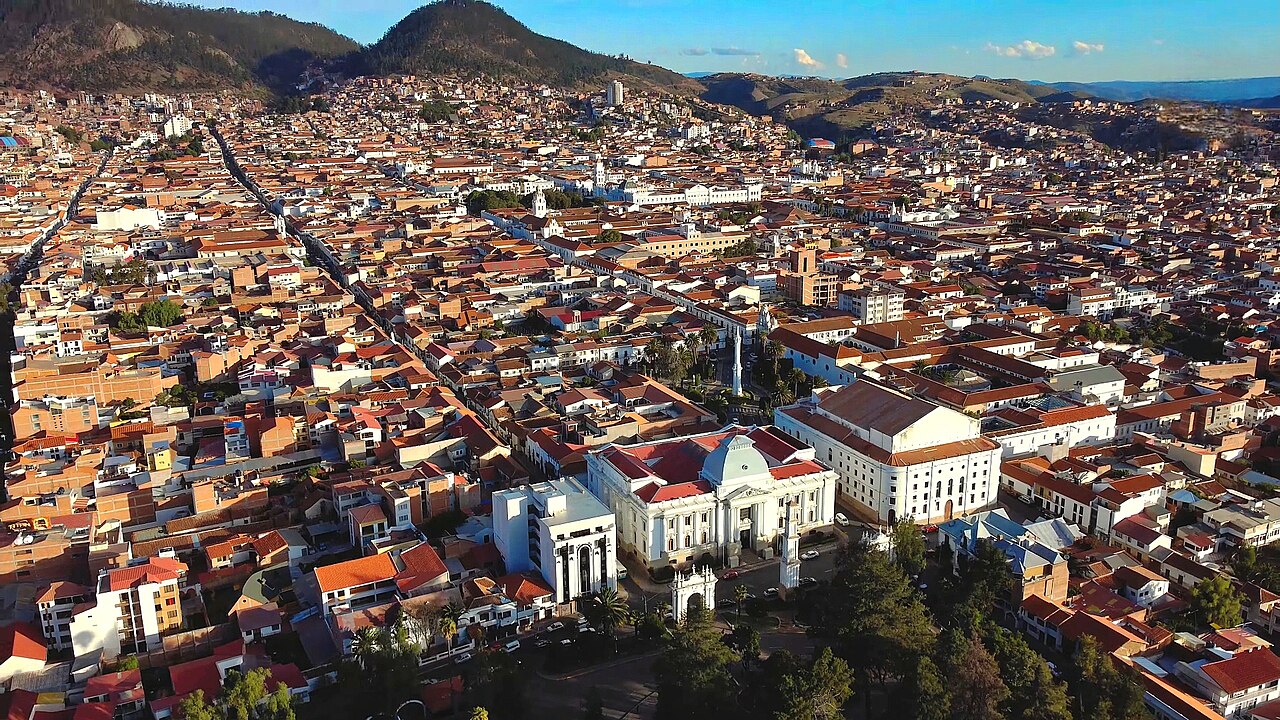
Sucre
 Bolivia
Bolivia's white city of colonial grandeur and Andean highland charm.
Overview
Sucre, Bolivia's constitutional capital, earns its nickname 'La Ciudad Blanca' from the dazzling whitewashed colonial buildings that earned the entire center UNESCO World Heritage status. At 2,810 meters, it sits lower than La Paz, giving it a warmer, more comfortable climate that has drawn travelers and language students for years. The city's pace is gentle: church bells mark the hours, market women in pollera skirts sell salteñas from blankets, and university students fill the plazas at dusk. For budget expats, Sucre is one of South America's cheapest livable cities, with quality Spanish schools, a small but friendly international community, and a depth of indigenous Andean culture that makes every market visit an education.
Why Expats Love It
UNESCO colonial beauty, one of South America's cheapest cities, excellent Spanish schools, pleasant Andean climate, and genuine Bolivian culture.
Must Dos
The essential, top gem experiences for the full tourist experience.
Casa de la Libertad
Visit the museum where Bolivia's declaration of independence was signed in 1825.
La Recoleta mirador
Watch the sunset over the whitewashed city from the hilltop lookout.
Mercado Central
Browse the bustling market for fresh fruit juices, salteñas and traditional textiles.
Dinosaur footprints at Cal Orck'o
See over 5,000 dinosaur tracks on a massive cliff face outside the city.
San Felipe Neri rooftop
Climb to the monastery roof for panoramic views over the colonial skyline.
Textile Museum (ASUR)
Learn about the intricate weaving traditions of Bolivia's indigenous communities.
Off the Beaten Path
Live like a local. Special, lesser known experiences for adventurers who want real local flavor.
Tarabuco Sunday Market
Day-trip to the indigenous market town for traditional Yampara textiles and crafts.
Maragua Crater
Hike into the prehistoric crater with its painted canyon walls and small village.
Jatun Yampara communities
Visit traditional Quechua farming communities in the highlands outside Sucre.
Cementerio General
Walk through the ornate tiered cemetery for a window into Bolivian memorial culture.
Salteña cooking class
Learn to fold and bake the iconic Bolivian empanada with a local chef.
Seven Waterfalls hike
Trek through the countryside south of Sucre to a series of cascades.
Cost of Living
1-Bedroom Apartment (City Center)
$150/mo
3-Bedroom Apartment (City Center)
$300/mo
Restaurant Meal
$2
Monthly Groceries
$80/mo
Monthly Transportation
$15/mo
Monthly Healthcare
$10/mo
Climate
Subtropical highland (2,810 m); warm sunny days, cool nights year-round.
Best Time to Visit
April to October (dry season)
Visa & Residency
Written for US citizens
U.S. citizens are not eligible for visa-free entry to Bolivia and must obtain a visa in advance, unlike many Western European nationalities who typically receive 90 days visa-free on arrival. Americans can generally apply for a tourist visa allowing stays of up to 30 days, with the possibility of extensions up to 90 days total within a 12-month period. Bolivia does not currently offer a dedicated digital nomad visa, so longer-term stays are commonly pursued through residency routes such as temporary residency tied to employment, marriage to a Bolivian national, or retirement, with permanent residency available after meeting qualifying time requirements. Work permits generally require employer sponsorship from a Bolivian entity. Border runs are not a reliable long-term strategy given entry restrictions for U.S. passport holders. Verify current visa requirements and residency procedures with the Bolivian consulate before making relocation plans.
These notes assume a US passport. If you hold a different nationality, your visa options and timelines may vary. Always confirm current rules with the official embassy or consulate before you commit.
Safety
Safe city; altitude may cause mild soroche (altitude sickness) on arrival. Watch for pickpockets in markets.
Healthcare
Hospital Santa Barbara and private clinics for basics; La Paz or Santa Cruz for complex procedures.
Culture & Lifestyle
Culture
Colonial-era architecture, Quechua indigenous heritage, traditional textiles, and Bolivia's finest salteñas.
Lifestyle
Morning salteñas, colonial plaza strolls, afternoon Spanish lessons, and sunset from La Recoleta mirador.
Language
Spanish, Quechua
Currency
BOB
Timezone
UTC-4