Salzburg
 Austria
A baroque prince-archbishop's city under an Alpine fortress, with Mozart, festivals and mountains at the door.
Overview
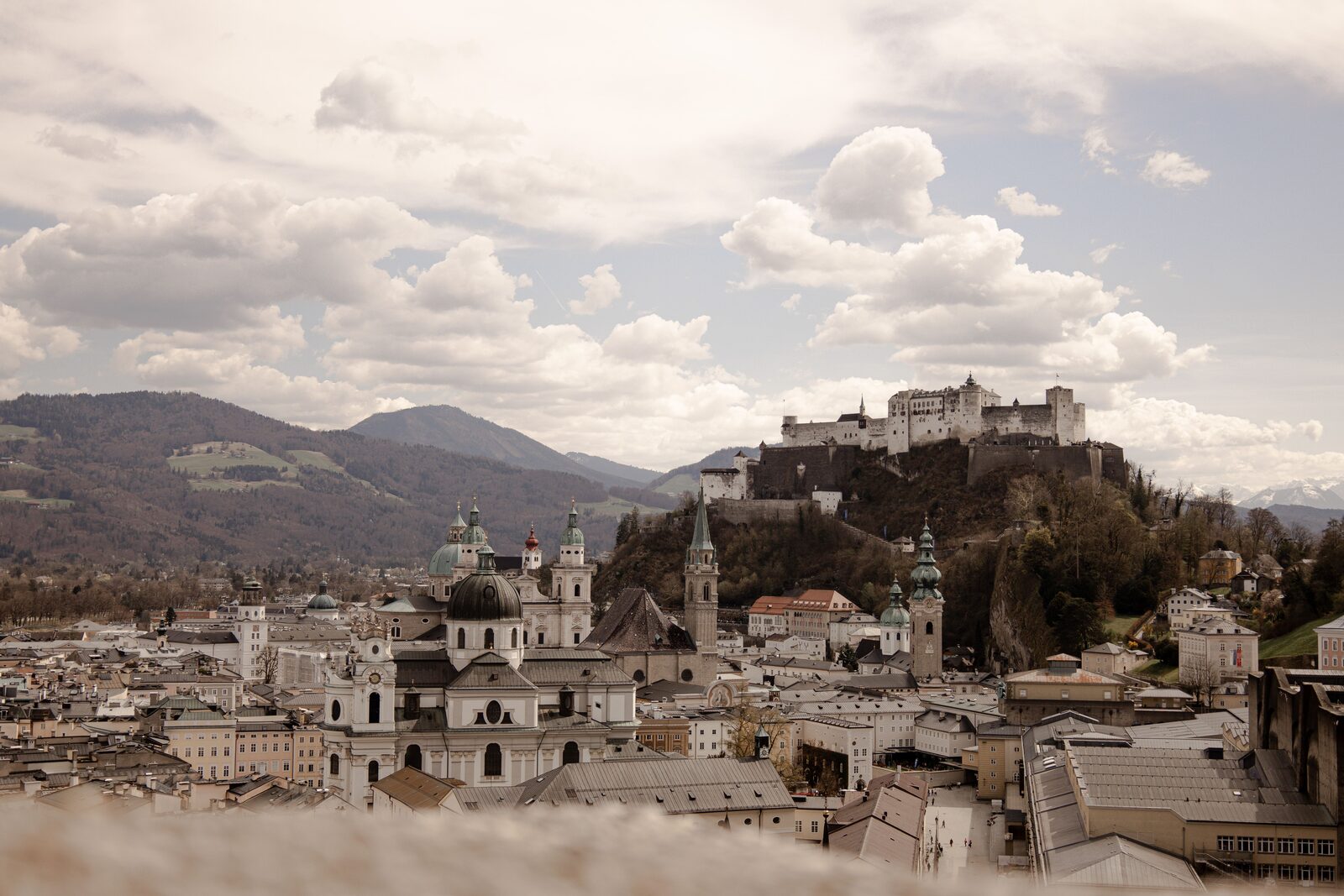
Salzburg grew rich on salt mined from the surrounding mountains, and its prince-archbishops spent that money on a compact baroque city centre that survived the Second World War largely intact. The UNESCO-listed Altstadt sits in a bend of the Salzach river beneath the Hohensalzburg fortress, one of the largest fully preserved medieval castles in Europe. It is a small city of around 155,000, but it punches far above its size culturally: Mozart was born here, the Salzburg Festival each summer is one of the most important classical music events in the world, and The Sound of Music was filmed across the region. The Alps begin immediately, with ski resorts within 45 minutes and the lakes of the Salzkammergut just east. Munich is 90 minutes by train and Vienna under three hours.
Why Expats Love It
You get Austrian public services, safety and healthcare in a city small enough to cross on foot, with genuine Alpine access for skiing, hiking and lake swimming. The cultural programme is disproportionate to the population, the air and water quality are excellent, and Munich airport plus Salzburg's own airport handle travel. Costs are lower than Vienna for most things except housing in the historic centre, and the university and a cluster of technology and tourism employers provide work. Families in particular rate the schooling and the outdoor lifestyle.
Must Dos
The essential, top gem experiences for the full tourist experience.
Hohensalzburg Fortress
Reached by funicular or a steep walk, the eleventh-century fortress holds state rooms, a marionette museum and ramparts with a full panorama of the Alps and the baroque domes below. It was never taken by force in nine centuries.
Mirabell Palace and Gardens
Built by a prince-archbishop for his mistress, with formal parterres, the Pegasus fountain and the steps used in the Do-Re-Mi sequence. The Marble Hall inside hosts chamber concerts and is free to enter when not in use.
Getreidegasse and Mozart's Birthplace
The narrow shopping street with wrought-iron guild signs, containing the yellow house where Mozart was born in 1756, now a museum of family instruments and letters. His later residence across the river is the better museum of the two.
Salzburg Cathedral and the Residenz
The early baroque cathedral where Mozart was baptised and worked as organist, beside the archbishops' Residenz with its state rooms and picture gallery. The DomQuartier ticket links them in one circuit.
Hellbrunn Palace and trick fountains
A summer palace four kilometres south whose seventeenth-century garden is full of hidden water jets designed to soak guests, still operated by guides who will absolutely soak you. The gardens and the Sound of Music gazebo are free.
Salzkammergut lakes
Hallstatt, Wolfgangsee and Fuschlsee are all within an hour, offering swimming, boat trips and the Dachstein ice caves. Hallstatt is famously crowded, so Gosausee or Altausseer See make better day trips.
Off the Beaten Path
Live like a local. Special, lesser known experiences for adventurers who want real local flavor.
Untersberg cable car
A ten-minute lift to 1,776 metres on the German border, opening a high karst plateau with marked trails, summit crosses and views deep into the Berchtesgaden Alps. Locals use it as their afternoon exercise.
Salzburg Museum and the Panorama
The city museum in the Neue Residenz is good, but the adjoining Sattler Panorama, a 26-metre circular painting of the city from 1829, is the piece nobody expects.
Stiegl Brauwelt and the Augustiner Brau
Austria's largest private brewery runs a museum, but the better experience is the Augustiner Brau monastery beer hall in Muhln, where you rinse your own stone mug, fill it from a wooden barrel and eat from independent food stalls in a chestnut garden.
Kapuzinerberg trail
The wooded hill on the right bank, climbed by a stations-of-the-cross path from Linzergasse, with a Capuchin monastery, Stefan Zweig's former villa and viewpoints back at the fortress. Almost nobody goes up.
Berchtesgaden and the Konigssee
Half an hour into Germany, an emerald fjord-like lake surrounded by cliffs, crossed by electric boats since 1909 with a trumpet echo demonstration halfway. The Eagle's Nest and the Documentation Obersalzberg sit above.
Salzwelten Hallein salt mine
The salt that built the city, in a mine on the Durrnberg where you wear overalls, ride wooden slides between levels and cross an underground lake. It is aimed at families but genuinely good, and it explains the city's entire economic history.
Cost of Living
1-Bedroom Apartment (City Center)
$1000/mo
3-Bedroom Apartment (City Center)
$1800/mo
Restaurant Meal
$20
Monthly Groceries
$380/mo
Monthly Transportation
$55/mo
Monthly Healthcare
$180/mo
Climate
Salzburg has a temperate Alpine-influenced climate with warm summers around 25C and cold snowy winters. It is one of the wettest cities in Austria because of the Schnurlregen, persistent rain caused by moist air hitting the mountain wall to the south.
Best Time to Visit
May to September, and December for the Christmas markets
Visa & Residency
Written for US citizens
Austria is in the Schengen Area, giving Americans and many other nationals 90 days in any 180-day period visa-free. Longer stays require a residence permit, with the Red-White-Red Card points-based route for skilled workers and graduates, the EU Blue Card, student permits and the settlement permit for financially independent people, which is quota-limited and competitive. Austria has no digital nomad visa. Registration of address, the Meldezettel, is required within three days of moving in.
These notes assume a US passport. If you hold a different nationality, your visa options and timelines may vary. Always confirm current rules with the official embassy or consulate before you commit.
Safety
Salzburg is extremely safe with negligible violent crime. Pickpocketing occurs in the Getreidegasse and around the Mirabell gardens during peak season and festival weeks. The real hazards are outdoors: mountain weather changes fast, avalanche risk in winter is genuine off-piste, and the Salzach river runs cold and fast. Winter pavements and cobbles ice over.
Healthcare
Austria's social insurance system covers residents in employment and their dependents, with modest contributions and comprehensive coverage. The Uniklinikum Salzburg is a large teaching hospital serving the whole region. Many residents add private supplementary insurance for single rooms and faster elective appointments. Standards are high throughout and English-speaking doctors are readily available in a city used to international visitors.
Culture & Lifestyle
Culture
Austrians are formal in address, using titles and Sie until well acquainted, and punctuality is expected. Salzburg is conservative and Catholic in its traditions, with feast days, processions and Krampus runs in December taken seriously. Sunday closing is near total. Learning German is important for integration beyond the tourism sector, and locals distinguish sharply between the tourist city and the real one.
Lifestyle
Residents ski or ski-tour in winter, hike the Gaisberg and Untersberg in summer, and swim in the Salzkammergut lakes at Fuschl and Wolfgangsee, all under 45 minutes away. The Altstadt is for concerts, markets and coffee houses rather than daily errands, which happen in districts like Lehen and Itzling. The Festival in July and August transforms the city and doubles prices. Cycling along the Salzach is a normal commute.
Language
German in an Austro-Bavarian dialect, with good English in tourism and business
Currency
Euro (EUR)
Timezone
CET (UTC+1), CEST (UTC+2) in summer