
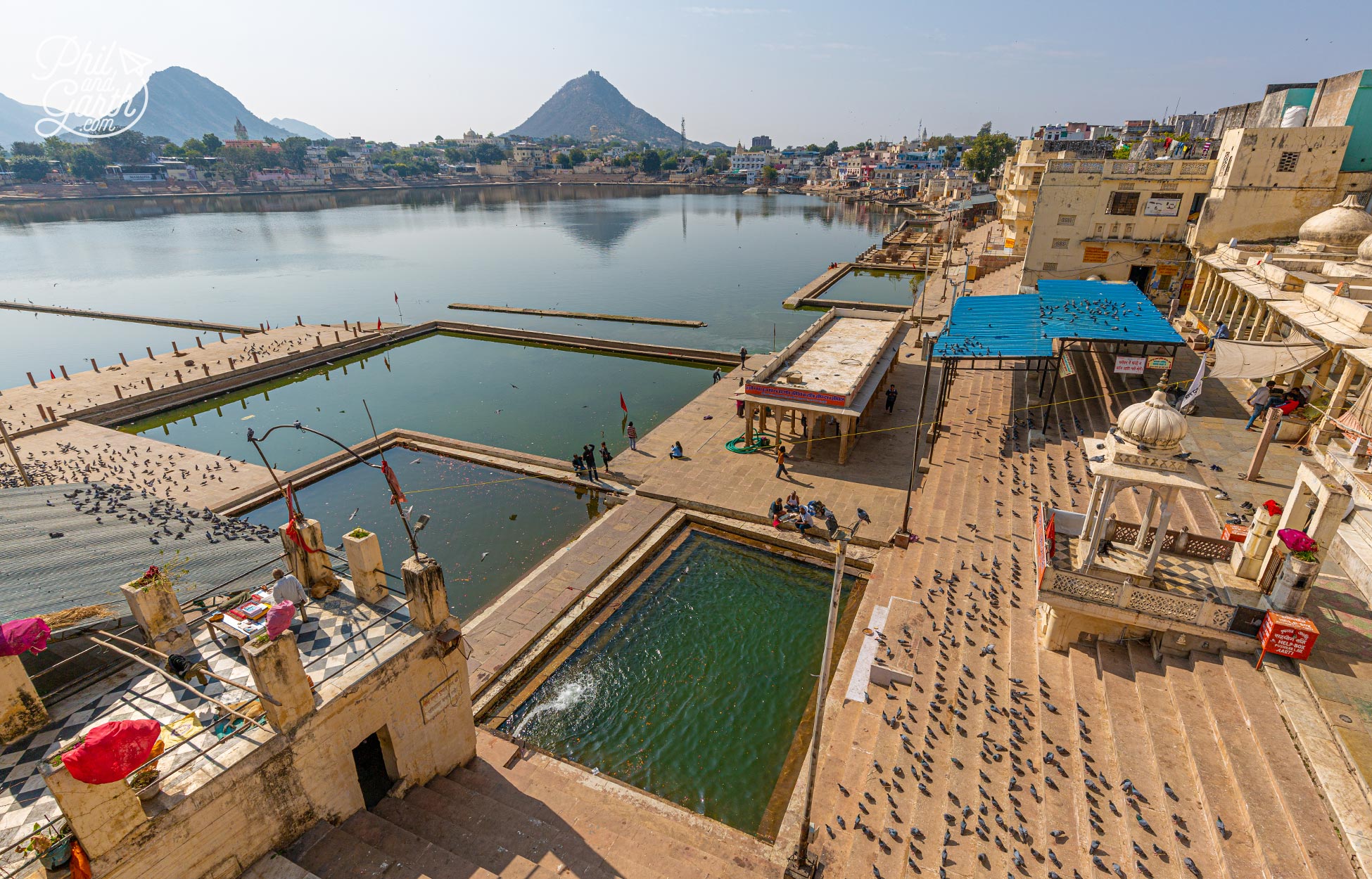
Pushkar
 India
India
Sacred lake town where Hindu pilgrims and backpackers share the same sunset.
Overview
Pushkar occupies a rare place in Rajasthan: a holy town built around a lake said to have been created when Brahma dropped a lotus flower. Over 400 temples ring the water, and 52 ghats descend to its edge for ritual bathing. Yet alongside the pilgrims, Pushkar has developed a relaxed traveler scene with rooftop cafes, yoga shalas and a famous annual camel fair that fills the desert dunes each November. The town is entirely vegetarian and alcohol-free by tradition, which gives it a unique calm. For budget-conscious nomads willing to skip cocktails, Pushkar offers some of India's cheapest comfortable living in a setting of genuine spiritual beauty.
Why Expats Love It
Rock-bottom costs, mystical atmosphere, camel-fair energy, rooftop cafe culture, and easy connections to Jaipur and Jodhpur.
Must Dos
The essential, top gem experiences for the full tourist experience.
Brahma Temple
Visit one of the very few temples in the world dedicated to the Hindu creator god.
Pushkar Lake ghats
Watch the evening aarti ceremony as oil lamps float across the sacred water.
Savitri Temple trek
Climb the hilltop trail for a panoramic sunrise view over the lake and desert.
Pushkar Camel Fair
Experience the world's largest camel trading festival each November.
Old Bazaar
Shop for silver jewelry, embroidered textiles and Rajasthani puppets in the narrow lanes.
Sunset Point dunes
Walk into the Thar Desert edge for golden-hour views over endless sand.
Off the Beaten Path
Live like a local. Special, lesser known experiences for adventurers who want real local flavor.
Merta Road stepwell
Visit the ornate medieval stepwell an hour's drive into the desert.
Rose Garden farms
Tour Pushkar's rose fields, source of India's finest rose water and gulkand.
Pap Mochani Temple
Climb to the hilltop sister temple with views rivaling Savitri and far fewer visitors.
Ajmer Dargah Sharif
Walk to the revered Sufi shrine in nearby Ajmer that draws millions of devotees.
Naga Pahar (Snake Mountain)
Hike the rocky ridge behind town for desert panoramas and solitude.
Pushkar Passport
Collect stamps from 52 ghats on a self-guided walking pilgrimage around the lake.
Cost of Living
1-Bedroom Apartment (City Center)
$120/mo
3-Bedroom Apartment (City Center)
$250/mo
Restaurant Meal
$1
Monthly Groceries
$50/mo
Monthly Transportation
$15/mo
Monthly Healthcare
$10/mo
Climate
Semi-arid; scorching April to June, pleasant October to March.
Best Time to Visit
October to March
Visa & Residency
Written for US citizens
U.S. citizens can typically enter India on an e-Tourist visa, which is generally available online and commonly valid for up to 1 year with multiple entries allowed, though each stay is typically limited to 180 days. India does not currently offer a dedicated digital nomad visa, and long-term residency options for foreigners are quite limited compared to many other countries. Work in India generally requires employer-sponsored employment visas, while business visas exist for certain commercial activities. There is no formal retirement visa category, and permanent residency is rarely granted to foreign nationals. Extensions beyond the standard tourist allowance are uncommon and generally not straightforward, so most long-stay visitors plan around visa terms carefully. Verify current entry conditions and any policy updates with the Indian embassy or consulate before relocating.
These notes assume a US passport. If you hold a different nationality, your visa options and timelines may vary. Always confirm current rules with the official embassy or consulate before you commit.
Safety
Extremely safe; the sacred town has minimal crime. Watch for pushy 'puja' (blessing) scams at the ghats.
Healthcare
Small clinics locally; Ajmer (15 km) has better hospitals.
Culture & Lifestyle
Culture
One of Hinduism's holiest towns, sacred to Brahma, with a devout vegetarian culture and vibrant festival calendar.
Lifestyle
Yoga at dawn, rooftop chai sessions, temple walks, and desert camel rides at sunset.
Language
Hindi, Rajasthani, English
Currency
INR
Timezone
UTC+5:30