
Naples
 Italy
Italy
Southern Italy's raw, operatic capital, with the best food in the country and the lowest big-city costs.
Overview
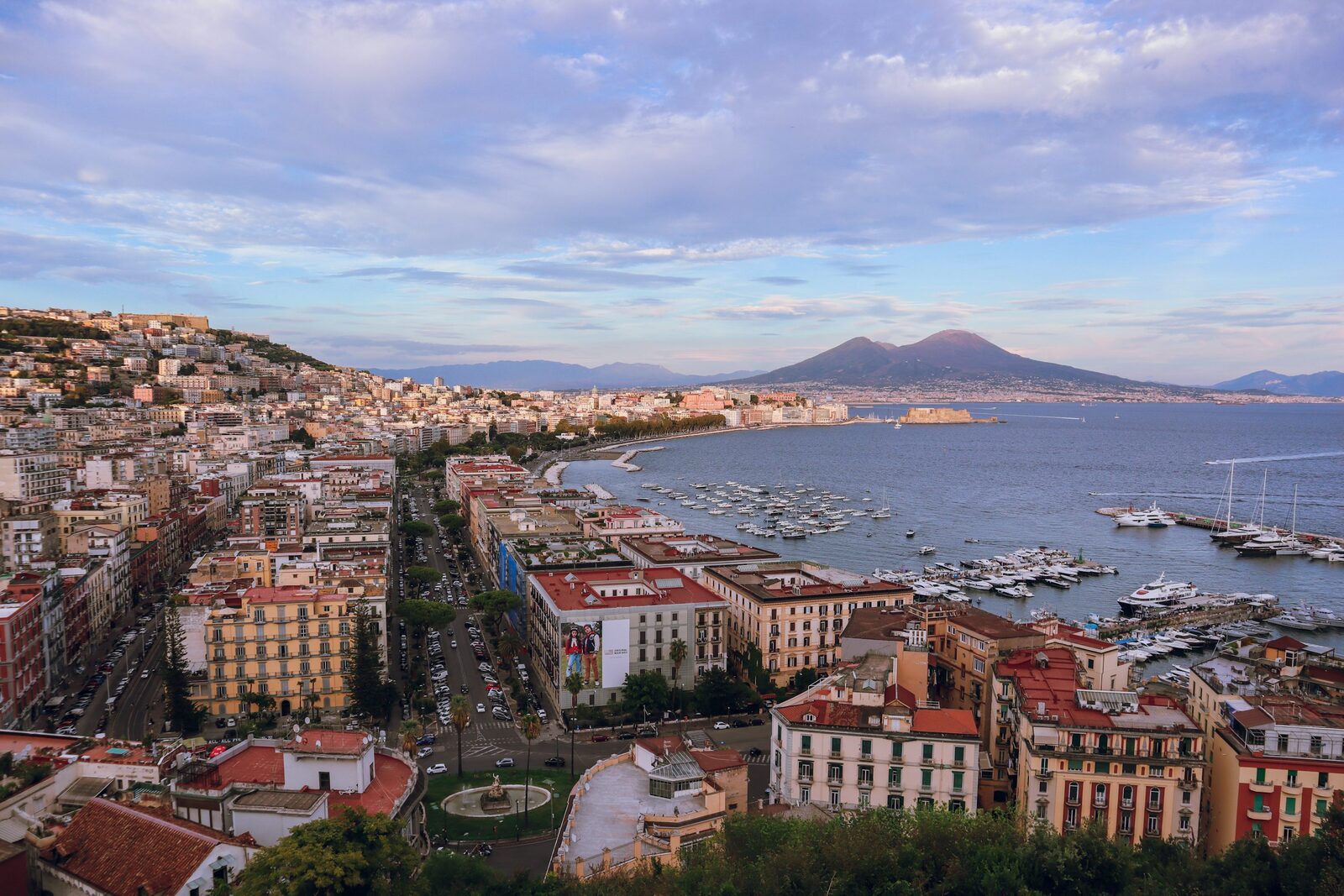
Naples is the largest city in southern Italy and the least polished of the country's major destinations, which is exactly why people fall for it. The historic centre is a dense grid of Greco-Roman streets stacked with baroque churches, laundry lines and street shrines, and it holds one of Europe's largest UNESCO-listed old towns. The city sits under Vesuvius on a bay that also contains Pompeii, Herculaneum, the Amalfi Coast and the islands of Capri, Ischia and Procida. For foreigners, Naples offers metropolitan amenities, three universities, a major airport and a high-speed rail link to Rome in just over an hour, at costs well below Milan, Florence or Rome. Neighbourhoods vary sharply: Vomero and Posillipo sit above the city and are calm and residential, Chiaia is the smart seafront district, and the Centro Storico and Quartieri Spagnoli are loud, cheap and intensely local.
Why Expats Love It
Rent and daily costs are among the lowest of any major western European city, and the food alone justifies the move for many people, from pizza and sfogliatella to the seafood of the bay. The setting is extraordinary, with a volcano, ancient sites and island ferries all inside a day trip. There is a real city underneath the tourism, with working neighbourhoods, a serious music and theatre tradition, and a warmth toward outsiders that northern Italian cities do not always match.
Must Dos
The essential, top gem experiences for the full tourist experience.
Museo Archeologico Nazionale
The single best collection of Roman material anywhere, holding the mosaics, frescoes, bronzes and household objects lifted from Pompeii and Herculaneum. The Farnese sculpture halls and the Gabinetto Segreto of erotic Roman art are the highlights, and you should go before visiting the sites themselves.
Pompeii and Herculaneum
Take the Circumvesuviana train to Pompeii Scavi for the vast excavated city, or to Ercolano for Herculaneum, which is smaller but far better preserved with intact upper floors and carbonised wooden furniture. Herculaneum can be done in half a day and is the better choice if you only pick one.
Cappella Sansevero
A small baroque chapel in the Centro Storico holding the Veiled Christ, a marble sculpture whose transparent shroud looks impossible up close. Book a timed ticket, and go down to the basement to see the anatomical machines commissioned by the eccentric Prince of Sansevero.
Napoli Sotterranea
Forty metres below the Centro Storico lies a network of Greek quarries turned Roman aqueduct turned wartime bomb shelter. The guided tour includes a narrow candlelit passage and a Roman theatre reached through the back of a private apartment.
Spaccanapoli and via San Gregorio Armeno
Walk the dead-straight Greco-Roman street that splits the old city, passing churches, pizzerias and the nativity-figure workshops of via San Gregorio Armeno, which sell handmade presepe scenes year round. Stop at Gino Sorbillo or Di Matteo for pizza.
Certosa di San Martino
The Carthusian monastery on the Vomero hill, with baroque cloisters, an inlaid-marble church and the best panorama of the bay and Vesuvius in the city. Reach it by the Montesanto funicular and combine it with the neighbouring Castel Sant'Elmo ramparts.
Off the Beaten Path
Live like a local. Special, lesser known experiences for adventurers who want real local flavor.
Rione Sanita and the Catacombs of San Gennaro
A working-class quarter north of the centre, long written off and now home to youth cooperatives that run the early Christian catacombs and the Fontanelle ossuary. The Palazzo dello Spagnolo staircase and the local pastry shops make the walk worthwhile.
Cimitero delle Fontanelle
A vast tufa cave holding the bones of tens of thousands of plague and cholera victims, where Neapolitans developed a folk cult of adopting anonymous skulls. Free to enter, genuinely strange, and unlike anything else in Italy.
Procida by ferry
The smallest and least developed of the bay islands, forty minutes from Molo Beverello, with painted fishermen's houses stacked above Marina Corricella and almost no cars. It stays quiet even in August compared with Capri.
Parco Sommerso di Gaiola
A protected marine park below Posillipo where a submerged Roman villa and road lie in shallow clear water. Snorkelling trips and glass-bottomed boat tours run from the small beach, and the clifftop park above has views across to Nisida.
Galleria Borbonica
A Bourbon-era military escape tunnel under the Pizzofalcone hill, later used as a bomb shelter and then as a police impound, so it still holds wartime graffiti and rusting 1940s cars and scooters. Tours run at set times from Vico del Grottone.
Catacombs of San Gaudioso and the Sanita food walk
Under the Santa Maria della Sanita basilica, with fifth-century frescoes and macabre seventeenth-century burial niches. Combine it with a walk through the Sanita market streets and a stop at Pasticceria Poppella for a fiocco di neve.
Cost of Living
1-Bedroom Apartment (City Center)
$600/mo
3-Bedroom Apartment (City Center)
$1050/mo
Restaurant Meal
$18
Monthly Groceries
$260/mo
Monthly Transportation
$42/mo
Monthly Healthcare
$70/mo
Climate
Naples has a Mediterranean climate with hot, dry summers and mild, wet winters. Sea breezes moderate the summer heat along the coast, while the upper districts of Vomero stay noticeably cooler than the centre.
Best Time to Visit
April to June, and September to October
Visa & Residency
Written for US citizens
Italy is in the Schengen Area, allowing 90 days in any 180-day period visa-free for Americans and many other nationals. Long stays need a national visa arranged before arrival, with the elective residence visa, self-employment visa, study visa and the Italian digital nomad visa for qualifying highly skilled remote workers among the usual routes. All long-stay arrivals must apply for a permesso di soggiorno within eight days. Check current rules with an Italian consulate.
These notes assume a US passport. If you hold a different nationality, your visa options and timelines may vary. Always confirm current rules with the official embassy or consulate before you commit.
Safety
Naples has a reputation that outruns the reality for most residents, but petty crime is genuinely higher than in northern Italy. Scooter-borne bag snatching, pickpocketing around the Stazione Centrale and phone theft are the practical risks. Avoid displaying jewellery or phones on the street in the Centro Storico and around Piazza Garibaldi at night, and use registered taxis or the metro rather than walking long distances after dark. Organised crime exists but does not target foreigners.
Healthcare
Registered residents access the national health service through hospitals including the Ospedale Cardarelli, one of southern Italy's largest, and the Federico II university hospital. Public waiting times can be long, so many residents and expats keep affordable private insurance and use private clinics in Chiaia and Vomero for faster specialist appointments. English-speaking doctors exist but are fewer than in Rome or Milan.
Culture & Lifestyle
Culture
Neapolitan social life happens outdoors and at volume, and directness that reads as aggression elsewhere is usually just normal conversation here. Family and neighbourhood ties are strong, and being a known face at your bar, bakery and fruttivendolo changes how the city treats you. Learning Italian is essential and understanding some Neapolitan helps enormously. Superstition, football and Saint Gennaro all matter more than an outsider expects.
Lifestyle
Daily rhythm runs late, with dinner after nine and streets busy past midnight. Residents ride the funiculars up to Vomero, take the metro line 1 with its art-filled stations, and spend weekends on ferries to Procida or trains to Pompeii and the Sorrento coast. Coffee is drunk standing at the counter, pizza is a weekday meal rather than an occasion, and the passeggiata along the Lungomare Caracciolo is a genuine daily habit.
Language
Italian, with Neapolitan widely spoken and English less common than in northern Italy
Currency
Euro (EUR)
Timezone
CET (UTC+1), CEST (UTC+2) in summer