Mostar
 Bosnia and Herzegovina
The iconic bridge, Ottoman soul and Balkan resilience along the Neretva.
Overview
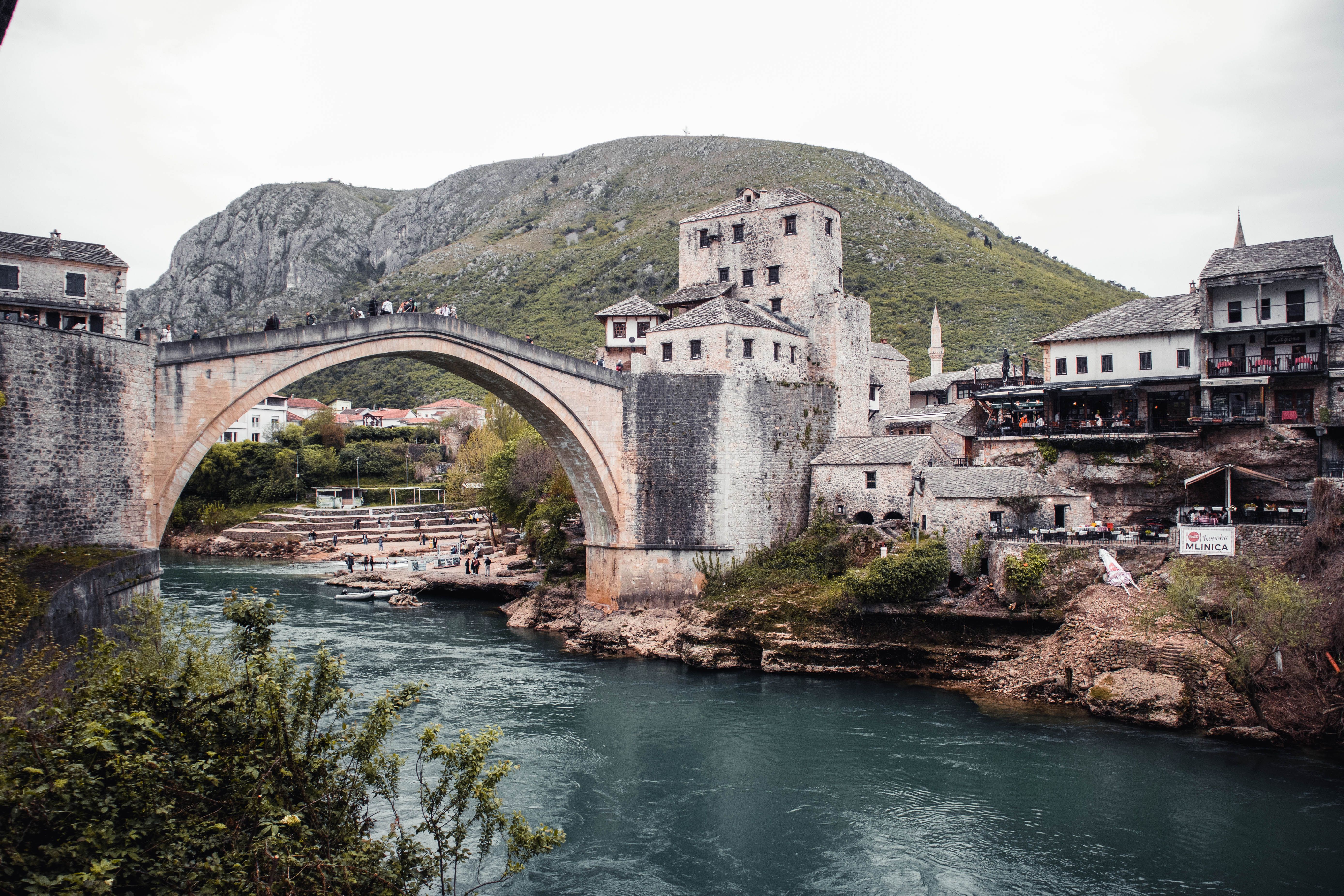
Mostar is defined by its bridge, the Stari Most, a 16th-century Ottoman arch that leaps 24 meters above the emerald Neretva River. Destroyed in the 1993 war and rebuilt stone by stone in 2004, the bridge is both a UNESCO World Heritage landmark and a symbol of the city's determination to heal. On either side, cobblestoned bazaar lanes sell copperware, Turkish coffee sets and hand-painted ceramics, while minarets and church steeples share the skyline. For expats, Mostar is one of Europe's most affordable cities: generous apartments in the old town rent for a fraction of Dubrovnik prices, the food is hearty and cheap (cevapi, burek, dolma), and the surrounding Herzegovina wine country and waterfalls add constant weekend variety.
Why Expats Love It
Iconic bridge and river, deeply affordable European living, outstanding Balkan food, Herzegovina wine country, and a resilient, welcoming community.
Must Dos
The essential, top gem experiences for the full tourist experience.
Stari Most
Walk across the iconic reconstructed Ottoman bridge and watch divers leap 24 meters into the Neretva.
Koski Mehmed Pasha Mosque
Climb the minaret for the best aerial view of the bridge and river.
Old Bazaar (Kujundziluk)
Browse copper workshops, carpet stalls and Turkish-coffee sets in the cobbled lanes.
Blagaj Tekke
Visit the Dervish monastery built into a cliff face where the Buna River springs from a cave.
War Photo Exhibition
View the powerful photographic record of Mostar's wartime destruction and rebuilding.
Cevapi at Tima-Irma
Eat the city's best grilled-meat sausages with somun bread and raw onion.
Off the Beaten Path
Live like a local. Special, lesser known experiences for adventurers who want real local flavor.
Kravice Waterfalls
Swim beneath the 25-meter crescent-shaped waterfall an hour south of the city.
Pocitelj
Visit the medieval fortress village perched above the Neretva valley.
Herzegovina wine route
Taste Zilavka and Blatina wines at family vineyards around Citluk and Medjugorje.
Partisan Memorial Cemetery
Walk through the striking Bogdan Bogdanovic-designed war memorial on a forested hillside.
Sniper Tower (Ljubljanska Bank)
See the war-scarred tower covered in street art, a haunting reminder of the siege.
Neretva river rafting
Raft the upper Neretva canyon through emerald gorges and rapids.
Cost of Living
1-Bedroom Apartment (City Center)
$300/mo
3-Bedroom Apartment (City Center)
$500/mo
Restaurant Meal
$5
Monthly Groceries
$130/mo
Monthly Transportation
$25/mo
Monthly Healthcare
$20/mo
Climate
Mediterranean-continental; hot summers, mild winters.
Best Time to Visit
May to October
Visa & Residency
Written for US citizens
U.S. passport holders can typically enter Bosnia and Herzegovina visa-free for up to 90 days within any 180-day period, and importantly, Bosnia is not part of the Schengen Area, so time spent here generally does not count against your Schengen allowance. There is no widely established digital nomad visa or retirement visa for Bosnia at this time, so long-term stays commonly require a temporary residence permit, which is typically tied to employment with a local employer, business registration, family reunification, or study. Work permits generally require employer sponsorship and are processed through local authorities. Border runs are sometimes used in practice but are not a formally sanctioned long-term strategy. Verify current requirements with the Bosnian embassy or consulate before making relocation plans.
These notes assume a US passport. If you hold a different nationality, your visa options and timelines may vary. Always confirm current rules with the official embassy or consulate before you commit.
Safety
Safe city; do not wander off marked paths in the countryside (landmine legacy from the 1990s war).
Healthcare
University Clinical Hospital Mostar provides solid care; Sarajevo or Croatia for specialist needs.
Culture & Lifestyle
Culture
Ottoman-Herzegovinian heritage, bridge-diving tradition, Sevdalinka love songs, and a post-war cultural renaissance.
Lifestyle
Bridge-view coffees, river swimming, old-town strolls, and Herzegovina vineyard day trips.
Language
Bosnian, Croatian, Serbian, English
Currency
BAM
Timezone
UTC+1