
Milan
 Italy
Italy
Italy's business and design capital, where fashion, finance, and aperitivo culture meet the best rail access in the country.
Overview
Milan is the working city of Italy, the place where the country's finance, fashion, design, and publishing industries are based, and it feels noticeably more northern European in pace than Rome or Naples. For expats that means the strongest job market in the country, an efficient metro, and a professional culture that actually runs on schedule, balanced against higher rents and a flatter, less immediately photogenic cityscape. The reward is that Milan repays living in it rather than visiting: courtyard gardens hidden behind plain facades, canal-side dinners in Navigli, design studios in Isola and Porta Romana, and a serious aperitivo ritual every evening. It is also the best-connected city in Italy, with fast trains to Rome, Turin, and Venice and cheap flights across Europe.
Why Expats Love It
Expats love Milan for real career options in Italy, the international feel of its design and fashion industries, and the ease of weekend escape to the Alps, the Ligurian coast, and the lakes. It offers Italian food and social life with northern European reliability, which is a rare combination.
Must Dos
The essential, top gem experiences for the full tourist experience.
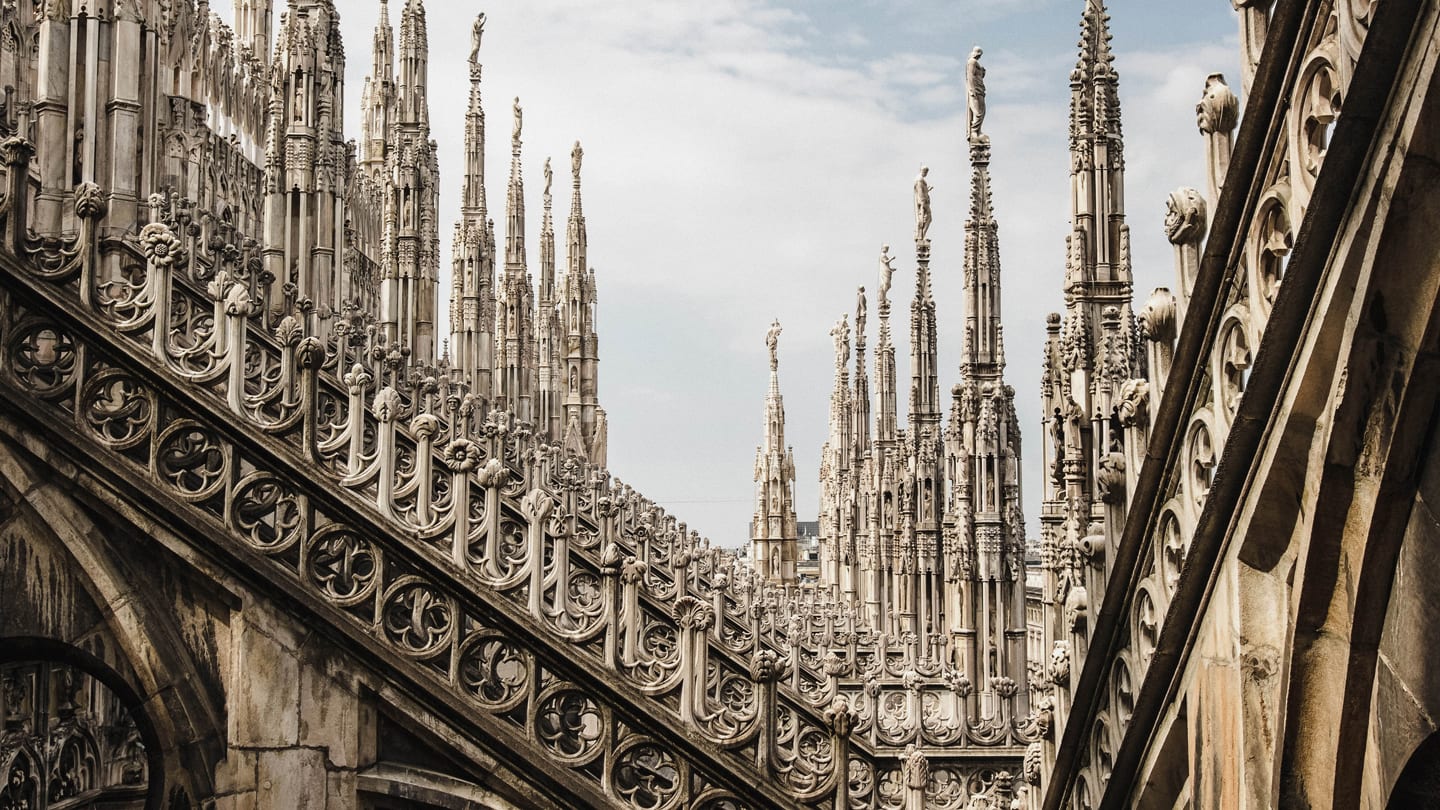
Duomo di Milano Rooftop
Buy the rooftop ticket at the Duomo di Milano and walk among the spires and statues above the piazza, which is a completely different experience from the interior.
The Last Supper
Book months ahead to see Leonardo's Last Supper at Santa Maria delle Grazie, where entry is limited to short timed slots.
Navigli Canals
Spend an evening along the Naviglio Grande in Navigli, where the canal banks fill with aperitivo tables and vintage shops.
Pinacoteca di Brera
Visit the Pinacoteca di Brera for Italian masters, then wander the surrounding Brera district's narrow streets and botanical garden.
Galleria Vittorio Emanuele II
Walk through the glass-domed Galleria Vittorio Emanuele II beside the Duomo, the world's oldest surviving shopping arcade.
Cimitero Monumentale
Tour the Cimitero Monumentale, an open-air gallery of extraordinary funerary sculpture that most visitors skip entirely.
Off the Beaten Path
Live like a local. Special, lesser known experiences for adventurers who want real local flavor.
Basilica di Sant'Ambrogio
Step into the Basilica di Sant'Ambrogio, an eleventh century Romanesque church far older and quieter than the Duomo, with a beautiful atrium.
Fondazione Prada
Explore Fondazione Prada in the Largo Isarco district, a former distillery reworked by Rem Koolhaas into a contemporary art campus with a gold-leaf tower.
Villa Necchi Campiglio
Tour Villa Necchi Campiglio, a 1930s rationalist house museum with a private garden and pool hidden behind a wall near Porta Venezia.
Chiesa di San Maurizio
Find the Chiesa di San Maurizio al Monastero Maggiore on Corso Magenta, whose entirely frescoed interior is often called the Sistine Chapel of Milan.
QT8 and Monte Stella
Climb Monte Stella in the QT8 district, an artificial hill built from war rubble that gives the best free view over the city toward the Alps.
Mercato Comunale Wagner
Shop the Mercato Comunale Wagner, a working covered market where Milanese buy fish, cheese, and produce rather than souvenirs.
Cost of Living
1-Bedroom Apartment (City Center)
$1250/mo
3-Bedroom Apartment (City Center)
$2200/mo
Restaurant Meal
$20
Monthly Groceries
$330/mo
Monthly Transportation
$39/mo
Monthly Healthcare
$90/mo
Climate
Milan has a humid subtropical climate with hot, muggy summers, cold, foggy, damp winters, and pleasant spring and autumn months. Air quality dips in winter when the Po Valley traps pollution.
Best Time to Visit
April to June and September to October
Visa & Residency
Written for US citizens
Americans can stay 90 days in any 180-day period visa-free under Schengen rules. Longer stays use Italy's elective residence visa for those with passive income, the self-employment visa, an EU Blue Card for skilled hires, or the digital nomad visa introduced in 2024 for remote workers meeting income and insurance thresholds. Italian paperwork is slow and consulate-specific, so confirm current requirements with an Italian consulate well before you plan to move.
These notes assume a US passport. If you hold a different nationality, your visa options and timelines may vary. Always confirm current rules with the official embassy or consulate before you commit.
Safety
Violent crime is rare and the city is comfortable at night in most areas. Pickpocketing is the real risk, concentrated around Duomo, Central Station, and the metro at rush hour, so keep bags closed and in front of you.
Healthcare
Lombardy has the strongest healthcare region in Italy, with respected hospitals such as San Raffaele and the Istituto Nazionale dei Tumori. Registered residents access the public system for a small annual fee, and affordable private clinics fill the gaps.
Culture & Lifestyle
Culture
Milanese culture prizes competence, punctuality, and a well-judged appearance, and dressing carelessly is noticed. Coffee is drunk standing at the bar, aperitivo runs from about seven, and August empties the city as residents leave for the coast.
Lifestyle
Life runs on the metro and a bike, with lunch near the office, an evening aperitivo instead of a big dinner, and weekends on the lakes or in the mountains within two hours. Coworking is abundant in Isola, Porta Venezia, and Lambrate.
Language
Italian, with English common in business, design, and fashion circles
Currency
Euro (EUR)
Timezone
CET (UTC+1)