Miami
 United States
America's gateway to Latin America, where beach living, a Spanish-speaking business culture, and no state income tax draw a fast-growing expat crowd.
Overview
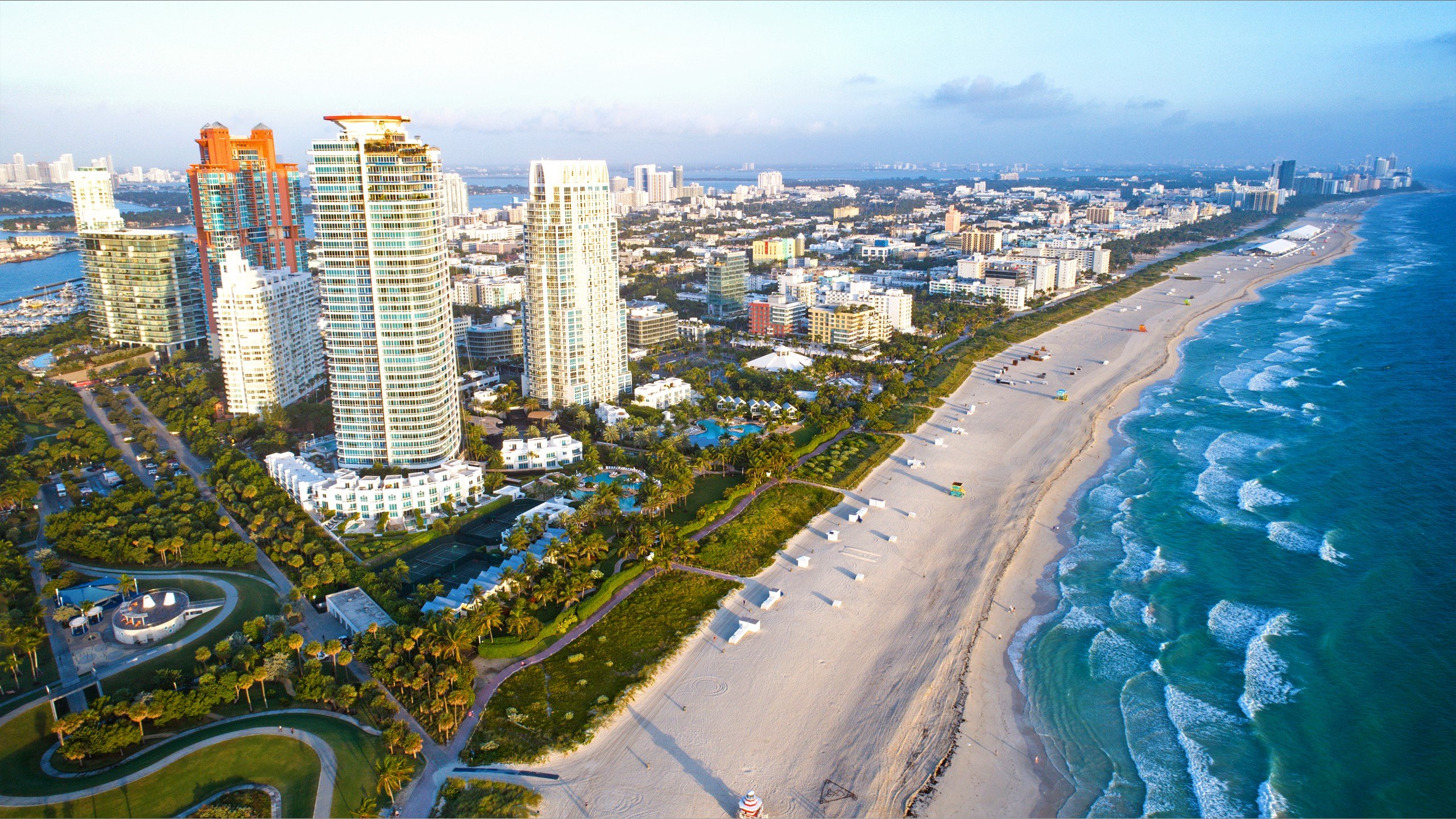
Miami has changed rapidly from a vacation town into a genuine business hub, pulling in finance, crypto, and tech companies alongside its long-standing role as the commercial bridge between the United States and Latin America. For expats the appeal is a subtropical climate, an overwhelmingly bilingual city where Spanish is often the default, and Florida's lack of a state income tax. Life is spread out across distinct areas: Brickell for high-rise professional living, Coconut Grove for leafy calm, Wynwood and Little Haiti for creative energy, and Miami Beach for the water. The main frictions are car dependence, summer humidity, hurricane season, and rents that have risen sharply since 2020.
Why Expats Love It
Expats love Miami for year-round warmth, a genuinely international business culture, and direct flight access to most of Latin America and Europe. Latin American professionals in particular find they can build a full career and social life without ever switching out of Spanish, while remote workers get beach mornings and a serious coworking scene.
Must Dos
The essential, top gem experiences for the full tourist experience.
Wynwood Walls
Walk the open-air mural district around Wynwood Walls and NW 2nd Avenue, where warehouse walls are repainted constantly. Go late afternoon and stay for the brewery and gallery scene.
Little Havana and Calle Ocho
Spend a morning on Calle Ocho in Little Havana, ordering a cortadito at Ball and Chain and watching the dominoes at Maximo Gomez Park.
Vizcaya Museum and Gardens
Tour the Italianate villa and formal gardens of Vizcaya Museum and Gardens in Coconut Grove, built on Biscayne Bay in 1916.
South Beach Art Deco District
Walk Ocean Drive and Collins Avenue through the Art Deco Historic District in South Beach, ideally early when the pastel facades are quiet.
Key Biscayne and Bill Baggs
Cross the Rickenbacker Causeway to Bill Baggs Cape Florida State Park on Key Biscayne for the best swimming beach and the historic lighthouse.
Everglades National Park
Drive an hour west to Everglades National Park and walk the Anhinga Trail at Royal Palm, where alligators and wading birds are visible from the boardwalk.
Off the Beaten Path
Live like a local. Special, lesser known experiences for adventurers who want real local flavor.
Little Haiti Cultural Complex
Visit the Little Haiti Cultural Complex for Caribbean art, dance classes, and the monthly Sounds of Little Haiti street party.
Deering Estate
Explore the Deering Estate in Palmetto Bay, a quieter bayfront historic property with canoe launches into mangrove channels and a fossil pit.
The Kampong
Book ahead for The Kampong in Coconut Grove, a tropical botanical garden of rare fruit trees on the former David Fairchild property.
Matheson Hammock Park
Swim in the man-made atoll pool at Matheson Hammock Park in Coral Gables, a calm, shallow alternative to the ocean beaches with skyline views.
Coral Castle
Drive south to Coral Castle in Homestead, an eccentric oolite limestone structure carved single-handedly over decades by Edward Leedskalnin.
Virginia Key North Point
Ride the trails at Virginia Key North Point Park, a mountain bike and kayak spot most visitors never realize exists minutes from downtown.
Cost of Living
1-Bedroom Apartment (City Center)
$2600/mo
3-Bedroom Apartment (City Center)
$4500/mo
Restaurant Meal
$25
Monthly Groceries
$500/mo
Monthly Transportation
$150/mo
Monthly Healthcare
$520/mo
Climate
Miami has a tropical monsoon climate with hot, humid, rainy summers from May to October and warm, dry, near-perfect winters. Hurricane season runs June through November.
Best Time to Visit
November to April
Visa & Residency
Written for US citizens
Americans need no visa. Others generally enter on ESTA or a B1/B2 visitor visa, with longer stays requiring an employment or investment route such as the L-1 transfer, E-2 investor, or O-1 visa. Florida has no state income tax, which is a real factor for relocating professionals, but federal tax obligations still apply, so speak with a cross-border tax advisor and confirm visa requirements with a US consulate before moving.
These notes assume a US passport. If you hold a different nationality, your visa options and timelines may vary. Always confirm current rules with the official embassy or consulate before you commit.
Safety
Tourist and professional areas such as Brickell, Coconut Grove, and South Beach are safe, though petty theft from parked cars is common. Avoid leaving valuables visible, be cautious in Overtown and parts of Liberty City at night, and take hurricane advisories seriously.
Healthcare
Miami has strong hospitals including Jackson Memorial and Baptist Health, and finding Spanish-speaking specialists is easy. As elsewhere in the United States, comprehensive insurance is essential because costs without it are severe.
Culture & Lifestyle
Culture
The rhythm is Latin American rather than typically American: later dinners, warmer greetings, and a strong emphasis on appearance and social presence. Spanish is a practical asset rather than a nicety, and Cuban, Colombian, Venezuelan, and Brazilian communities each shape their own districts.
Lifestyle
Daily life mixes beach or gym in the early morning, work from a Brickell or Wynwood coworking space, and evenings that start late. A car is close to essential outside Brickell and Miami Beach, and weekends run to the Everglades, the Keys, or a boat.
Language
English and Spanish, with Haitian Creole widely spoken in several neighborhoods
Currency
US Dollar (USD)
Timezone
EST (UTC-5), EDT in summer