
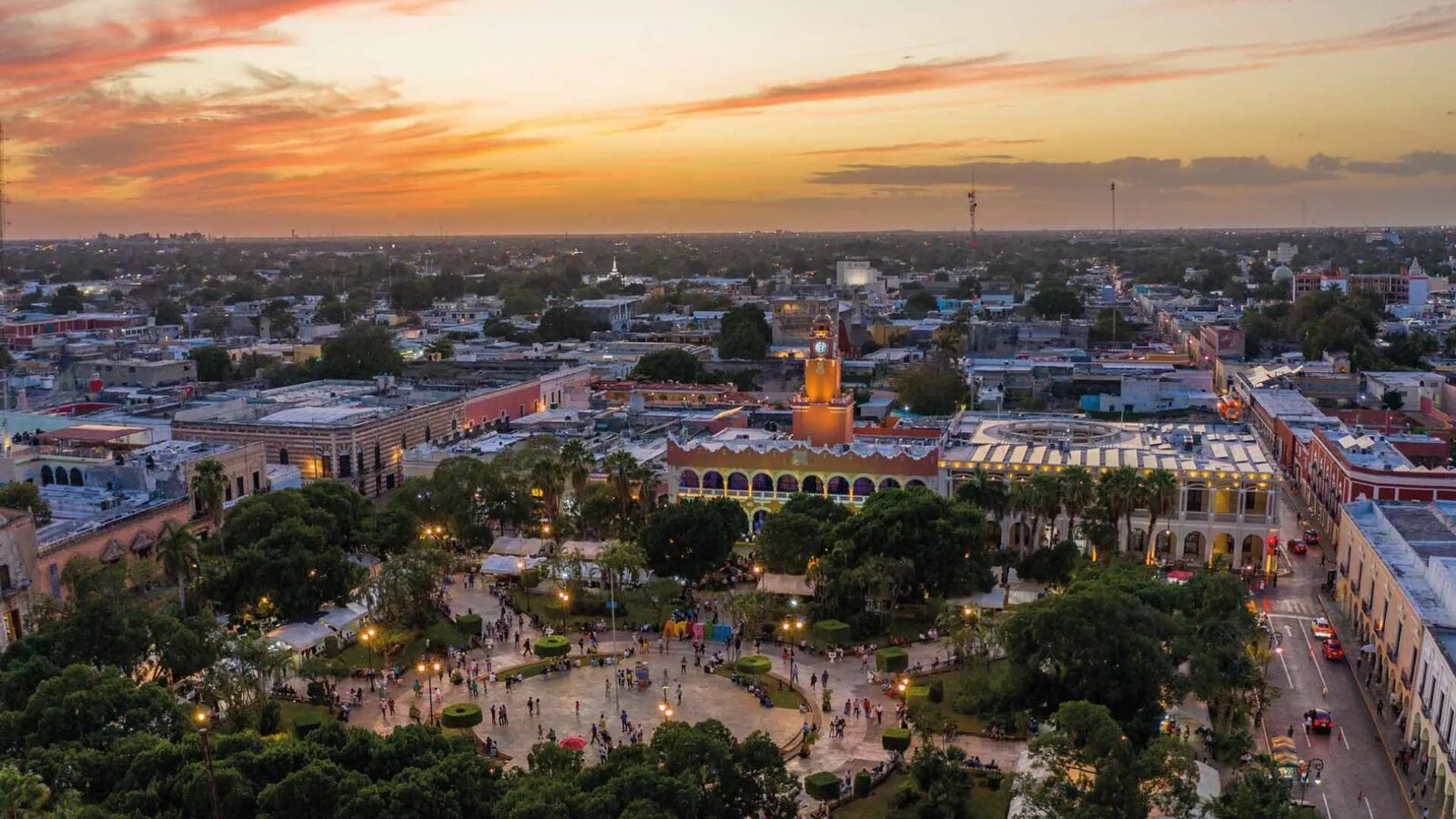
Merida
 Mexico
Yucatan's safe colonial capital of pastel mansions and cenotes
Overview
Merida is the cultural capital of the Yucatan peninsula and consistently ranks among the safest cities in the Americas. Founded on a Maya city in 1542, it has a grid of colourful colonial buildings, a grand nineteenth century boulevard of henequen boom mansions, and a large surviving Maya population whose language is still widely spoken. Cenotes, Maya ruins and Gulf beaches all lie within an hour or two. The heat is serious from March to September, but the city's shaded plazas, free concerts and low costs have drawn a fast growing community of North American and European residents.
Why Expats Love It
Exceptional safety, low costs, rich Maya culture and beaches, cenotes and ruins on the doorstep.
Must Dos
The essential, top gem experiences for the full tourist experience.
Plaza Grande and the Cathedral
The oldest cathedral on the American mainland facing a plaza of confidante chairs.
Paseo de Montejo
A grand boulevard of henequen fortune mansions, best on Sunday when it closes to cars.
Gran Museo del Mundo Maya
The definitive museum of Maya civilisation, with objects from across the peninsula.
Uxmal
Puuc style pyramids an hour south, arguably more beautiful and far quieter than Chichen Itza.
Cenote Swimming at Cuzama or Homun
Underground limestone pools reached through village networks.
Mercado Lucas de Galvez
Cochinita pibil, habanero salsa and the full Yucatecan pantry in one market.
Off the Beaten Path
Live like a local. Special, lesser known experiences for adventurers who want real local flavor.
Santa Lucia Serenade Nights
Free Thursday trova concerts in a small colonial square, attended almost entirely by locals.
Hacienda Yaxcopoil
A crumbling henequen estate frozen as its owners left it, thirty minutes south.
Celestun Biosphere
Flamingo flocks in a mangrove estuary on the Gulf coast, best in winter.
Izamal
A town painted entirely yellow around a Franciscan monastery built on a Maya pyramid.
Dzibilchaltun
Maya ruins with a cenote for swimming and an equinox aligned temple, twenty minutes north.
Barrio de Santiago Dance Nights
Tuesday big band dancing in the square, a tradition running since the 1950s.
Cost of Living
1-Bedroom Apartment (City Center)
$420/mo
3-Bedroom Apartment (City Center)
$800/mo
Restaurant Meal
$7
Monthly Groceries
$260/mo
Monthly Transportation
$25/mo
Monthly Healthcare
$90/mo
Climate
Tropical savanna, hot year round with a rainy season from June to October
Best Time to Visit
November to March for dry days and manageable heat
Visa & Residency
Written for US citizens
Most nationalities get up to 180 days on arrival as a visitor. Longer stays use the temporary resident visa, applied for at a Mexican consulate abroad with proof of income or savings.
These notes assume a US passport. If you hold a different nationality, your visa options and timelines may vary. Always confirm current rules with the official embassy or consulate before you commit.
Safety
Merida has one of the lowest crime rates in Mexico and walking at night is normal. Heat exhaustion and hurricane season are the bigger practical risks.
Healthcare
Star Medica and Clinica de Merida offer strong private care at a fraction of US prices, and the city is a regional medical hub.
Culture & Lifestyle
Culture
Yucatecan identity is distinct from central Mexico, with its own food, music and Maya heritage. Family, siesta hours and Sunday plaza gatherings still structure the week.
Lifestyle
Early mornings before the heat, courtyard pool afternoons, evening street food in Santa Ana. Weekends mean cenote swimming, Progreso beach or Maya ruins.
Language
Spanish, with Yucatec Maya widely spoken and some English
Currency
Mexican Peso (MXN)
Timezone
CST (UTC-6)