Marseille
 France
France's oldest and most Mediterranean city, rough-edged, sun-soaked and cheaper than anywhere comparable.
Overview
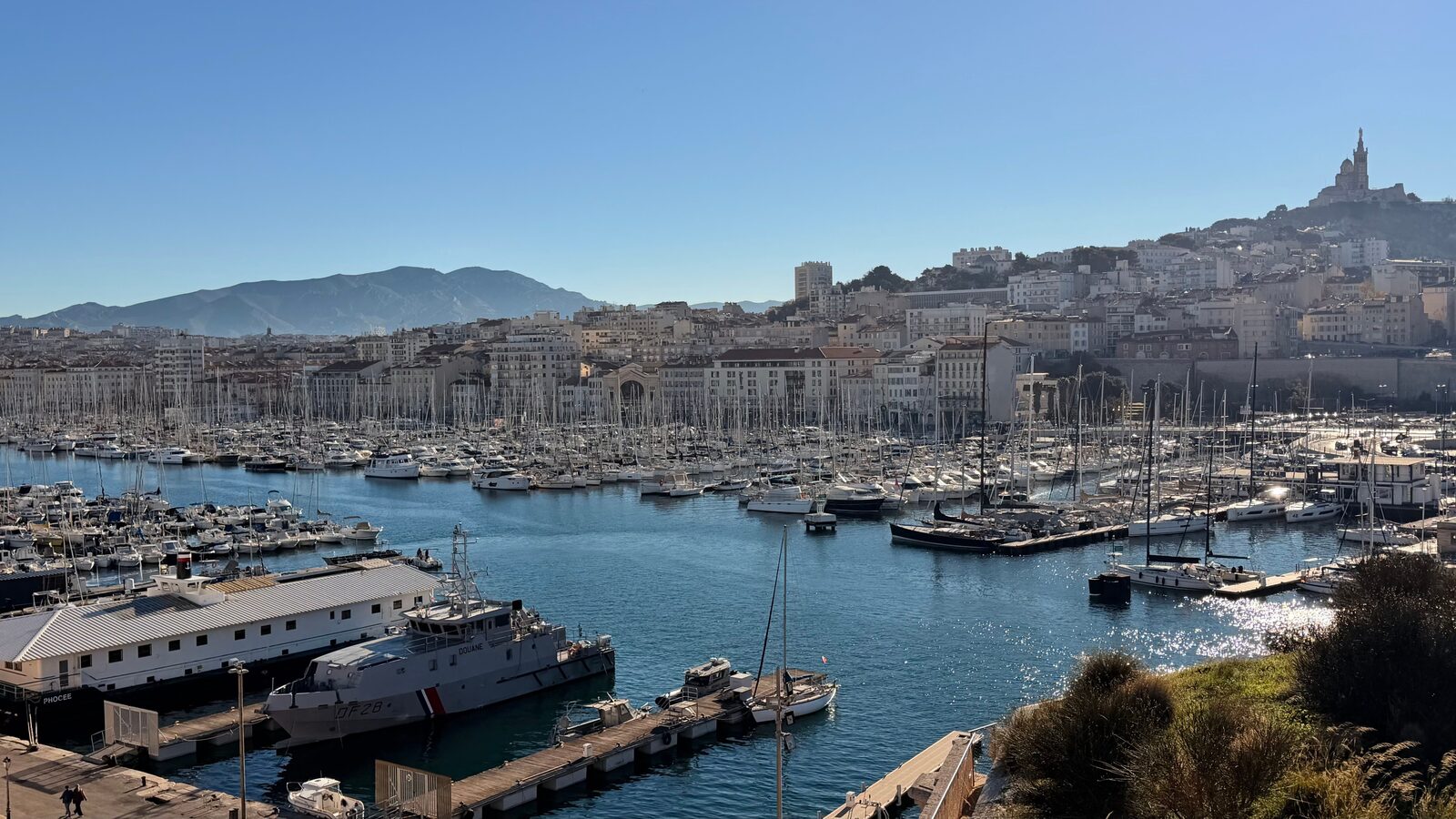
Founded by Greek sailors around 600 BC, Marseille is the oldest city in France and the least French-feeling of its major cities. It faces the Mediterranean rather than Paris, and centuries of arrivals from Italy, Armenia, Algeria, Morocco, Tunisia, Comoros and West Africa have produced a genuinely mixed population and food culture. The city climbs from the Vieux-Port up through hills to the Notre-Dame de la Garde basilica, with the white limestone Calanques fjords immediately south and the Provencal countryside inland. It was European Capital of Culture in 2013, which funded the MuCEM museum and a waterfront rebuild, and a wave of investment and TGV connections has since drawn Parisians and remote workers priced out of the capital. Districts vary enormously, from the gentrifying Le Panier and Cours Julien to the wealthy seventh and eighth arrondissements along the corniche and the deprived northern quarters.
Why Expats Love It
You get 300 days of sun, swimming from city beaches, and rent roughly half of Paris, with a TGV that reaches the capital in just over three hours. The Calanques National Park starts at the edge of town, Aix-en-Provence is 30 minutes away and the airport connects across Europe and North Africa. The food, from bouillabaisse to Algerian and Comorian cooking, is exceptional and cheap, and the city has a creative, unpolished energy that appeals to people who find Nice or Cannes sterile.
Must Dos
The essential, top gem experiences for the full tourist experience.
Calanques National Park
A 20-kilometre stretch of white limestone inlets between Marseille and Cassis, reachable on foot from the Luminy campus bus stop or by boat from the Vieux-Port. Calanque de Sugiton and Calanque d'En-Vau are the classics, and summer access is regulated by a free booking system because of fire risk.
MuCEM and Fort Saint-Jean
The Museum of European and Mediterranean Civilisations sits in a black concrete lattice cube on the harbour mouth, linked by a footbridge to the seventeenth-century Fort Saint-Jean. The rooftop walk and the fort gardens are free and give the best sunset view in the city.
Notre-Dame de la Garde
The nineteenth-century basilica on the highest point of the city, gold Madonna on top, interior hung with model ships and votive paintings from sailors. Walk up through the Vauban quarter rather than taking the tourist train, and stay for the 360-degree panorama.
Le Panier
The oldest quarter, a hill of narrow lanes above the Vieux-Port that was the Greek settlement and later the Italian and immigrant district. It holds the Vieille Charite almshouse complex, street art, ceramic workshops and the best casual eating in the centre.
Chateau d'If and the Frioul islands
A short boat ride to the island fortress that held the fictional Count of Monte Cristo and many real political prisoners, then on to the barren Frioul archipelago for swimming coves and empty walking trails.
Marche de Noailles
The North African market at the foot of La Canebiere, dense with spice stalls, Tunisian bakeries, halal butchers and fruit sellers shouting prices. It is the most vivid ten minutes in the city and the place to buy for cooking.
Off the Beaten Path
Live like a local. Special, lesser known experiences for adventurers who want real local flavor.
Vallon des Auffes
A tiny fishing harbour tucked under a road viaduct on the corniche, with wooden boats, fishermen's huts and two long-established bouillabaisse restaurants. It is five minutes from the beach road and most visitors drive straight over the top of it.
Cite Radieuse
Le Corbusier's 1952 concrete housing block in the eighth arrondissement, a UNESCO site containing a hotel, a bookshop, a restaurant and a rooftop with a gymnasium and shallow pool now used as an art space. Residents still live there and the interior street level is open to the public.
L'Estaque
A former fishing village at the northwest edge of the city where Cezanne, Braque and Dufy painted, now reachable by boat or bus. Come for the panisses and chichis fritters sold on the quay and the view back across the bay.
Parc National des Calanques by kayak from Callelongue
Launching from the tiny hamlet of Callelongue at the end of the bus line gets you into coves that are unreachable on foot and empty even in August. Rental operators run guided half days.
Cours Julien and Rue Consolat street art
The hillside quarter above the centre is repainted constantly and holds independent record shops, vintage dealers and a Wednesday farmers market. It is where the city's music and design scene actually lives.
Chateau Borely and the Musee des Arts Decoratifs
An eighteenth-century bastide with formal gardens and a botanical garden behind, holding a decorative arts, fashion and ceramics collection. It sits behind the Prado beaches and is nearly always quiet.
Cost of Living
1-Bedroom Apartment (City Center)
$700/mo
3-Bedroom Apartment (City Center)
$1250/mo
Restaurant Meal
$18
Monthly Groceries
$300/mo
Monthly Transportation
$45/mo
Monthly Healthcare
$90/mo
Climate
Marseille has a hot-summer Mediterranean climate with very dry summers around 30C, mild winters rarely near freezing, and the mistral wind that blows hard and cold down the Rhone valley for days at a time, clearing the air and flattening the sea.
Best Time to Visit
May to June, and September to October
Visa & Residency
Written for US citizens
France is in the Schengen Area, allowing 90 days in any 180-day period visa-free for Americans and many other nationals. Longer stays require a long-stay visa arranged before arrival, with the visiteur visa for those with sufficient income who will not work locally, the passeport talent for skilled workers and entrepreneurs, the profession liberale route for freelancers, and student visas among the options. Most long-stay visas must be validated online with OFII within three months of arrival. Confirm current rules with a French consulate.
These notes assume a US passport. If you hold a different nationality, your visa options and timelines may vary. Always confirm current rules with the official embassy or consulate before you commit.
Safety
Marseille has a worse reputation than daily life justifies, but it does have real problems with drug-related violence, almost entirely confined to specific northern housing estates that residents and visitors have no reason to enter. In the central districts the practical risks are phone snatching, moped theft and pickpocketing, particularly around the Vieux-Port, Noailles and Gare Saint-Charles. Keep phones out of sight on the street, avoid empty stations late at night, and use registered taxis after dark.
Healthcare
France's health system is among the best in the world and residents access it through the PUMA scheme after three months of stable residence, usually topping it up with a mutuelle for the remaining share. The Assistance Publique Hopitaux de Marseille network includes La Timone, one of the largest hospitals in Europe. English-speaking doctors exist but are not the norm, so basic medical French is genuinely useful.
Culture & Lifestyle
Culture
Marseillais are loud, direct and quick to complain, with a strong local identity that puts the city ahead of the nation. Olympique de Marseille is close to a civic religion and knowing something about it opens conversations. Bureaucracy is slower and less predictable than in northern France, so patience and paper copies of everything are essential. Learning French is not optional here; the English-speaking bubble is small compared with Paris or Lyon.
Lifestyle
Daily life is outdoors. Residents swim at the Plages du Prado or the small coves along the corniche, buy fish on the Vieux-Port quay in the morning, drink pastis on Cours Julien terraces and hike the Calanques on weekends. The metro and tram cover the centre, but scooters and cars dominate. Summer empties as locals leave for the countryside, and the mistral dictates whether the beach or the hills is the better plan.
Language
French, with Arabic widely spoken and English less common than in Paris
Currency
Euro (EUR)
Timezone
CET (UTC+1), CEST (UTC+2) in summer