
Malaga
 Spain
Spain
The Costa del Sol's capital reinvented as a museum city, with 320 days of sun and a serious tech influx.
Overview
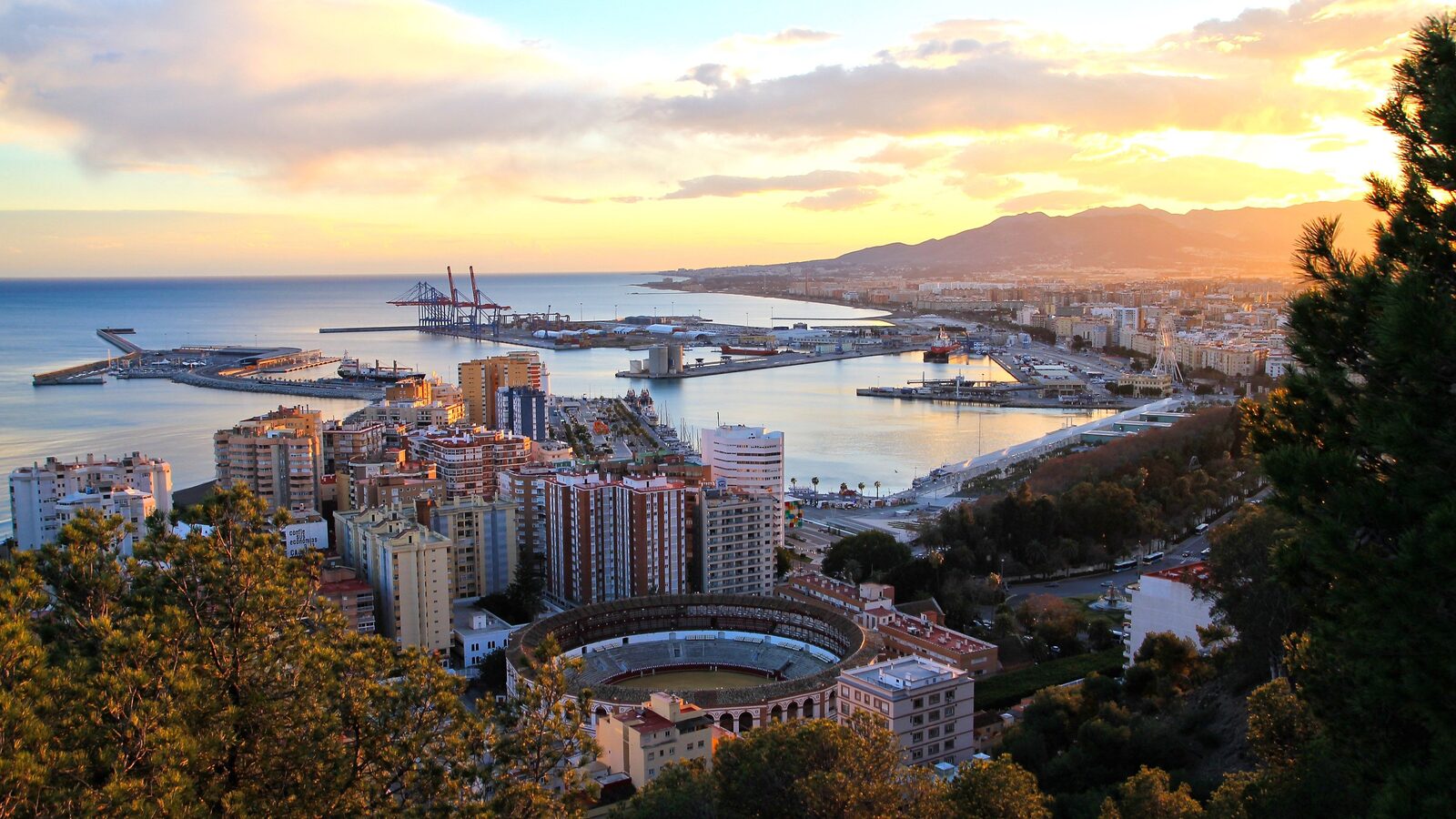
Malaga spent decades as the airport you passed through on the way to the Costa del Sol resorts, and then rebuilt itself. Since 2003 the city has opened more than thirty museums, pedestrianised its historic core, restored the Roman theatre and Moorish Alcazaba, and turned the Soho district into an open-air street art gallery. It is now the fastest-growing tech hub in southern Europe, with Google, Vodafone and a dense startup ecosystem clustered in the Malaga TechPark, and it has become the default landing spot for remote workers in Spain. The city sits on a wide bay with beaches inside the urban area, mountains immediately behind, and Granada, Seville and Cordoba all within two hours. The old town, La Malagueta seafront, the residential Teatinos and the bohemian Soho and Lagunillas quarters give a range of options.
Why Expats Love It
Sun almost year-round, beaches within walking distance of the centre, and costs well under Madrid or Barcelona while offering a real city rather than a resort. The airport is one of the best connected in Europe, which matters for people flying home often. Spain's digital nomad visa made long stays legally straightforward, and the existing international community means English works for daily life even though Spanish transforms it. The food, from espetos grilled on the beach to the Atarazanas market, is excellent and cheap.
Must Dos
The essential, top gem experiences for the full tourist experience.
Alcazaba and Gibralfaro Castle
A Moorish palace fortress from the eleventh century stacked above the Roman theatre, connected by a walled ramp to the Gibralfaro castle on the hill above. The combined ticket is cheap and the walk up gives the definitive view over the bullring and port.
Museo Picasso Malaga
Picasso was born here, and the museum in the Buenavista Palace holds over 200 works donated by his family, spanning every period. The birthplace house on Plaza de la Merced is a separate, smaller visit nearby.
Mercado Central de Atarazanas
A nineteenth-century iron market built around a preserved Moorish shipyard gate, with a stained glass window at one end. Eat at the counter bars inside, where fried fish and vermouth are served from mid-morning.
Caminito del Rey
A restored cliffside walkway pinned to the walls of the Gaitanes gorge an hour north, once known as the most dangerous path in the world and now a safe but vertiginous 7.7-kilometre linear route. Book weeks ahead.
Muelle Uno and the Centre Pompidou
The redeveloped port promenade, anchored by the colourful glass cube of the Centre Pompidou Malaga, the museum's first permanent outpost outside France. The walk continues to the La Farola lighthouse and the beach.
Pedregalejo and El Palo
The old fishing quarters east of the centre, where single-storey houses front a string of small beaches and chiringuito restaurants grill sardines on skewers over open boats. Take the bus and stay for sunset.
Off the Beaten Path
Live like a local. Special, lesser known experiences for adventurers who want real local flavor.
Lagunillas street art quarter
A working-class barrio north of the centre, painted floor to roofline by local artists and residents, with community gardens built on demolition lots. It is rough around the edges and completely uncommercialised.
Jardin Botanico La Concepcion
A nineteenth-century tropical garden in the hills north of the city, with bamboo groves, palm avenues and a wisteria pergola, planted by a merchant family and now municipal. Almost no visitors and a good deal cooler than the centre.
Montes de Malaga Natural Park
Pine-forested hills immediately behind the city with hiking and trail running routes, and ventas serving the local plato de los montes. Reachable by car or bus in 30 minutes for a full change of climate.
Cementerio Ingles
The oldest Protestant cemetery in mainland Spain, founded in 1831, a walled subtropical garden of tombs shaded by jacaranda and cypress with a strange, quiet beauty. It is a short walk east of the bullring.
Baths of El Carmen and the Huelin district
A restored 1918 bathing pavilion on a stretch of beach west of the centre, in a working residential district with none of the tourism of La Malagueta. The parque del Oeste behind it has sculpture and shade.
Antequera and the dolmens
An hour inland, a UNESCO site of neolithic dolmens aligned to the mountain called the Lovers' Rock, beside a whitewashed town with baroque churches and El Torcal karst landscape above. It is the best half-day escape from the coast.
Cost of Living
1-Bedroom Apartment (City Center)
$900/mo
3-Bedroom Apartment (City Center)
$1500/mo
Restaurant Meal
$15
Monthly Groceries
$280/mo
Monthly Transportation
$40/mo
Monthly Healthcare
$80/mo
Climate
Malaga has a hot-summer Mediterranean climate with the mildest winters in mainland Europe, averaging 17C in January, and summers reaching the mid-30s. Rain is concentrated in a few autumn and winter storms, and the terral wind occasionally pushes summer temperatures well past 40C for a day or two.
Best Time to Visit
March to June, and September to November
Visa & Residency
Written for US citizens
Spain is in the Schengen Area, so Americans and many other nationals get 90 days in any 180-day period visa-free. For longer stays Spain offers the digital nomad visa for remote workers earning a set multiple of the minimum wage from non-Spanish clients or employers, the non-lucrative visa for those with passive income who will not work, student visas, and various work permits. Applications are made at a Spanish consulate or, in some cases, from inside Spain within the first 90 days. A TIE residence card and NIE number follow after arrival.
These notes assume a US passport. If you hold a different nationality, your visa options and timelines may vary. Always confirm current rules with the official embassy or consulate before you commit.
Safety
Malaga is a safe city with very low violent crime. Pickpocketing in the old town, on the Calle Larios shopping street and at the airport bus stops is the practical risk, and it rises sharply during the August feria. Beach theft while swimming is common, so do not leave belongings unattended. Summer heat is a genuine hazard between 14:00 and 18:00 in July and August.
Healthcare
Spain's public system is strong and residents who contribute to social security or hold qualifying visas access it through a health card. The Hospital Regional Universitario de Malaga is the main public facility. Many expats also carry private insurance, which is inexpensive and gives fast specialist access at hospitals such as Quironsalud and Vithas, both with English-speaking staff. Private cover is a visa requirement for several residency routes.
Culture & Lifestyle
Culture
Andalusian life is late, sociable and outdoors. Lunch runs from 14:00, dinner rarely before 21:00, and the evening paseo along the port is a real daily habit. People are open and physically warm, and small talk with strangers is normal. Semana Santa and the August feria dominate the calendar and shut much of the city down. Spanish is essential for anything official, and the Andalusian accent drops consonants in ways that catch out learners.
Lifestyle
Residents swim at La Malagueta or the quieter Pedregalejo beaches, eat espeto sardines grilled over boat-borne fires, and cycle the flat seafront path. Weekends bring the Caminito del Rey gorge walk, the white villages of the Axarquia and Granada by fast train. Coworking is abundant and the remote-work community organises constantly. Air conditioning and a shaded terrace are the two things worth paying rent for.
Language
Spanish, in a fast Andalusian accent, with English widely used in tourism and tech
Currency
Euro (EUR)
Timezone
CET (UTC+1), CEST (UTC+2) in summer