
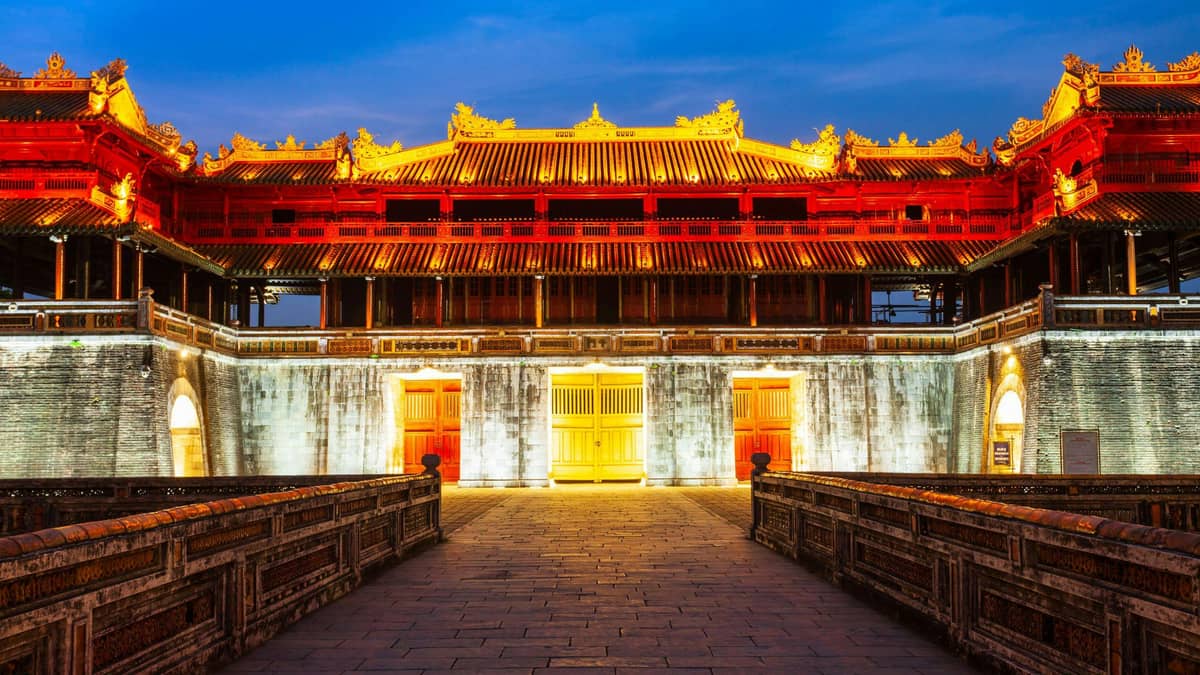
Hue
 Vietnam
Imperial citadels, perfume-river poetry and Vietnam's finest royal cuisine.
Overview
Hue was the seat of Vietnam's Nguyen dynasty for 143 years, and the grandeur lingers in its walled Imperial Citadel, royal tombs set among pine forests, and pagodas rising above the Perfume River. The city suffered heavily during the 1968 Tet Offensive, but decades of restoration have brought much of its heritage back to life. Today Hue is also Vietnam's culinary capital, famous for bun bo Hue noodle soup, banh khoai pancakes and elaborate royal-court tasting menus served in garden restaurants. For expats, Hue offers serious history and culture at a fraction of Hanoi or Saigon prices, with a university town's youthful energy and improving digital infrastructure.
Why Expats Love It
Extraordinary history, world-class street food, very low costs, beautiful river setting, and a cultural depth that keeps rewarding exploration.
Must Dos
The essential, top gem experiences for the full tourist experience.
Imperial Citadel
Explore the vast walled palace complex with its throne halls, gardens and forbidden purple city.
Thien Mu Pagoda
Visit the seven-story icon of Hue perched above the Perfume River.
Tomb of Tu Duc
Wander the pine-shaded royal mausoleum with its pavilions, lake and poetry stele.
Bun bo Hue breakfast
Eat the city's signature spicy beef noodle soup at a market stall.
Perfume River dragon boat
Cruise past pagodas and royal tombs on a traditional dragon-prowed boat.
Dong Ba Market
Dive into the city's largest market for conical hats, spices and local snacks.
Off the Beaten Path
Live like a local. Special, lesser known experiences for adventurers who want real local flavor.
Tomb of Khai Dinh
See the French-influenced mausoleum with its mosaic-covered interior on a wooded hillside.
An Dinh Palace
Visit the rarely toured 1917 royal residence with its blend of Vietnamese and European design.
Thanh Toan Bridge
Cross the 18th-century covered bridge in a rice-farming village outside the city.
Bach Ma National Park
Hike to the summit of the 1,450-m peak for views stretching from the coast to Laos.
Royal cuisine cooking class
Learn to prepare multi-course imperial dishes with a local chef.
Thuy Bieu village
Cycle through the pomelo gardens of this riverside village and try its traditional herbal foot-bath.
Cost of Living
1-Bedroom Apartment (City Center)
$200/mo
3-Bedroom Apartment (City Center)
$380/mo
Restaurant Meal
$2
Monthly Groceries
$90/mo
Monthly Transportation
$25/mo
Monthly Healthcare
$20/mo
Climate
Tropical monsoon; hot and dry March to August, rainy September to January.
Best Time to Visit
February to April
Visa & Residency
Written for US citizens
U.S. passport holders can typically enter Vietnam visa-free for up to 45 days, or obtain an e-visa valid for up to 90 days, generally allowing a single entry though multi-entry e-visas are also commonly available. Vietnam does not currently offer a dedicated digital nomad visa or official retirement visa, so long-stay options are more limited than in some other Southeast Asian countries. Extended stays typically require a work permit tied to employer sponsorship, a business visa, or an investor visa for those establishing a local company. Some expats manage longer residency through repeated visa renewals or border runs, though authorities have tightened enforcement of this practice in recent years. Temporary residence cards are available for those with qualifying employment or family ties. Verify current entry rules and long-stay requirements with the Vietnamese embassy or consulate before relocating.
These notes assume a US passport. If you hold a different nationality, your visa options and timelines may vary. Always confirm current rules with the official embassy or consulate before you commit.
Safety
Very low crime; watch for motorbike traffic and occasional flooding in rainy season.
Healthcare
Hue Central Hospital is one of Vietnam's top public facilities; affordable private clinics available.
Culture & Lifestyle
Culture
Imperial heritage, Buddhist pagodas, royal cuisine, and a poetry tradition that infuses daily life.
Lifestyle
Citadel walks at dawn, street-food crawls, Perfume River boat rides, and weekend trips to Hai Van Pass.
Language
Vietnamese, English
Currency
VND
Timezone
UTC+7