Hamburg
 Germany
Germany's maritime second city, with more bridges than Venice and a green, water-lined quality of life.
Overview
Hamburg is Germany's second largest city and its biggest port, built around the Elbe river and the Alster lakes that sit in the middle of the centre. It has been a trading city for a thousand years, and the merchant history still shows in the red brick warehouse district of Speicherstadt, the Kontorhaus office blocks and a certain understated northern reserve. The city is unusually green and low-rise for its size, with canals, parks and lakeside paths woven through the districts. For foreigners it is a strong base: the economy runs on logistics, media, aviation and a growing tech and startup sector, English is widely used in professional settings, and the standard of public services and transport is high. Neighbourhoods range from the affluent Elbchaussee villas and Eppendorf, through the young and multicultural Sternschanze and St. Pauli, to the redeveloped HafenCity waterfront.
Why Expats Love It
Quality of life is the draw: clean air, water everywhere, excellent public transport, safe streets and easy access to the North Sea and Baltic coasts. Salaries are strong and rent, while not cheap, undercuts Munich and Frankfurt. The music scene is the best in Germany outside Berlin, the Elbphilharmonie has given the city a world-class concert hall, and the international community is large enough that newcomers find footing quickly without needing fluent German from day one.
Must Dos
The essential, top gem experiences for the full tourist experience.
Elbphilharmonie
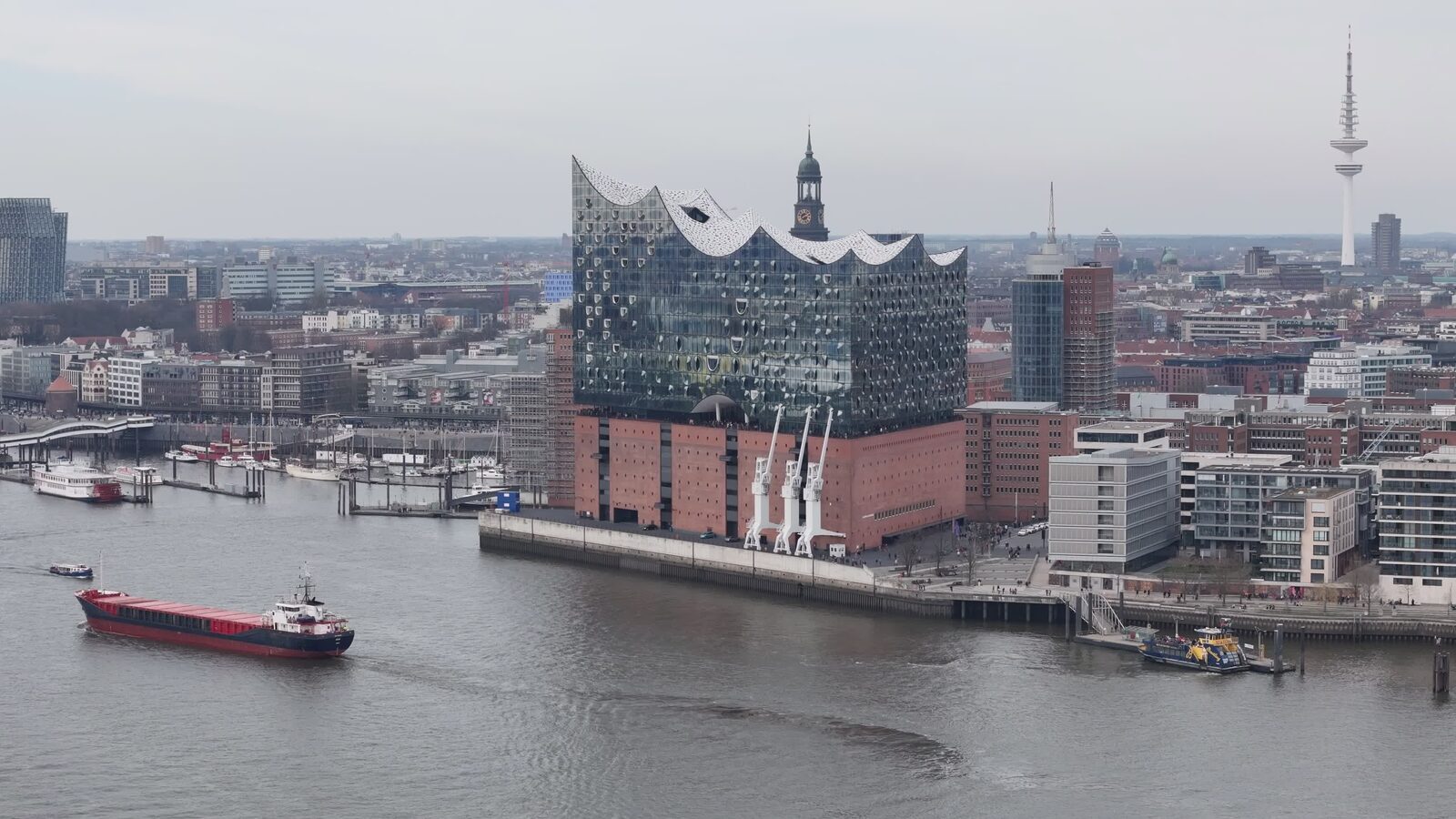
The glass wave on top of an old brick warehouse in HafenCity, with one of the best concert acoustics in the world. Even without a ticket you can ride the long curved escalator up to the free public Plaza at 37 metres for a full circuit view of the harbour and city.
Speicherstadt and Miniatur Wunderland
The world's largest warehouse district, red brick and gothic gables standing on oak piles over the canals, best walked at night when it is floodlit. Inside it sits Miniatur Wunderland, the largest model railway on earth, which is far more absorbing than it sounds and needs booking ahead.
Harbour ferry line 62
Board at Landungsbrucken with an ordinary HVV transit ticket and ride the public ferry to Finkenwerder, passing container terminals, dry docks and the Elbe beaches. It costs the same as a bus and beats every paid harbour cruise.
Sunday Fischmarkt
Running since 1703, the market opens at 05:00 on Sunday and mixes fish and produce traders shouting down their prices with a live band in the Fischauktionshalle and a crowd that has come straight from the Reeperbahn. Go early, eat a Fischbrotchen, leave by nine.
St. Pauli and the Reeperbahn
The famous nightlife mile plus the Beatles-Platz where the band played their formative residencies, and the streets behind it that hold the city's best small music venues. Come for the clubs and the Millerntor stadium atmosphere rather than the strip itself.
Planten un Blomen
The central park that runs from the Dammtor station down to the old ramparts, with a Japanese garden and tropical greenhouses. In summer the Wasserlichtkonzerte water and light shows on the lake run nightly and are free.
Off the Beaten Path
Live like a local. Special, lesser known experiences for adventurers who want real local flavor.
Old Elbe Tunnel
A 1911 tiled tunnel running 24 metres below the river from Landungsbrucken to Steinwerder, reached by huge wooden vehicle lifts. Walking or cycling through is free, the acoustics are startling, and the far side gives the classic postcard view back at the skyline.
Ohlsdorf Cemetery
The largest rural cemetery in the world at nearly 400 hectares, with its own bus lines, ponds, sculpture and woodland. Hamburgers use it as a park, and in spring the rhododendron avenues are extraordinary.
Wilhelmsburg and the Energiebunker
A Second World War flak bunker on the Elbe island of Wilhelmsburg converted into a renewable energy plant with a cafe on the roof terrace. The surrounding district is the city's most multicultural and least visited, with allotment gardens and the Inselpark.
Blankenese Treppenviertel
A former fishing village at the western edge of the city where narrow staircases climb a hillside of captains' houses above the Elbe. There are more than 5,000 steps in the quarter, and the riverside path leads on to the Wittenbergen lighthouse and beach.
Gangeviertel and the Kontorhausviertel
The last surviving fragment of Hamburg's old courtyard housing, squatted in 2009 and now a protected arts quarter, sitting beside the expressionist brick office blocks of the Kontorhausviertel including the ship-shaped Chilehaus. Both are UNESCO listed and both are quiet on a weekday.
Alter Botanischer Garten and the Karolinenviertel
A small botanic garden beside the Messe, backing onto the Karolinenviertel, a low-rise grid of independent shops, vintage dealers and cafes squeezed between the Schanze and the trade fair grounds. It is where locals go when the Schanze feels too busy.
Cost of Living
1-Bedroom Apartment (City Center)
$1150/mo
3-Bedroom Apartment (City Center)
$2100/mo
Restaurant Meal
$18
Monthly Groceries
$330/mo
Monthly Transportation
$65/mo
Monthly Healthcare
$250/mo
Climate
Hamburg has a temperate oceanic climate, cool and changeable, with mild summers around 22C and grey, wet winters that rarely drop far below freezing. Rain is spread through the year and wind off the North Sea is constant, so locals treat a good jacket as basic equipment.
Best Time to Visit
May to September
Visa & Residency
Written for US citizens
Germany is in the Schengen Area, so Americans and many other nationals can enter for 90 days in any 180-day period without a visa. Longer stays require a residence permit, with the EU Blue Card for qualifying skilled workers, the freelance and self-employment permit that Germany grants relatively readily, the job seeker visa, and student permits among the common routes. Americans and a few other nationalities may enter first and apply for the permit at the local Auslanderbehorde within 90 days. Registration of your address, the Anmeldung, is mandatory within two weeks of moving in.
These notes assume a US passport. If you hold a different nationality, your visa options and timelines may vary. Always confirm current rules with the official embassy or consulate before you commit.
Safety
Hamburg is safe by any international measure. The main exceptions are the Reeperbahn nightlife strip in St. Pauli late at night, where drunkenness and aggressive touts are common, and pickpocketing around Hauptbahnhof. Bike theft is widespread, so a heavy lock is worth the money. Cycling infrastructure is good but drivers and cyclists share space more than in the Netherlands, so ride defensively.
Healthcare
Germany's statutory health insurance system covers residents in employment, with contributions split with the employer, while freelancers and higher earners can choose private cover. The Universitatsklinikum Hamburg-Eppendorf is one of Europe's leading teaching hospitals. Finding a general practitioner taking new patients can take patience, and specialist appointments through public insurance often mean a wait, but standards are excellent throughout.
Culture & Lifestyle
Culture
Northern German reserve is real: people are polite, punctual and slow to move from acquaintance to friendship, but relationships once formed are durable. Rules are followed, quiet hours on Sundays and after 22:00 are enforced socially as well as legally, and recycling is taken seriously. Learning German matters for anything beyond the professional bubble, and even modest effort is received well. The city has a strong civic identity and a long liberal, mercantile, outward-looking tradition.
Lifestyle
Life orbits the water. Residents run and cycle around the Aussenalster, swim at the Elbe beaches near Ovelgonne, and take the public ferry line 62 down the harbour as a commuter route and an evening pleasure. Weekend rituals include the Fischmarkt at dawn on Sunday, brunch in Eimsbuttel and long walks in the Planten un Blomen gardens. St. Pauli and the Schanzenviertel supply the nightlife, and the FC St. Pauli football club is a cultural institution in itself.
Language
German, with very high levels of English in business, universities and hospitality
Currency
Euro (EUR)
Timezone
CET (UTC+1), CEST (UTC+2) in summer