Geneva
 Switzerland
The world's diplomatic capital on a lake between the Alps and the Jura, expensive and exceptionally functional.
Overview
Geneva sits at the western tip of Lake Geneva where the Rhone flows out, surrounded on three sides by France. It hosts the European headquarters of the United Nations, the WHO, the Red Cross, CERN and hundreds of NGOs and multinationals, so roughly 40 percent of residents are foreign nationals and English functions almost as a second working language. The city is small, around 200,000 in the commune, walkable and dense, with the old town rising on the left bank around Saint-Pierre cathedral and the international organisations clustered in the Nations quarter on the right. Everything works: trams run to the second, the lake is clean enough to swim in from public bathing platforms, and the Alps are visible from the waterfront with Chamonix an hour away. The cost is that Geneva is one of the most expensive cities on earth, though salaries are correspondingly high and many residents live across the border in France for cheaper housing.
Why Expats Love It
Salaries and safety are both at the top of the global scale, and the concentration of international organisations creates a career ecosystem that exists nowhere else. Public services, transport and healthcare are outstanding. The setting is remarkable, with lake swimming in summer and world-class skiing within ninety minutes. The international community is enormous, schooling in English and French is well provided for, and Geneva airport puts most of Europe within a two-hour flight.
Must Dos
The essential, top gem experiences for the full tourist experience.
Jet d'Eau
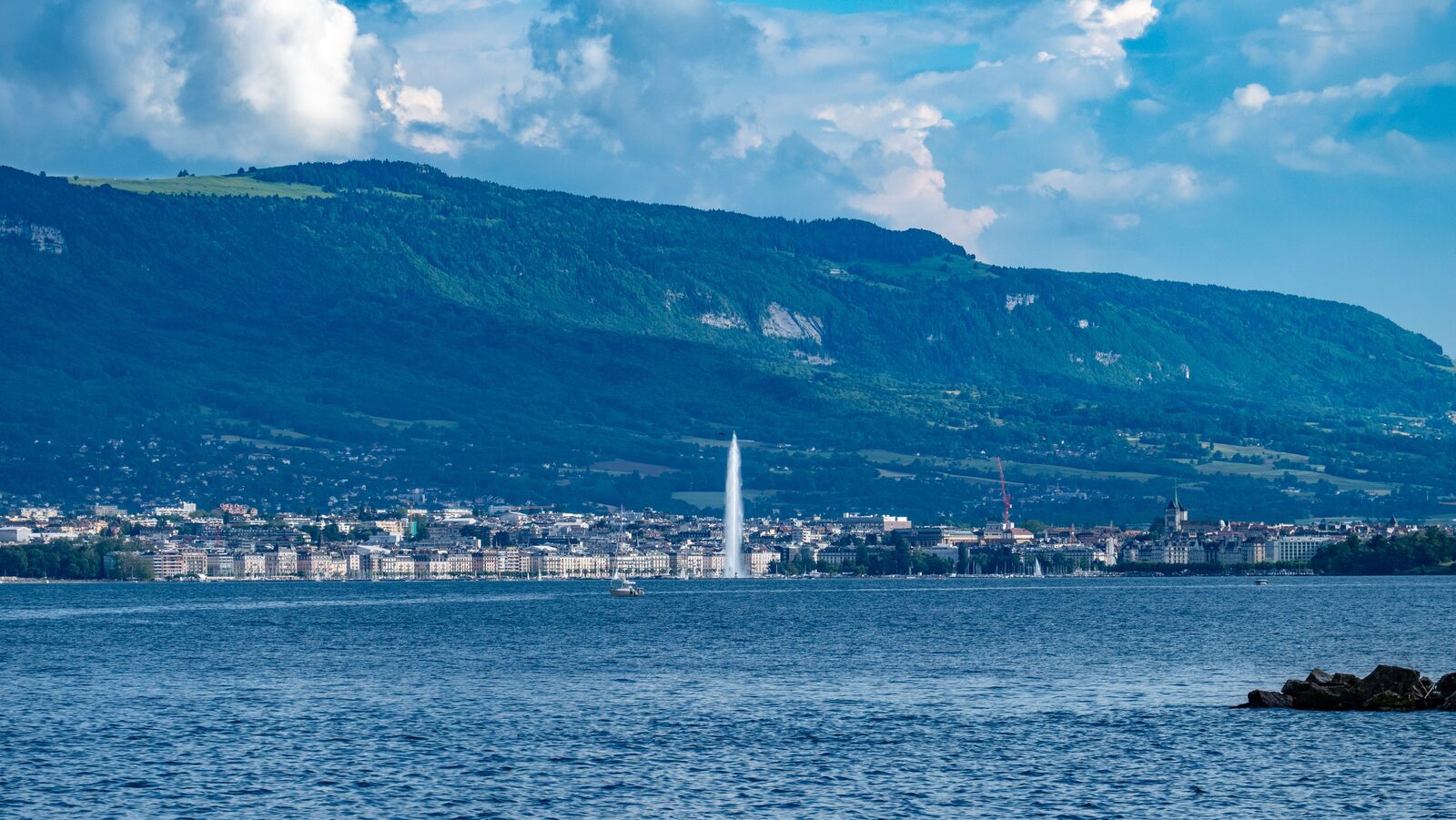
The 140-metre water jet on the lake, pumping 500 litres a second and visible from across the city. Walk out onto the pier for the spray, and time it for sunset when the plume catches the light against the Alps.
Old Town and Saint-Pierre Cathedral
Climb the cathedral towers for a rooftop panorama and visit the archaeological site beneath, then walk the Grand-Rue past Rousseau's birthplace and the longest bench in the world on the Promenade de la Treille.
Palais des Nations
The European headquarters of the United Nations, in the former League of Nations building, open for guided tours through the Assembly Hall and the Council Chamber with its Sert murals. Bring a passport and book ahead.
CERN
Home of the Large Hadron Collider, with a free permanent exhibition in the Science Gateway building designed by Renzo Piano, and guided tours of surface facilities that must be booked well in advance.
Bains des Paquis
A municipal bathing pier from 1932 jutting into the lake, with swimming, saunas, a hammam and a famous fondue counter in winter. It costs a couple of francs and is the most democratic place in an expensive city.
Carouge
A separate town absorbed into the city, laid out by the Kingdom of Sardinia in the eighteenth century in an Italian grid of low houses and courtyards. It has the best independent shops, markets and bars in the area.
Off the Beaten Path
Live like a local. Special, lesser known experiences for adventurers who want real local flavor.
Salve regina walk to Mont Saleve
A cable car from Veyrier just across the French border lifts you to a 1,100-metre ridge with paragliding launches and a full view down onto the lake and across to Mont Blanc. Hiking trails run the length of the ridge.
Parc des Bastions and the Reformation Wall
A 100-metre stone monument to Calvin, Farel, Beze and Knox in a central park where locals play on giant outdoor chessboards. It explains Geneva's role as the Protestant Rome better than any museum.
Musee Ariana
The Swiss museum of ceramics and glass, in a nineteenth-century neo-baroque palace beside the UN, with 20,000 pieces spanning 1,200 years. Entry to the permanent collection is free and it is almost always empty.
Le Bois de la Batie and the Rhone confluence
A wooded park where the milky glacial Arve meets the clear blue Rhone in a visible line of two colours. There is a small free animal park and river paths that few visitors reach.
Yvoire and the French lakeshore
A medieval walled village of stone and flowers on the French side, reachable by lake boat in an hour, with the Jardin des Cinq Sens inside the old castle grounds.
Geneva's international quarter walk
Beyond the Palais des Nations sit the Red Cross Museum, the WTO in a lakeside villa, and dozens of mission buildings flying their flags. The ICRC museum in particular is a serious, unsettling and excellent institution.
Cost of Living
1-Bedroom Apartment (City Center)
$2200/mo
3-Bedroom Apartment (City Center)
$3800/mo
Restaurant Meal
$32
Monthly Groceries
$600/mo
Monthly Transportation
$80/mo
Monthly Healthcare
$450/mo
Climate
Geneva has a temperate climate with warm summers around 26C, cold winters near freezing with occasional snow, and the cold bise wind funnelling down the lake. Lake fog can settle for days in late autumn while the mountains above stay in sun.
Best Time to Visit
May to September for the lake, December to March for skiing
Visa & Residency
Written for US citizens
Switzerland is in the Schengen Area, so Americans and many other nationals can visit for 90 days in any 180-day period without a visa. Working or residing longer requires a permit, and for non-EU nationals these are quota-limited and normally require an employer to demonstrate that no Swiss or EU candidate was available. Common categories are the L short-term permit, the B residence permit and the C settlement permit after several years. Staff of international organisations receive separate legitimation cards. Switzerland has no digital nomad visa. Registration with the commune is required within fourteen days of arrival.
These notes assume a US passport. If you hold a different nationality, your visa options and timelines may vary. Always confirm current rules with the official embassy or consulate before you commit.
Safety
Geneva is very safe with low violent crime, though pickpocketing around Cornavin station and the Paquis district is more common than elsewhere in Switzerland. Paquis is the red-light and nightlife quarter and is best treated with normal urban awareness after dark. Cross-border traffic congestion is the bigger daily frustration. Lake swimming is safe at supervised sites but the Rhone current is strong.
Healthcare
Swiss health insurance is compulsory, bought privately from regulated insurers, and expensive, with premiums varying by canton and deductible. Geneva has among the highest premiums in the country. Care quality is outstanding, with the Hopitaux Universitaires de Geneve among Europe's leading hospitals and no meaningful waiting lists. Subsidies are available to lower-income residents through the canton.
Culture & Lifestyle
Culture
Swiss social norms prize punctuality, discretion, quiet and rule-following, and noise regulations on Sundays and at night are taken seriously. Geneva is more formal and more international than the German-speaking cities, and the local Genevois can be reserved with the transient international population. French is essential outside the UN and NGO bubble. Recycling, waste sorting and neighbourly quiet are not suggestions.
Lifestyle
Summers revolve around the lake, with the Bains des Paquis bathing pier, swimming from the Genthod and Hermance shores and paddleboarding after work. Winters mean the Jura for cross-country and the Alps for downhill, both reachable within the day. Residents shop in France for groceries, walk the old town's antiquarian streets, and use the extensive tram and Leman Express rail network. Sundays are quiet, with shops closed and families walking the lakeside parks.
Language
French, with very widespread English in the international sector
Currency
Swiss Franc (CHF)
Timezone
CET (UTC+1), CEST (UTC+2) in summer