Gdansk
 Poland
A rebuilt Hanseatic port on the Baltic where Solidarity began, with beaches, amber and low costs.
Overview
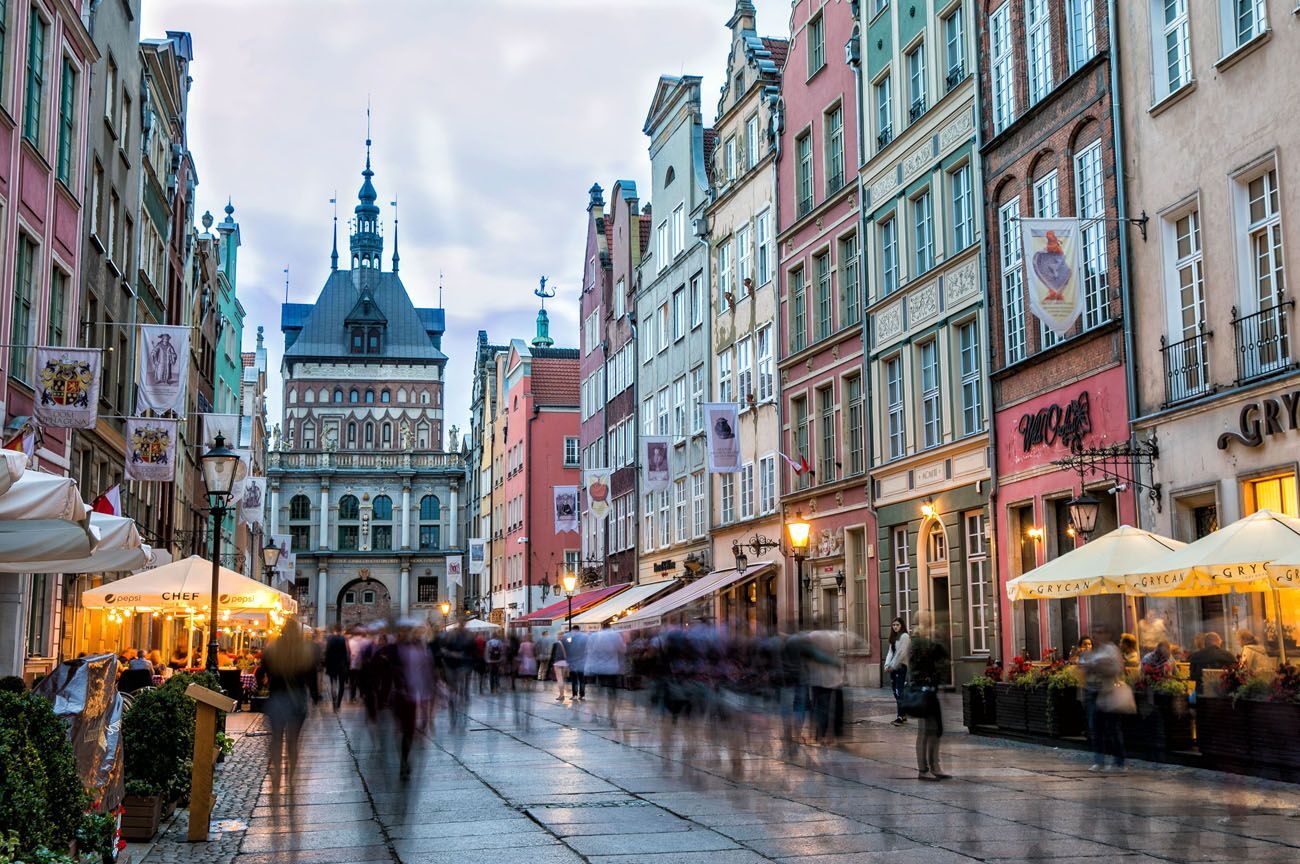
Gdansk was 90 percent destroyed in 1945 and painstakingly reconstructed as the Hanseatic merchant city it had been for six centuries, so the tall narrow facades along Dluga and Dlugi Targ look centuries old but are barely eighty. It sits at the mouth of the Vistula on the Baltic, forming the Tricity with the resort of Sopot and the port of Gdynia, all linked by a fast commuter rail line. This is where the Second World War began at Westerplatte and where the Solidarity movement started in the Lenin Shipyard in 1980, which gives the city an unusual weight of history for its size. Today it is one of Poland's strongest economies, with shipbuilding, logistics, a large IT and business services sector, and a growing startup scene. Beaches run along the whole coastline, the Kashubian lake district is inland, and costs remain low against western Europe.
Why Expats Love It
Poland offers EU membership with costs roughly half of Germany, and Gdansk adds a Baltic coastline, forests and a genuinely beautiful centre. The IT sector pays well and hires in English, healthcare and public transport are good, and the city is safe and clean. Summers are long and light, the beach is a tram ride away, and Berlin, Stockholm and the Baltic states are all short flights. Many foreigners also find the pace calmer and the housing far more attainable than in Warsaw or Krakow.
Must Dos
The essential, top gem experiences for the full tourist experience.
Dlugi Targ and the Neptune Fountain
The reconstructed main square lined with merchant houses, the Golden Gate at one end and the Renaissance Town Hall in the middle. Climb the Town Hall tower for the view along the parallel streets down to the river.
European Solidarity Centre
A rusted steel building at the shipyard gates, holding one of the best modern history museums in Europe, covering the strike of 1980, martial law and the collapse of communism. Lech Walesa keeps an office in the building.
St. Mary's Church
One of the largest brick churches in the world, seating 25,000, with a fifteenth-century astronomical clock and a 405-step tower climb that gives the full panorama of the old town and the port cranes.
Motlawa waterfront and the Zuraw crane
The medieval port crane, the largest in Europe when built, stands on the quay among the reconstructed granaries. Walk the riverside to Granary Island and cross the rotating footbridge in the evening when it is lit.
Westerplatte
The peninsula where the German battleship Schleswig-Holstein opened fire on 1 September 1939, starting the Second World War. Reachable by water tram from the old town, with bunker ruins, a memorial and a good site museum.
Sopot and the wooden pier
Twenty minutes by train, Poland's main seaside resort, with the longest wooden pier in Europe at 511 metres, a wide sandy beach, the crooked house on Monte Cassino street and a lively bar strip.
Off the Beaten Path
Live like a local. Special, lesser known experiences for adventurers who want real local flavor.
Oliwa Cathedral organ
A Cistercian cathedral in the northern district of Oliwa with an extraordinary eighteenth-century organ whose figures move and trumpet during recitals held several times daily. The surrounding park with its palm house is one of the best in northern Poland.
Hel Peninsula
A 35-kilometre sand spit reaching into the Baltic, reachable by summer ferry, with wide empty beaches on both sides, a seal sanctuary and wartime coastal artillery bunkers. Cycling its length is a classic day out.
Wisloujscie Fortress
A sixteenth-century artillery fort guarding the river mouth, rarely visited and only partly restored, with a lighthouse tower inside a ring of bastions. Open seasonally and reachable by bike along the port road.
Zaspa mural district
A postwar housing estate whose concrete blocks carry more than sixty large-scale murals painted by international artists since 1997. It is a free open-air gallery in an ordinary residential neighbourhood.
Malbork Castle
Fifty minutes by train, the largest brick castle in the world and the former headquarters of the Teutonic Knights, a UNESCO site of enormous scale that most Baltic visitors miss entirely.
Kashubian lake district
An hour inland, a region of forests, lakes and its own Kashubian language, with kayaking on the Radunia and Brda rivers, small guesthouses and the ceramics workshops of Kartuzy and Chmielno.
Cost of Living
1-Bedroom Apartment (City Center)
$600/mo
3-Bedroom Apartment (City Center)
$1000/mo
Restaurant Meal
$12
Monthly Groceries
$250/mo
Monthly Transportation
$30/mo
Monthly Healthcare
$60/mo
Climate
Gdansk has a temperate oceanic climate moderated by the Baltic, with mild summers around 23C and cold winters hovering near freezing with regular snow. Sea breezes keep summer comfortable, and daylight stretches past 21:00 in June.
Best Time to Visit
June to September
Visa & Residency
Written for US citizens
Poland is in the Schengen Area, allowing 90 days in any 180-day period visa-free for Americans and many other nationals. Longer stays require a national D visa or a temporary residence permit applied for at the voivodeship office, with routes including employment, the EU Blue Card, business activity, and study. Poland has no dedicated digital nomad visa, so remote workers usually use business registration or a residence permit for other circumstances. Registration of residence and a PESEL number follow arrival.
These notes assume a US passport. If you hold a different nationality, your visa options and timelines may vary. Always confirm current rules with the official embassy or consulate before you commit.
Safety
Gdansk is a safe city with low violent crime. Weekend nightlife in the old town and in Sopot draws large groups and heavy drinking, and pickpocketing rises during the summer Saint Dominic's Fair. Winter pavements ice over and are not always cleared. Cycling infrastructure is good but drivers can be impatient with cyclists outside marked lanes.
Healthcare
Residents contributing to ZUS access the NFZ public system, where quality is decent but specialist waiting lists are long. Most professionals and expats use private networks such as Medicover or LuxMed, which cost a modest monthly fee and give same-week appointments with English-speaking doctors. The University Clinical Centre in Gdansk is the main public hospital and handles complex care well.
Culture & Lifestyle
Culture
Poles are reserved with strangers and warm once past the first threshold, and directness is normal rather than rude. Gdansk has a distinct identity shaped by its German, Polish and Hanseatic past and its Solidarity history, and locals are proud of both. Catholic tradition remains socially visible even as practice declines. Learning Polish is hard but any attempt is met with real appreciation, and it is necessary for offices and older shopkeepers.
Lifestyle
Life divides between the city and the coast. Residents take the SKM train to Sopot for the pier and beach bars, cycle the coastal path to Brzezno and Jelitkowo, and use the Tricity forest park behind the city for running and mushroom picking in autumn. Winter is indoors, with a strong cafe and cultural scene, saunas and the Christmas market. The Motlawa waterfront and Granary Island are where new restaurants and apartments have concentrated.
Language
Polish, with strong English among younger residents and in the IT sector
Currency
Polish Zloty (PLN)
Timezone
CET (UTC+1), CEST (UTC+2) in summer