
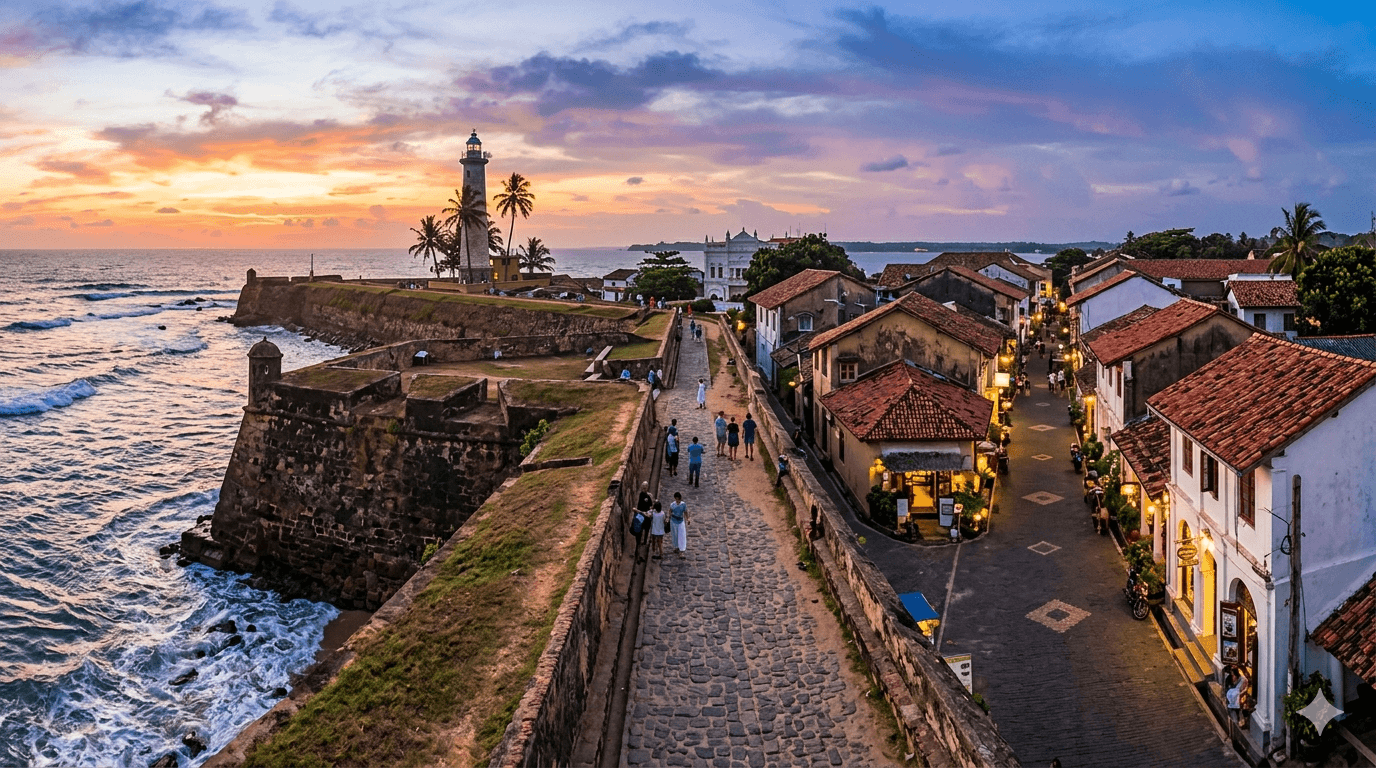
Galle
 Sri Lanka
Colonial fort walls, Indian Ocean surf and slow-cooked Sri Lankan charm.
Overview
Galle Fort, a UNESCO World Heritage site built by the Portuguese and perfected by the Dutch, juts into the Indian Ocean at the southern tip of Sri Lanka's coast. Inside its ramparts, coral-stone streets wind past boutique hotels, gem shops, art galleries and cafes housed in centuries-old merchants' houses. Outside the walls the pace shifts to fishing boats, spice markets and beaches stretching toward Unawatuna and Mirissa. The town's growing remote-work community is drawn by reliable fiber internet in the fort area, the low cost of living and the ability to surf before breakfast and explore ancient temples by afternoon.
Why Expats Love It
UNESCO heritage atmosphere, excellent Sri Lankan cuisine, surf beaches minutes away, and a creative expat community inside the fort.
Must Dos
The essential, top gem experiences for the full tourist experience.
Galle Fort rampart walk
Stroll the 400-year-old walls at sunset as cricket games play out below.
Unawatuna Beach
Swim and snorkel at the sheltered crescent beach five minutes south of the fort.
Dutch Reformed Church
Visit the 1755 church with its ornate floor tombstones and colonial history.
Galle Lighthouse
Photograph Sri Lanka's oldest lighthouse perched at the fort's southeast bastion.
Jungle Beach
Hike down a forested path to a hidden cove between Unawatuna and Galle.
Maritime Archaeology Museum
Explore exhibits on shipwrecks and trade routes inside the old Dutch warehouse.
Off the Beaten Path
Live like a local. Special, lesser known experiences for adventurers who want real local flavor.
Rumassala Peace Pagoda
Climb the hill above Unawatuna to a Japanese-built pagoda with 360-degree ocean views.
Koggala Lake boat safari
Glide past cinnamon islands, bird sanctuaries and a tiny temple island.
Handunugoda Tea Estate
Tour a rare virgin white-tea plantation set in the southern lowlands.
Ahangama stilt fishermen
Watch (or try) the iconic stilt-fishing technique at sunrise near Weligama.
Moon Bastion evening
Join locals for kite-flying and street-food snacks on the fort's quietest corner.
Yatagala Raja Maha Viharaya
Visit a 2,300-year-old rock temple hidden in a coconut grove outside town.
Cost of Living
1-Bedroom Apartment (City Center)
$350/mo
3-Bedroom Apartment (City Center)
$600/mo
Restaurant Meal
$4
Monthly Groceries
$100/mo
Monthly Transportation
$30/mo
Monthly Healthcare
$25/mo
Climate
Tropical; driest and sunniest from December to March. Southwest monsoon May to September.
Best Time to Visit
December to March
Visa & Residency
Written for US citizens
U.S. passport holders can typically enter Sri Lanka with an Electronic Travel Authorization, commonly granting 30 days of tourist stay, with the possibility of extending up to 90 days through the Department of Immigration and Emigration without leaving the country. Sri Lanka does not currently offer a dedicated digital nomad visa, though remote workers sometimes enter on tourist status and extend locally, which carries some legal ambiguity. Long-stay options are limited but include residence visas tied to employment with a Sri Lankan employer, which generally requires employer sponsorship, and a retirement-oriented residence visa for older applicants who can demonstrate sufficient passive income, though specific thresholds should be confirmed with the embassy as requirements can shift. Investment-based residency routes also exist for those committing significant capital to the local economy. Border runs are possible but not officially encouraged as a long-term strategy. Verify all current requirements, income thresholds, and extension procedures with the Sri Lankan embassy or consulate before making relocation plans.
These notes assume a US passport. If you hold a different nationality, your visa options and timelines may vary. Always confirm current rules with the official embassy or consulate before you commit.
Safety
Very safe for travelers; watch for strong ocean currents when swimming.
Healthcare
Karapitiya Teaching Hospital is a major public facility; private clinics available in and around Galle.
Culture & Lifestyle
Culture
Dutch-Portuguese colonial architecture, Sinhalese Buddhist traditions, and a cricket-obsessed sporting culture.
Lifestyle
Morning surf at Unawatuna, work from a fort cafe, and sunset walks along the ramparts.
Language
Sinhala, Tamil, English
Currency
LKR
Timezone
UTC+5:30