Dubrovnik
 Croatia
A walled Adriatic city of limestone streets and island ferries, and a natural base for Croatia's digital nomad visa.
Overview
Dubrovnik is a fortified medieval port on the southern Dalmatian coast, with intact city walls, marble-paved streets, and a setting between mountains and the Adriatic that made it both a UNESCO World Heritage site and a filming location famous enough to reshape its tourism. For remote workers the appeal is Croatia's well-regarded digital nomad visa, a Mediterranean lifestyle at prices below Italy or France, and immediate access to the Elafiti islands, Montenegro, and Bosnia. The honest caveat is seasonality: the old town is overwhelmed by cruise passengers from June to September and much quieter and cheaper the rest of the year, so most long-stay residents live in Lapad, Gruz, or Ploce rather than inside the walls. The city is small, so anyone wanting a larger job market usually looks to Split or Zagreb.
Why Expats Love It
Expats love Dubrovnik for swimming from rocks below their apartment, for a compact and walkable city with genuine history, and for a nomad visa that makes a year-long Mediterranean base straightforward. Off season it becomes a friendly small town with a tight-knit remote work community.
Must Dos
The essential, top gem experiences for the full tourist experience.
Dubrovnik City Walls
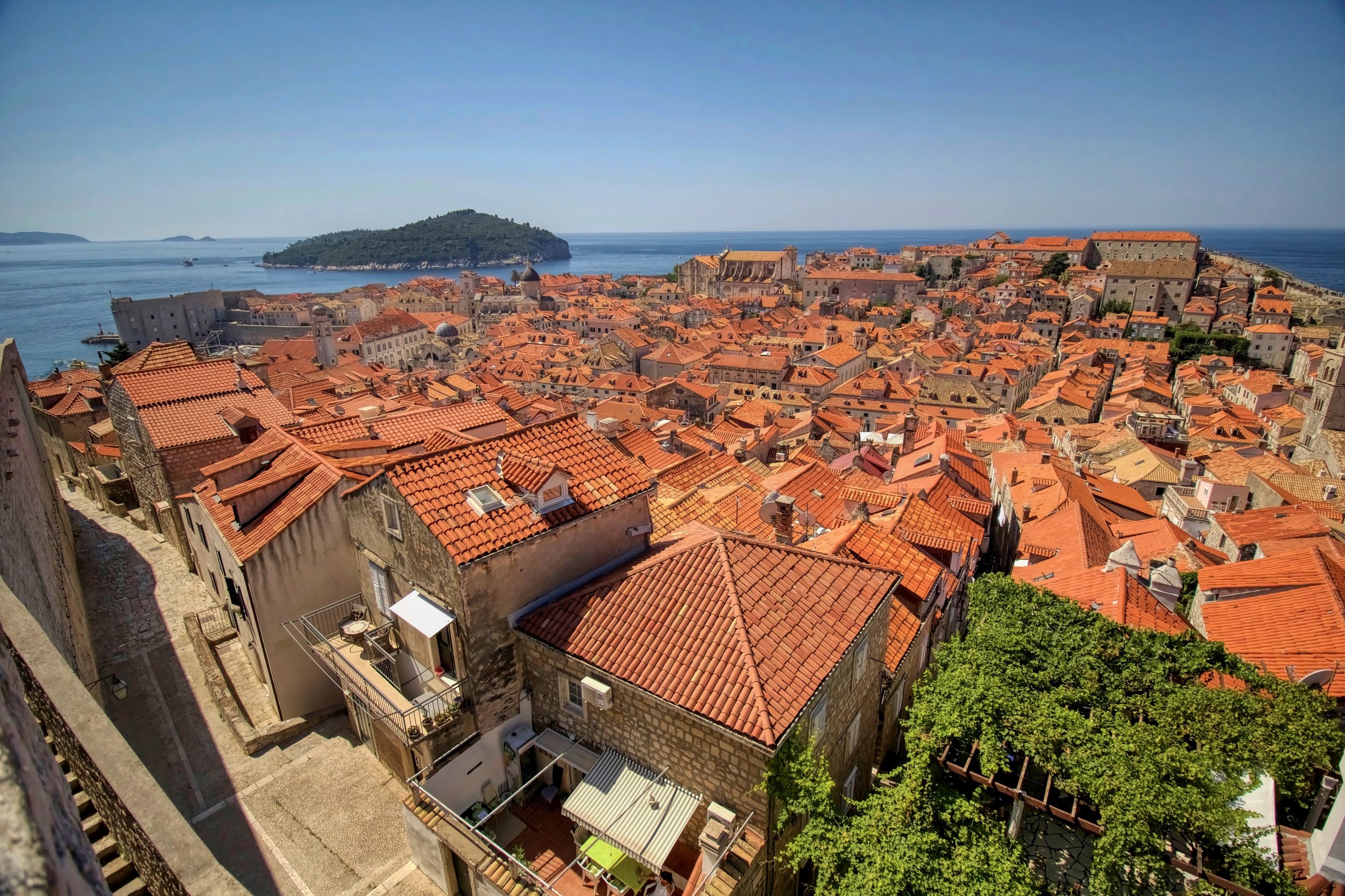
Walk the full two kilometre circuit of the Dubrovnik City Walls at opening time, looking down over the terracotta roofs and out to Lokrum.
Stradun and the Old Town
Stroll Stradun, the polished limestone main street, and step into the Rector's Palace and the Franciscan monastery pharmacy from 1317.
Mount Srd Cable Car
Ride the Mount Srd cable car for the definitive view of the walled city and islands, and walk down the switchback path afterwards.
Lokrum Island
Ferry ten minutes to Lokrum Island for botanical gardens, a saltwater lake, free-roaming peacocks, and swimming off the rocks.
Banje Beach and Buza Bar
Swim at Banje Beach for the classic old town view, then find Buza Bar through a hole in the sea walls for a cliffside drink.
Elafiti Islands Day Trip
Sail to the Elafiti Islands of Lopud, Sipan, and Kolocep, where cars are largely absent and coves stay empty.
Off the Beaten Path
Live like a local. Special, lesser known experiences for adventurers who want real local flavor.
Cavtat
Take the bus or boat south to Cavtat, a quieter waterfront town with a palm promenade, the Racic mausoleum, and better value restaurants.
Trsteno Arboretum
Visit the Trsteno Arboretum, a Renaissance garden estate up the coast with aqueduct-fed fountains and ancient plane trees.
Peljesac Wine Road
Drive the Peljesac peninsula to Dingac and Postup vineyards, then eat oysters on the pier at Mali Ston.
Sipan Island
Spend a slow day on Sipan, the largest Elafiti island, walking between the two villages of Sudurad and Sipanska Luka past olive groves.
Kayaking Under the Walls
Paddle a sea kayak from Pile beach around the walls to Betina cave, which most visitors only see from a boat deck.
Konavle Valley
Explore the Konavle valley inland, where watermills, silk embroidery traditions, and family konobas serve lamb from the peka.
Cost of Living
1-Bedroom Apartment (City Center)
$700/mo
3-Bedroom Apartment (City Center)
$1300/mo
Restaurant Meal
$16
Monthly Groceries
$300/mo
Monthly Transportation
$40/mo
Monthly Healthcare
$80/mo
Climate
Dubrovnik has a Mediterranean climate with hot, dry summers, mild, wet winters, and one of the sunniest records in Europe. Autumn brings heavy rain bursts and the cold bura wind blows in winter.
Best Time to Visit
May to June and September to October
Visa & Residency
Written for US citizens
Croatia is in Schengen, so Americans can stay 90 days in any 180-day period visa-free. Croatia's digital nomad residence permit allows up to a year for non-EU remote workers with proof of foreign employment, roughly 2,500 euros monthly income, health insurance, and a local address, and it is not directly renewable back to back. Confirm current requirements with a Croatian consulate or the local police administration that handles residence.
These notes assume a US passport. If you hold a different nationality, your visa options and timelines may vary. Always confirm current rules with the official embassy or consulate before you commit.
Safety
Dubrovnik is one of the safest cities in Europe with almost no violent crime and low petty theft even in peak season. The main hazards are slippery polished limestone streets in rain, strong sun, and boat and swimming conditions when the bura wind picks up.
Healthcare
Croatia's public system is solid and inexpensive, and Dubrovnik General Hospital handles most needs, though complex specialist care means travelling to Split or Zagreb. Private clinics and dental care are affordable and widely used by visitors.
Culture & Lifestyle
Culture
Dalmatian life is unhurried and relationship-based, with long coffee sittings that are the core social ritual rather than a caffeine stop. Locals are proud of the Republic of Ragusa's independent history, and modest dress is expected in churches.
Lifestyle
Daily rhythm centres on the sea, with a morning swim off the rocks, work from a Lapad or Gruz cafe or coworking desk, and evening drinks on a terrace. Buses and walking cover the city, and weekends mean island ferries, kayaks, or a drive up the Peljesac wine road.
Language
Croatian, with excellent English across tourism and among younger residents
Currency
Euro (EUR)
Timezone
CET (UTC+1)