
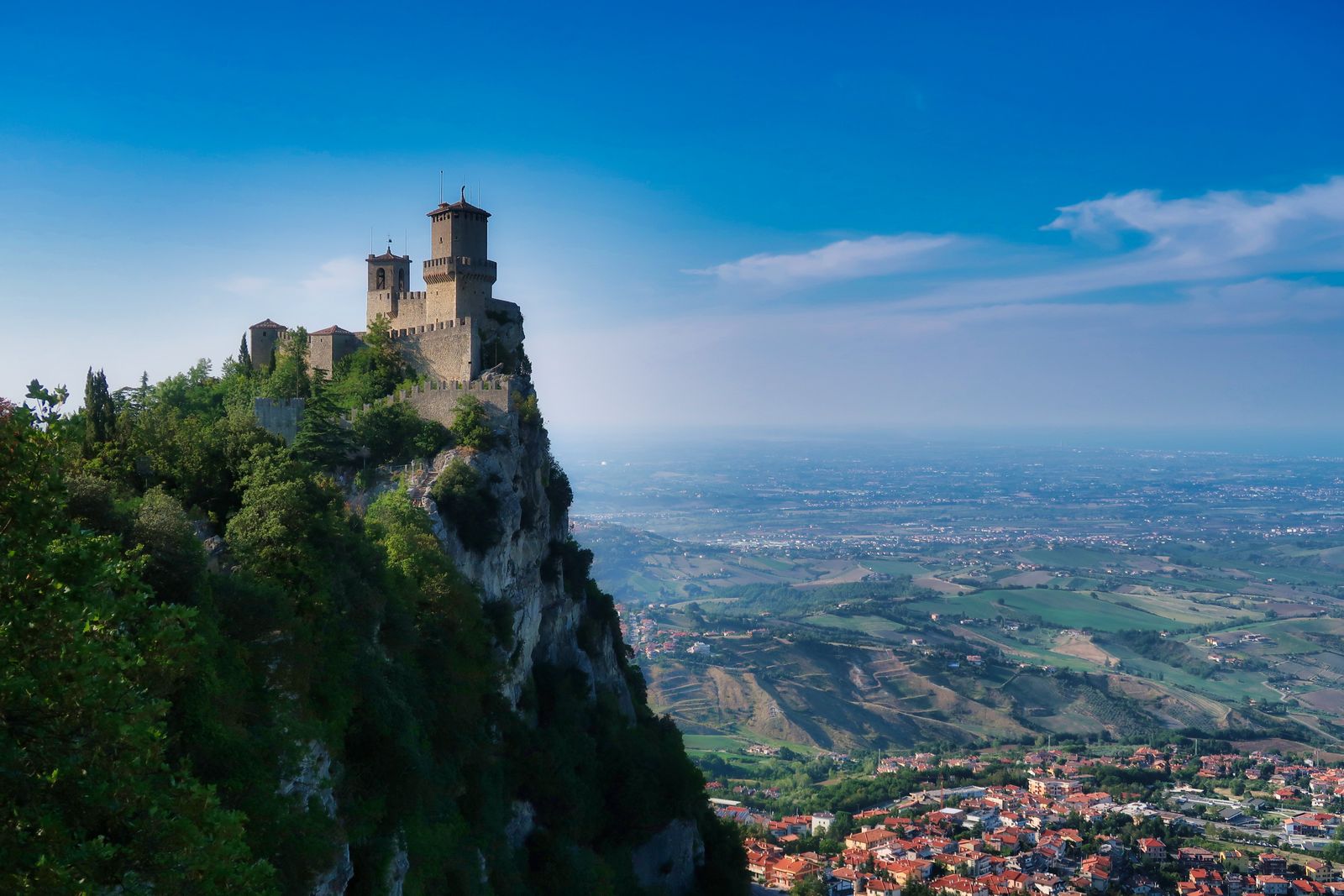
City of San Marino
 San Marino
A mountaintop microstate with medieval views
Overview
City of San Marino is the historic capital of the Republic of San Marino, perched high on Monte Titano above the Romagna plain. It is one of Europe’s smallest capitals, but it feels dramatic and distinctive, with stone lanes, fortified towers, and panoramic viewpoints at nearly every turn. Daily life is quiet, safe, and heavily shaped by tourism, government, and cross border ties with nearby Italy. For Americans seeking a small, orderly base with character, it offers a rare chance to live inside a UNESCO listed old town.
Why Expats Love It
Expats and digital nomads choose City of San Marino for its exceptional safety, beautiful setting, and easy access to Italy, especially Rimini, Bologna, and the Adriatic coast. The lifestyle is calm and scenic, and while the city itself is tiny, nearby Italian cities expand options for coworking, nightlife, shopping, and transport. It suits people who value tranquility over big city buzz.
Must Dos
The essential, top gem experiences for the full tourist experience.
Guaita Tower
Visit the oldest and most iconic of San Marino’s Three Towers, perched on Monte Titano with sweeping views over Emilia-Romagna and the Adriatic on clear days.
Cesta Tower Museum
Climb to the highest of the Three Towers and explore the Museum of Ancient Arms inside the fortress at the summit.
Passo delle Streghe
Walk the scenic ridge path linking Guaita and Cesta, one of the best panoramic walks in the republic.
Piazza della Libertà
Watch the changing of the guard outside the Palazzo Pubblico and take in the grand terrace views from the political heart of the capital.
Basilica di San Marino
Step inside the neoclassical basilica dedicated to Saint Marinus, the spiritual symbol of the republic.
State Museum Visit
Explore the Museo di Stato for archaeological finds, historic artifacts, coins, and artworks that explain San Marino’s long independence.
Off the Beaten Path
Live like a local. Special, lesser known experiences for adventurers who want real local flavor.
Borgo Maggiore Market
Head down to Borgo Maggiore for the traditional market area and a more local feel than the tourist heavy upper town, especially on market mornings.
Montecerreto Trails
Walk the quieter green paths around Montecerreto Park, where locals jog, picnic, and escape the busiest parts of the center.
Contrada del Pianello Early
Wander Contrada del Pianello early in the morning before tour groups arrive, when the old stone street feels like a lived in neighborhood rather than a postcard.
San Francesco Cloister
Visit the small cloister and church of San Francesco for a calmer historic stop with fewer crowds than the main tower circuit.
Borgo Cable Car Ride
Take the funivia between City of San Marino and Borgo Maggiore in late afternoon, when commuters and locals use it and the light over the hills is best.
Serravalle Evenings
Spend an evening in nearby Serravalle for everyday shopping, casual dining, and a clearer sense of how residents live outside the UNESCO center.
Cost of Living
1-Bedroom Apartment (City Center)
$900/mo
3-Bedroom Apartment (City Center)
$1600/mo
Restaurant Meal
$25
Monthly Groceries
$350/mo
Monthly Transportation
$35/mo
Monthly Healthcare
$180/mo
Climate
The city has a humid subtropical to temperate hill climate, with warm summers and cool winters. Because it sits at elevation, it is usually cooler and breezier than the nearby coast, and winter can bring fog, frost, and occasional snow.
Best Time to Visit
May to June, or September to early October
Visa & Residency
Written for US citizens
US passport holders can enter San Marino via Italy under the Schengen rules, typically for up to 90 days within any 180 day period without a visa. San Marino does not operate a fully separate airport based entry system, so your practical immigration framework is Italy and Schengen. For longer stays, residency and permit options are limited and usually tied to work, business, family, or specific residence arrangements, so professional legal guidance is wise.
These notes assume a US passport. If you hold a different nationality, your visa options and timelines may vary. Always confirm current rules with the official embassy or consulate before you commit.
Safety
San Marino is one of the safest places in Europe, with very low violent crime. The main issues are petty theft in tourist areas and careful driving on steep, narrow roads, especially in bad weather.
Healthcare
Healthcare standards are solid, and residents benefit from a well regarded public system, with more specialized care often accessed in nearby Italian cities such as Rimini and Bologna. Expats staying long term usually keep private insurance for faster access and broader cross border options.
Culture & Lifestyle
Culture
Life is formal but friendly, and Italian social norms apply, greet people politely, dress neatly, and respect slower meal times and local holidays. The historic center can feel touristy by day, but local identity is strong and proud, especially around national celebrations and medieval traditions.
Lifestyle
This is a peaceful, scenic, small scale lifestyle where walking, cafés, and weekend drives replace big city energy. It is best for remote workers, retirees, and couples who want beauty and security more than constant entertainment.
Language
Italian
Currency
Euro (EUR)
Timezone
CET (UTC+1)