
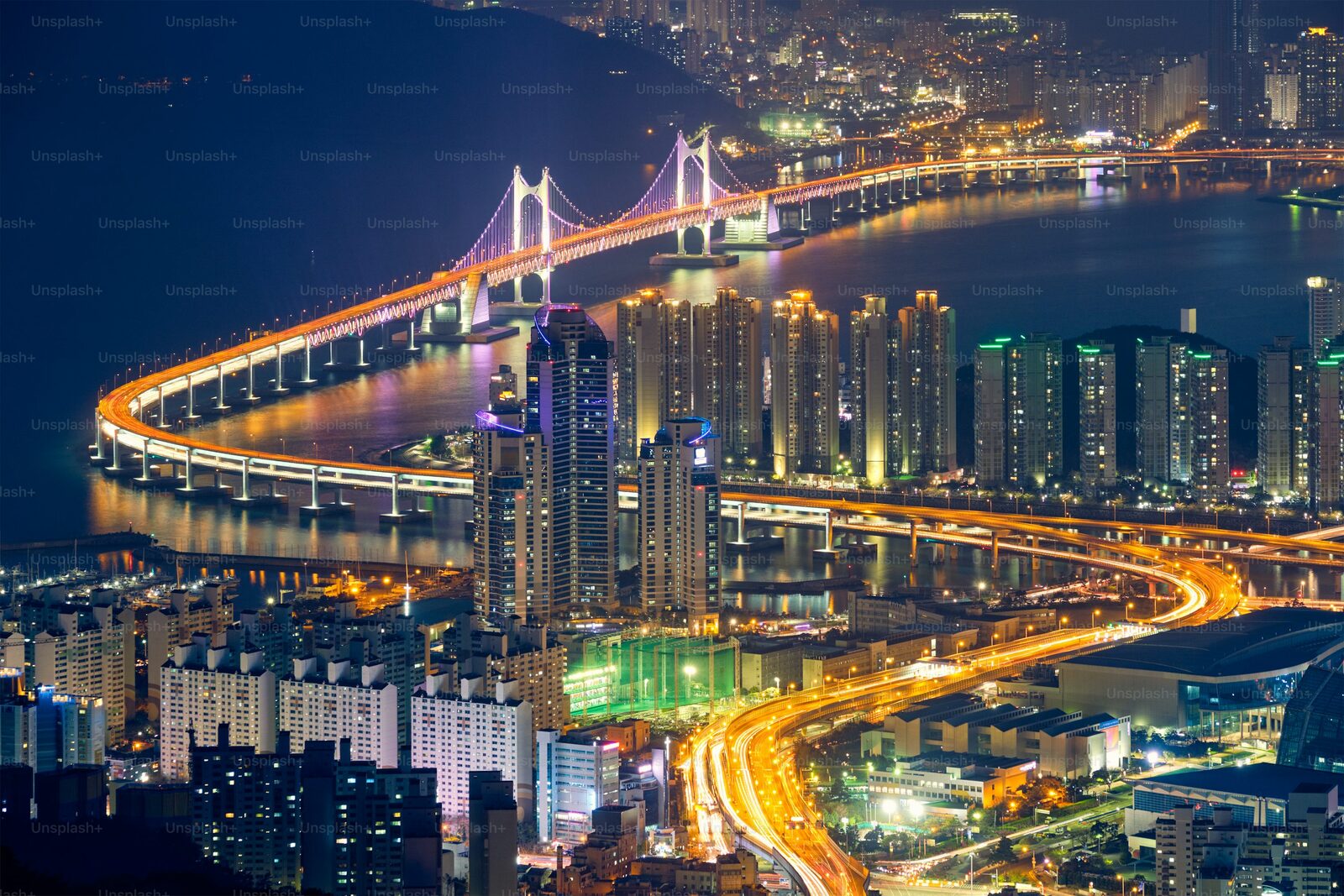
Busan
 South Korea
Korea's beach city where mountains, markets and the sea collide
Overview
Busan is South Korea's second city and its most relaxed, a sprawling port wrapped around beaches, forested ridges and one of Asia's busiest harbours. Life here moves at a gentler pace than Seoul, with locals swapping the capital's intensity for morning swims at Haeundae and long seafood dinners at Jagalchi Market. The city climbs steeply, so neighbourhoods stack up hillsides in bright terraces and sea views come cheap. A strong film culture, excellent transit and genuinely low rents for a developed Asian city make it a quietly compelling base. Foreign residents tend to arrive for a year and stay for several.
Why Expats Love It
Beach living with world-class infrastructure at a fraction of Seoul prices, plus a warm and unhurried local culture.
Must Dos
The essential, top gem experiences for the full tourist experience.
Haeundae and Gwangalli Beaches
Swim in summer and walk the lit promenade under the Diamond Bridge at night. Both have strong cafe scenes year round.
Jagalchi Fish Market
Pick your catch downstairs and have it cooked upstairs. It is the largest seafood market in Korea and the heart of Busan life.
Gamcheon Culture Village
A hillside of painted houses stacked like a mosaic above the harbour. Go early to beat the crowds.
Haedong Yonggungsa Temple
A rare Buddhist temple built directly on the rocks above crashing surf on the northeast coast.
Beomeosa Temple and Geumjeongsan
Combine a mountain temple with a ridge hike along Korea's longest surviving fortress wall.
Busan International Film Festival
Every October the city becomes Asia's most important film gathering, with open air screenings on the beach.
Off the Beaten Path
Live like a local. Special, lesser known experiences for adventurers who want real local flavor.
Igidae Coastal Walk
A cliff path with suspension bridges facing the skyline, far quieter than the tourist beaches.
Songjeong Beach
A surf town at the end of the metro line with board rental, mellow waves and a fraction of Haeundae's crowd.
Bosu-dong Book Alley
Narrow lanes stacked floor to ceiling with secondhand books, some in English, since the Korean War.
Huinnyeoul Culture Village
Whitewashed houses on a cliff above the container port, used constantly as a film location.
Oryukdo Skywalk
A glass platform over the sea where the East Sea officially meets the South Sea.
Ilgwang Beach
A local weekend escape north of the city with grilled clam tents and almost no foreign visitors.
Cost of Living
1-Bedroom Apartment (City Center)
$520/mo
3-Bedroom Apartment (City Center)
$1050/mo
Restaurant Meal
$9
Monthly Groceries
$330/mo
Monthly Transportation
$48/mo
Monthly Healthcare
$95/mo
Climate
Humid subtropical with mild winters, hot humid summers and a short monsoon in July
Best Time to Visit
May, June, September and October for warm dry days and open beaches
Visa & Residency
Written for US citizens
Many nationalities get 90 days visa free with K-ETA. Longer stays run through work visas, the D-8 business visa or the D-10 job seeker visa. Korea has no dedicated digital nomad visa but does offer a workation visa for qualifying remote earners.
These notes assume a US passport. If you hold a different nationality, your visa options and timelines may vary. Always confirm current rules with the official embassy or consulate before you commit.
Safety
Violent crime is rare and walking alone at night is normal. The main risks are summer typhoons and slippery hillside stairs in winter.
Healthcare
Korean hospitals are modern and inexpensive by Western standards. Registered residents join the National Health Insurance Service, which covers most treatment at low cost.
Culture & Lifestyle
Culture
Busan people are known across Korea for blunt speech and open warmth. Drinking culture is central to friendship, seniority shapes conversation, and shoes always come off indoors.
Lifestyle
Mornings at the fish market, afternoons hiking coastal trails, evenings over grilled eel and soju. Weekends mean beach volleyball, temple visits and the KTX to Seoul in under three hours.
Language
Korean, with limited English outside tourist zones
Currency
South Korean Won (KRW)
Timezone
KST (UTC+9)