
Brussels
 Belgium
Europe’s capital with café soul
Overview
Brussels is the best all-around choice in Belgium for expats and digital nomads thanks to its international job market, dense transit network, and deeply multicultural feel. As the de facto capital of the European Union, it blends grand architecture, serious politics, and everyday neighborhood life in a way few cities do. You can spend the morning in a sleek coworking space, the afternoon in an Art Nouveau district, and the evening over Belgian beer in a centuries-old square. It is not the prettiest city at every turn, but it is one of the most livable and globally connected places in the country.
Why Expats Love It
Expats choose Brussels because it has a huge international community, strong English usage in professional settings, and some of the best career options in Belgium, especially in EU institutions, NGOs, tech, consulting, and policy. Digital nomads like how easy it is to live without a car, hop on trains to Paris, Amsterdam, or Cologne, and settle into distinct neighborhoods like Ixelles, Saint-Gilles, and Etterbeek. It feels cosmopolitan without being impossibly large.
Must Dos
The essential, top gem experiences for the full tourist experience.
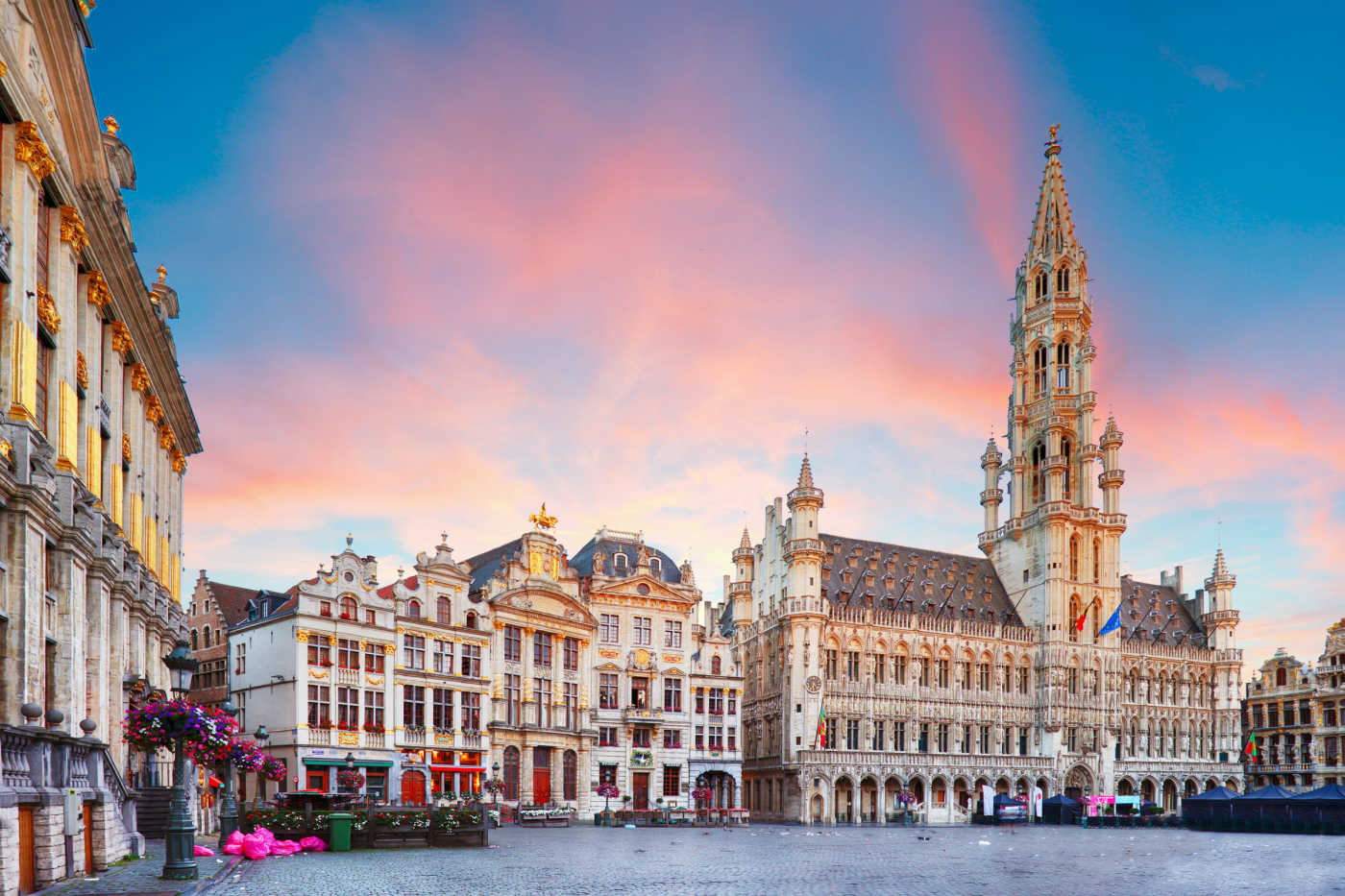
Grand Place Nights
Visit the Grand Place after dark when the guildhalls glow gold and the square feels at its most dramatic. Step into the nearby Galeries Royales Saint-Hubert for historic covered-arcade elegance.
Magritte Museum
See the world’s best concentration of René Magritte works at the Musée Magritte Museum on Place Royale. It gives real context to Belgium’s surrealist legacy beyond the postcard clichés.
Art Nouveau Walk
Explore Victor Horta’s Brussels through the Horta Museum in Saint-Gilles and the townhouse-lined streets around Avenue Louise. The ironwork, stained glass, and flowing interiors are a signature of the city.
European Quarter
Walk around Parc du Cinquantenaire, then see the European Parliament and the Berlaymont in the EU district. This area explains why Brussels matters far beyond Belgium.
Marolles and Flea Market
Browse the daily Jeu de Balle flea market in the Marolles, then climb to Place Poelaert for sweeping city views. The neighborhood shows off a grittier, more local Brussels.
Beer and Frites Crawl
Try classic Belgian beers at Delirium or A La Mort Subite, then compare frites from Maison Antoine or Fritland. Brussels takes both traditions seriously, and locals absolutely have opinions.
Off the Beaten Path
Live like a local. Special, lesser known experiences for adventurers who want real local flavor.
Abbaye de la Cambre
Wander the peaceful grounds and ponds of La Cambre Abbey near Ixelles, a local favorite for quiet walks. It feels far removed from the EU quarter even though it is not far away.
Châtelain Wednesday Market
Head to Place du Châtelain on Wednesday evening for one of the city’s best after-work markets. Locals gather for oysters, wine, and street food before spilling onto nearby terraces.
Altitudes 100 Charm
Explore the leafy Altitude 100 area in Forest, where Art Deco buildings, cafés, and the roundabout create a village-like feel. It is a great place to see how residents actually live beyond the center.
Bois de la Cambre Mornings
Rent a bike or walk through Bois de la Cambre early in the day when joggers and dog walkers take over the paths. On sunny weekends, the park becomes one of the city’s most social outdoor spaces.
Parvis de Saint-Gilles
Spend an evening around Parvis de Saint-Gilles, where neighborhood bars and bakeries mix old Brussels character with creative energy. It is one of the best areas to understand the city’s everyday rhythm.
Train World Detour
Visit Train World in Schaerbeek, an unexpectedly excellent museum set in and around the historic station. The area also rewards a walk for its grand avenues and lesser-known Art Nouveau facades.
Cost of Living
1-Bedroom Apartment (City Center)
$1400/mo
3-Bedroom Apartment (City Center)
$2300/mo
Restaurant Meal
$28
Monthly Groceries
$380/mo
Monthly Transportation
$58/mo
Monthly Healthcare
$120/mo
Climate
Brussels has a temperate maritime climate with mild summers, cool winters, and frequent gray skies. Rain is spread throughout the year, so locals dress in layers and always keep a compact umbrella handy.
Best Time to Visit
May to September
Visa & Residency
Written for US citizens
US passport holders can enter Belgium and the Schengen Area visa-free for up to 90 days within any 180-day period for tourism or business visits. For longer stays, Americans typically need a residence permit tied to work, study, family reunification, or self-employment status, and the process usually starts before or soon after arrival depending on the permit type. Belgium does not offer a simple dedicated digital nomad visa, so remote workers should verify whether their planned stay fits local immigration and tax rules.
These notes assume a US passport. If you hold a different nationality, your visa options and timelines may vary. Always confirm current rules with the official embassy or consulate before you commit.
Safety
Brussels is generally safe for daily life, but petty theft and pickpocketing are common in busy tourist zones and around major train stations like Bruxelles-Midi and Bruxelles-Central. Some outer districts feel rougher late at night, so use normal big-city awareness, especially after dark.
Healthcare
Belgium has a strong healthcare system with excellent hospitals and specialists, including major facilities in Brussels. Expats usually combine mandatory local coverage, when applicable, with supplementary private insurance for faster access, broader reimbursement, and English-speaking support.
Culture & Lifestyle
Culture
Brussels is bilingual on paper and multilingual in practice, with French heard more often in daily life and Dutch visible on signs and official services. People value politeness, punctuality for work, and a clear separation between public formality and relaxed social time.
Lifestyle
Life in Brussels revolves around neighborhood cafés, weekly markets, parks, and easy rail travel across Belgium and nearby countries. It suits people who want an international professional environment, strong food and beer culture, and a city that feels urban without being overwhelming.
Language
French and Dutch, English widely used in expat and EU circles
Currency
Euro (EUR)
Timezone
CET (UTC+1)