
Bruges
 Belgium
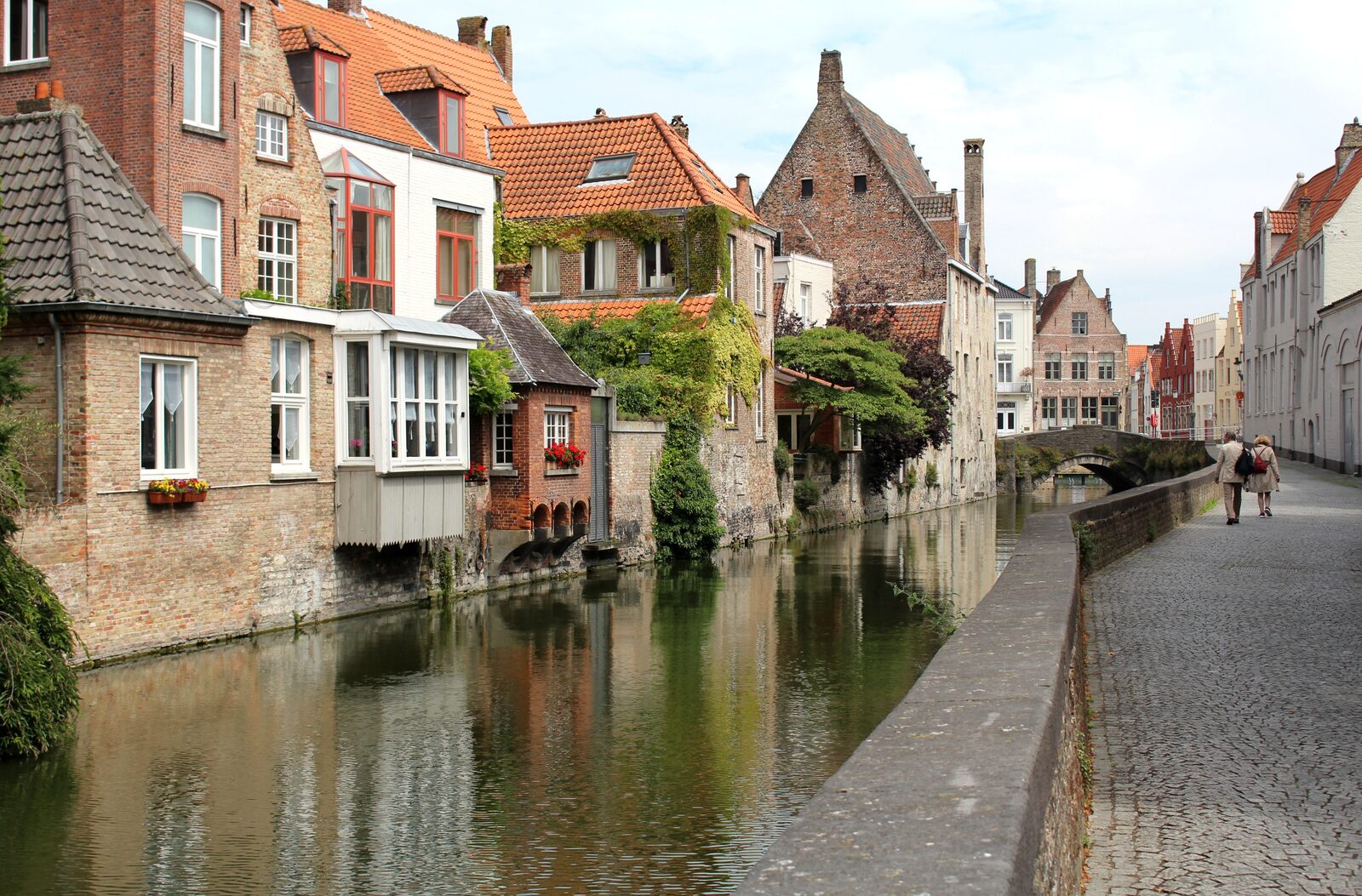
A near-intact medieval trading city of canals and brick gables, small enough to know completely.
Overview
Bruges was one of the wealthiest cities in Europe in the thirteenth and fourteenth centuries, a wool and cloth trading hub connected to the North Sea by the Zwin inlet. When the inlet silted up the money left, and the city fell into a long dormancy that accidentally preserved it. The result is a UNESCO-listed historic centre of canals, step-gabled brick houses, almshouses and a fifteenth-century skyline almost untouched by industrialisation or war. It is small, with roughly 120,000 residents in the wider municipality and far fewer inside the ring canal, so daily life is entirely walkable and cyclable. Tourism dominates the centre in daylight hours but drains away by evening, and quieter districts like Sint-Anna and Ezelstraat remain genuinely residential. Brussels and Ghent are under an hour by train, and Lille, Antwerp and the coast are all close.
Why Expats Love It
It offers exceptional quality of life at a scale that removes commuting entirely, with Belgian public services, healthcare and food culture behind it. Housing is cheaper than Brussels or Antwerp, the city is safe and clean, and the North Sea beaches at Ostend and Knokke are twenty minutes by train. People who choose Bruges usually want calm, beauty and a small community rather than urban intensity, and they get very fast access to the rest of northwest Europe through the Belgian rail network and the Eurostar from Brussels.
Must Dos
The essential, top gem experiences for the full tourist experience.
Belfry of Bruges
Climb the 366 steps of the thirteenth-century belfry over the Markt for the view across the whole medieval core and the polder beyond. The carillon of 47 bells is still played by hand several times a week and the stairwell narrows sharply near the top.
Groeningemuseum
A compact but exceptional collection of Flemish Primitives, including Jan van Eyck's Madonna with Canon van der Paele and works by Memling, Bosch and David. It takes ninety minutes and explains why this small city mattered so much to European painting.
Begijnhof and Minnewater
The whitewashed Ten Wijngaarde beguinage, founded in 1245 and now home to Benedictine nuns, set around a courtyard that fills with daffodils in spring. It adjoins the Minnewater lake and park at the southern edge of the ring canal.
Canal boat and the Rozenhoedkaai
Take a thirty-minute boat from one of the five landing stages for the water-level view of the gabled backs of the houses, then walk to the Rozenhoedkaai corner for the classic view of the belfry reflected in the canal.
Sint-Janshospitaal and the Memling collection
One of Europe's oldest surviving hospital buildings, with medieval wards, an apothecary and six masterpieces by Hans Memling including the Shrine of Saint Ursula. Quieter than the Groeningemuseum and arguably more atmospheric.
Cycle to Damme
A flat six-kilometre ride along the tree-lined Damse Vaart canal to the small town of Damme, once Bruges's outer harbour. Bikes rent cheaply near the station, and the route continues to the Dutch border if you want a longer day.
Off the Beaten Path
Live like a local. Special, lesser known experiences for adventurers who want real local flavor.
Sint-Anna quarter and the Jerusalem Chapel
East of the centre, this residential district holds the fifteenth-century Jerusalem Chapel built by a merchant family after a pilgrimage, with a black marble tomb and a replica of the Holy Sepulchre. The neighbouring lace centre still runs demonstrations by working lacemakers.
Sint-Sebastiaansgilde archers' guild
A crossbow and longbow guild in continuous existence since the fifteenth century, with a garden range where members still shoot vertically at a target on a high mast. The clubhouse museum opens limited hours and receives few visitors.
De Halve Maan brewery pipeline
The family brewery in the centre pipes its beer three kilometres underground to a bottling plant outside the historic core, avoiding truck traffic. The tour ends on the roof with a view over the city, and the pipeline story is a genuinely good piece of modern civic engineering.
Bonne Chiere and Sint-Janshuis windmills
Four windmills stand on the eastern ring canal embankment, of which Sint-Janshuis still grinds flour and opens to visitors. The grass rampart walk connecting them is where locals run and walk dogs, with no tourists at all.
Zeebrugge and the coastal tram
Twenty minutes north sits the working port of Zeebrugge and the start of the Kusttram, the longest tram line in the world, running 68 kilometres along the entire Belgian coast for a few euros. Ride it to Ostend or the Zwin nature reserve.
Brugse Zot and the brown cafes of Langestraat
Skip the Markt entirely and drink where residents do, along Langestraat and Ezelstraat, in unrenovated cafes with hundreds of Belgian beers and no menu in English. Herberg Vlissinghe, open since 1515, claims to be the oldest pub in the city.
Cost of Living
1-Bedroom Apartment (City Center)
$800/mo
3-Bedroom Apartment (City Center)
$1300/mo
Restaurant Meal
$22
Monthly Groceries
$330/mo
Monthly Transportation
$50/mo
Monthly Healthcare
$130/mo
Climate
Bruges has a temperate maritime climate, cool and damp, with summers around 21C and mild wet winters. Grey days are frequent and coastal wind is persistent, but hard frost and snow are uncommon.
Best Time to Visit
April to June, and September to October
Visa & Residency
Written for US citizens
Belgium is in the Schengen Area, so Americans and many other nationals can stay 90 days in any 180-day period without a visa. Longer stays require a type D national visa arranged before arrival, with routes including the single permit for skilled employment, the EU Blue Card, the professional card for self-employed activity, and student permits. All residents must register with the local commune within eight days of arrival to obtain a residence card. Confirm requirements with a Belgian consulate as regional rules differ between Flanders, Wallonia and Brussels.
These notes assume a US passport. If you hold a different nationality, your visa options and timelines may vary. Always confirm current rules with the official embassy or consulate before you commit.
Safety
Bruges is among the safest cities in Europe, with violent crime close to nonexistent. Pickpocketing in the Markt and Burg squares during peak season is the main risk, along with bike theft. Cobbled streets are hard on ankles and bicycle tyres, and canal edges have no railings in many places, which matters if you are out late.
Healthcare
Belgium runs a compulsory insurance system through mutualites, with patients typically paying up front and being reimbursed most of the cost. Care is high quality, waiting times are short by European standards and you can go directly to specialists without a referral. AZ Sint-Jan Brugge is a large regional hospital with a strong reputation, and English-speaking doctors are readily available.
Culture & Lifestyle
Culture
Flemish social life is private and home-centred, and friendships form slowly, often through clubs, sport or children's schools rather than spontaneous encounters. Learning Dutch is genuinely important in Flanders, where language politics run deep and speaking French to a Fleming can land badly. Bruges locals are used to visitors and warm once they understand you live there rather than passing through. Food, beer and cycling are the three reliable common grounds.
Lifestyle
Life is small-scale and seasonal. Residents cycle everywhere, shop at the Wednesday Markt and Saturday 't Zand markets, and drink in brown cafes rather than tourist bars. Summer means the coast tram along the whole Belgian shoreline, cycling the polder canals to Damme, and long evenings in the Minnewater park. Winter brings the Christmas market, cold Trappist beers and the sense of having the city back to yourself.
Language
Dutch, specifically West Flemish, with very high levels of English and widespread French
Currency
Euro (EUR)
Timezone
CET (UTC+1), CEST (UTC+2) in summer