Bordeaux
 France
An eighteenth-century stone city on the Garonne, wine capital of the world and two hours from Paris by train.
Overview
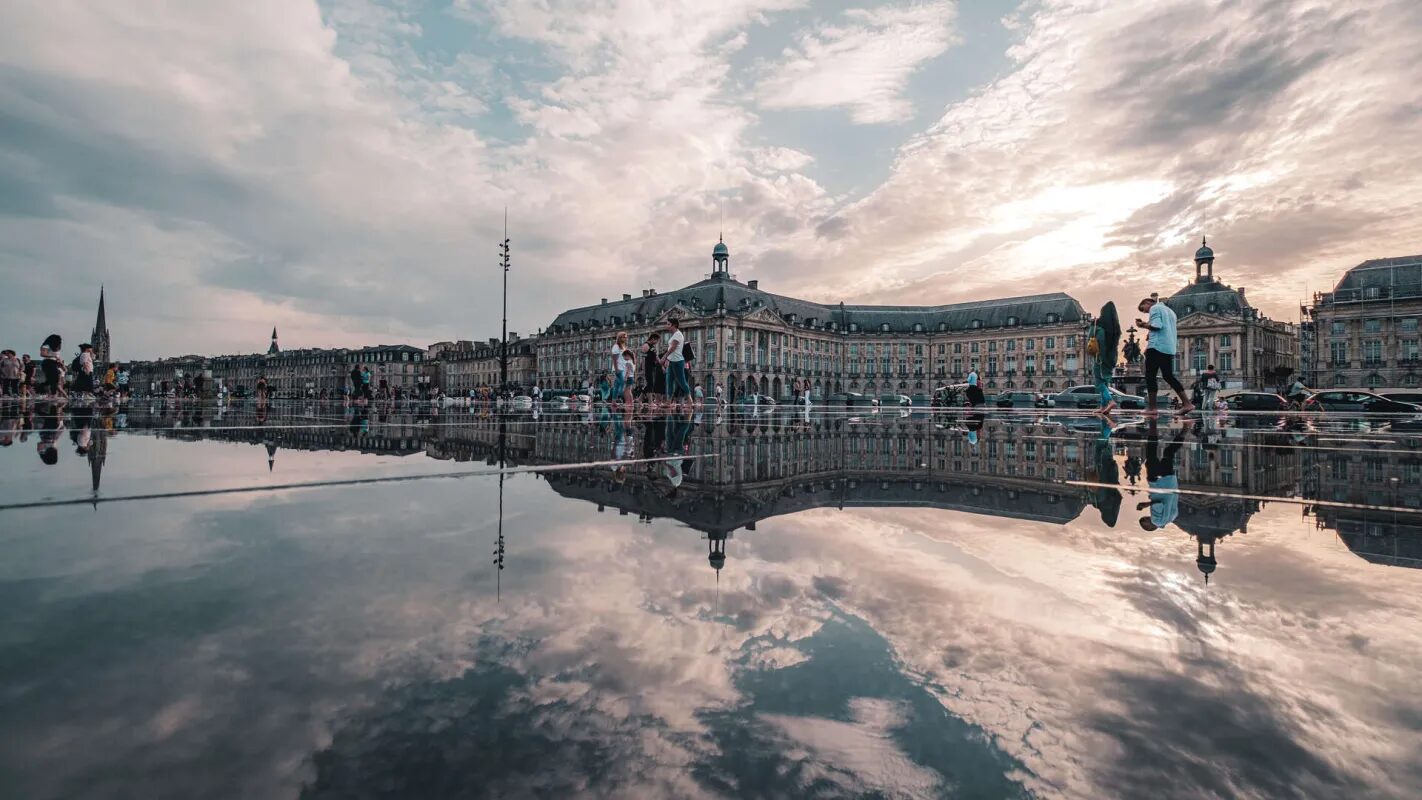
Bordeaux spent the 1990s and 2000s scrubbing two centuries of soot off its limestone facades and pedestrianising its centre, and the transformation produced one of the largest UNESCO-listed urban areas in the world. The city is built in a consistent honey-coloured stone along a crescent bend of the Garonne, with the vast Place de la Bourse and its mirror-pool Miroir d'Eau at its heart. The wine trade underpins everything, with more than 6,000 chateaux in the surrounding region and the Cite du Vin museum anchoring a redeveloped riverfront. A large student population from the University of Bordeaux keeps the bar and music scene lively, and the LGV high-speed line put Paris just over two hours away in 2017, which triggered a wave of relocation from the capital. The Atlantic surf beaches at Lacanau and Arcachon are under an hour, and Spain is two hours south.
Why Expats Love It
It combines a genuinely beautiful, walkable, tram-served city with Atlantic beaches, vineyards and the Pyrenees within reach, at costs well below Paris. The wine industry provides an internationally minded professional community, the food is superb, and the climate is milder and greener than the Mediterranean south. Remote workers value the fast Paris link and the airport's European connections, and families are drawn by the schools, parks and low crime.
Must Dos
The essential, top gem experiences for the full tourist experience.
Place de la Bourse and the Miroir d'Eau
The classical eighteenth-century facade reflected in the world's largest reflecting pool, which cycles through mirror, drained and mist phases. Come at dusk when it is lit, and expect children playing in it all summer.
La Cite du Vin
A curving building meant to evoke wine swirling in a glass, holding an genuinely well-designed interactive museum of world wine culture, ending with a tasting on the eighth-floor belvedere with a river panorama.
Saint-Emilion day trip
A medieval hilltop wine village 40 minutes east, built over a network of limestone quarries, with a monolithic church carved directly into the rock and dozens of chateaux offering tastings. Trains run from Bordeaux Saint-Jean.
Marche des Capucins
The city's main covered market, open Tuesday to Sunday mornings, where locals eat oysters and white wine at the counter from around 08:00. Go on a Saturday and treat it as breakfast.
Rue Sainte-Catherine and the Golden Triangle
The longest pedestrian shopping street in Europe at 1.2 kilometres, ending near the Grand Theatre and the Golden Triangle of eighteenth-century mansions, antique dealers and the Musee des Beaux-Arts.
Dune du Pilat and Arcachon
The tallest sand dune in Europe at over 100 metres, an hour west by train and bus, with pine forest on one side and the Atlantic on the other. Combine it with oysters at Cap Ferret or the Arcachon seafront.
Off the Beaten Path
Live like a local. Special, lesser known experiences for adventurers who want real local flavor.
Base Sous-Marine
A colossal Nazi submarine bunker in the Bacalan docks, its concrete too thick to demolish, now used for immersive digital art projections across the water basins inside. The scale of the structure is more impressive than the art.
Darwin Ecosysteme
A former military barracks on the right bank converted into a co-working, skatepark, organic grocery and street art complex. It is the counterculture answer to the polished left bank and has the best casual food in the city.
Bassins des Lumieres and the Chartrons antique quarter
North of the centre, Chartrons was the wine merchants' district and still holds their warehouses, now antique shops and the Sunday quayside market. Walk the Rue Notre-Dame end to end.
Cap Sciences and the Pont Jacques Chaban-Delmas
The largest vertical lift bridge in Europe, whose central span rises to let cruise ships pass, an event announced in advance and worth timing a walk around.
Le Jardin Public and the natural history museum
An eighteenth-century English-style park in the centre with a botanic garden, a puppet theatre and a small, beautifully restored natural history museum that few visitors find.
Bordeaux by cycling the Roger Lapebie greenway
A 55-kilometre disused railway line converted to a flat cycle path running from the city into the Entre-deux-Mers vineyards, passing through old station buildings, tunnels and villages with tasting rooms.
Cost of Living
1-Bedroom Apartment (City Center)
$800/mo
3-Bedroom Apartment (City Center)
$1500/mo
Restaurant Meal
$20
Monthly Groceries
$320/mo
Monthly Transportation
$45/mo
Monthly Healthcare
$90/mo
Climate
Bordeaux has a temperate oceanic climate with warm summers around 27C, mild damp winters and reliable rainfall, which is precisely what the vineyards need. Atlantic weather systems make conditions changeable, and late spring frosts are a recurring worry for growers.
Best Time to Visit
May to June, and September to October during the grape harvest
Visa & Residency
Written for US citizens
France is in the Schengen Area, permitting 90 days in any 180-day period without a visa for Americans and many other nationals. Long stays require a long-stay visa obtained before arrival, including the visiteur visa for financially self-sufficient people not working locally, the passeport talent for skilled workers and founders, the profession liberale route for freelancers, and student visas. Most long-stay visas require online validation with OFII within three months of arrival.
These notes assume a US passport. If you hold a different nationality, your visa options and timelines may vary. Always confirm current rules with the official embassy or consulate before you commit.
Safety
Bordeaux is a safe city with low violent crime. Pickpocketing occurs on the trams and around Place de la Victoire, and the student nightlife area around Saint-Michel and Victoire gets rowdy at weekends. Bike theft is common. The riverfront quays are well lit and busy into the evening. Occasional national protest movements bring central road closures and some disruption.
Healthcare
Residents access the French system through PUMA after three months of stable residence, usually adding a mutuelle to cover the remaining share. The CHU de Bordeaux is a major teaching hospital group with strong specialist departments. Appointments are booked easily through online platforms, waiting times are short by European standards, and pharmacies handle a wide range of minor issues directly.
Culture & Lifestyle
Culture
Bordeaux has a reputation within France for being bourgeois and slightly reserved, a legacy of the wine merchant class, though the student population offsets this considerably. Formality matters: greet shopkeepers with bonjour on entering, use vous until invited otherwise, and respect the long lunch closure. French is essential outside the wine and tech sectors. Wine knowledge is social currency, but pretension is not, and asking honest questions is welcomed.
Lifestyle
Life runs along the river and the tram lines. Residents jog the quays, drink on the terraces of Place du Parlement and the Chartrons district, and shop the Marche des Capucins on weekend mornings. Saturdays often mean a drive into the Medoc or Saint-Emilion for tastings, and summer weekends mean the Dune du Pilat and the oyster shacks of the Arcachon basin. The city empties somewhat in August.
Language
French, with English common in the wine trade and among students
Currency
Euro (EUR)
Timezone
CET (UTC+1), CEST (UTC+2) in summer