Bilbao
 Spain
Spain
A post-industrial Basque city transformed by architecture, with green hills, world-class food and Atlantic weather.
Overview
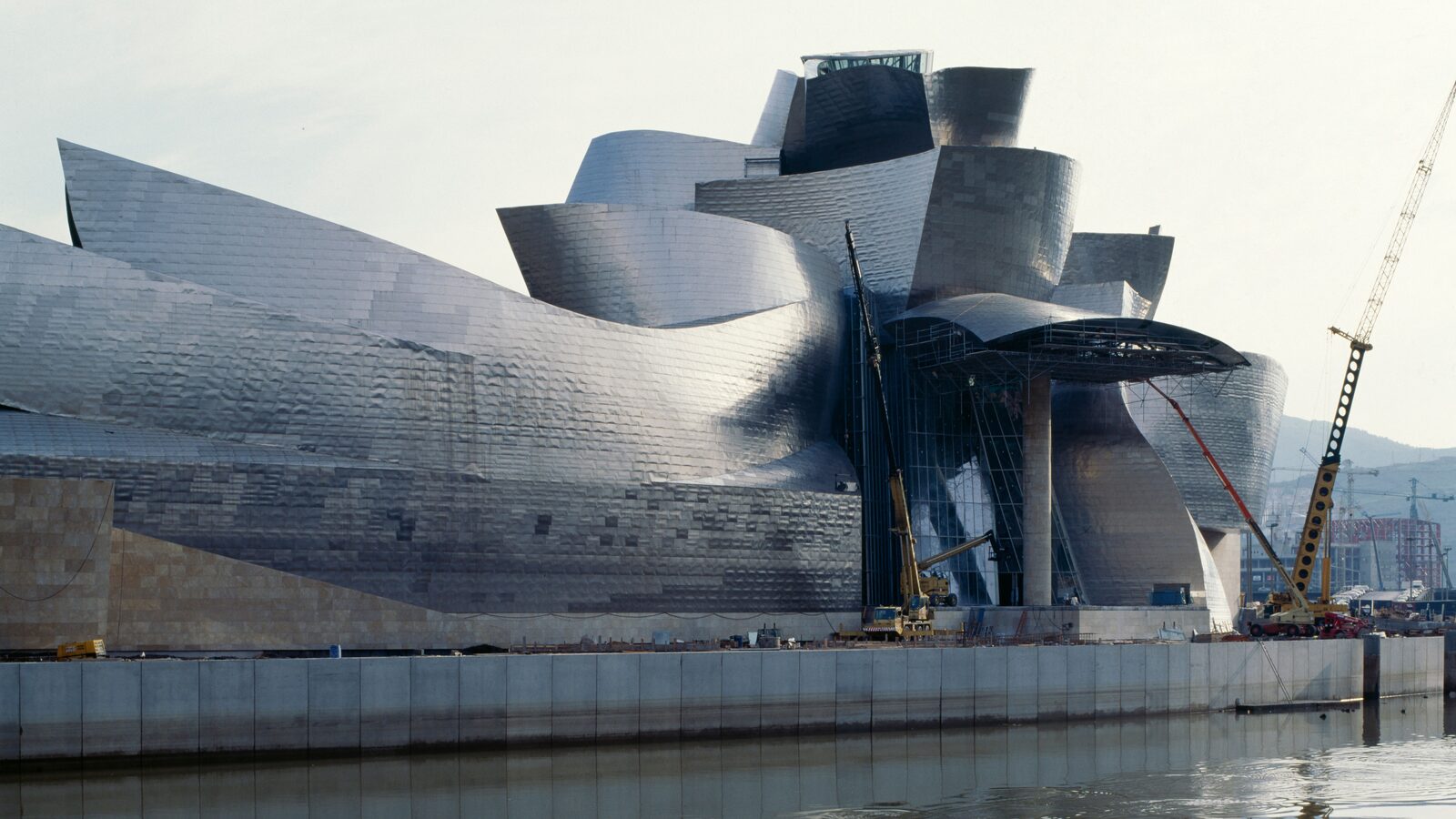
Bilbao was a heavy industry and shipbuilding city whose economy collapsed in the 1980s, leaving a polluted river and mass unemployment. The regeneration that followed, anchored by Frank Gehry's Guggenheim in 1997, became the textbook case of culture-led urban renewal. The river was cleaned, the docks were converted, Norman Foster designed the metro and Santiago Calatrava the airport and a footbridge. What remains is a compact city of 350,000 in a green valley, with a preserved medieval Casco Viejo, an elegant nineteenth-century Ensanche and a strong Basque identity distinct from the rest of Spain. The Basque Country has its own tax system and among the highest living standards in the country, and Bilbao sits 15 minutes from the Atlantic coast at Getxo and under an hour from the surf beaches and the culinary capital of San Sebastian.
Why Expats Love It
The quality of life is high and unforced: excellent public services, clean air, a metro that works, low crime and mountains and coast within half an hour. Food is a genuine reason to move, with pintxos culture, Michelin density and the strongest gastronomic tradition in Spain. Costs are moderate for western Europe and below Madrid or Barcelona. The Basque social model, with strong cooperatives such as Mondragon nearby, gives the region an unusual economic character, and the summer climate is comfortable rather than punishing.
Must Dos
The essential, top gem experiences for the full tourist experience.
Guggenheim Museum Bilbao
Gehry's titanium form on the riverbank, still startling nearly three decades on, holding modern and contemporary work including Richard Serra's Matter of Time installation in the vast Fish Gallery. Jeff Koons's Puppy stands outside and is replanted seasonally.
Casco Viejo and the Siete Calles
The medieval core of seven original streets, with the Santiago cathedral, the neoclassical Plaza Nueva arcade and the highest density of pintxos bars in the city. Gure Toki and Sorginzulo on the Plaza Nueva are reliable starting points.
Mercado de la Ribera
One of the largest covered markets in Europe, sitting on the riverbank in a 1929 building with stained glass and ship-like lines. The upper floor is a pintxos hall and the ground floor still serves the neighbourhood.
Funicular de Artxanda
A 1915 funicular that climbs to a hilltop park in three minutes, giving the full view down onto the city, the river bends and the Guggenheim. There is a restaurant, a sculpture park and walking trails along the ridge.
Vizcaya Bridge
The world's oldest transporter bridge, built in 1893 and UNESCO listed, carrying a suspended gondola across the river mouth at Portugalete. You can ride it as a commuter or walk the high gangway 45 metres above the water.
San Juan de Gaztelugatxe
An hour along the coast, a rocky islet crowned by a hermitage and reached by a stone causeway and 241 steps, familiar to Game of Thrones viewers as Dragonstone. Access requires a free timed booking in high season.
Off the Beaten Path
Live like a local. Special, lesser known experiences for adventurers who want real local flavor.
Azkuna Zentroa
A 1909 wine warehouse converted by Philippe Starck into a cultural centre, with 43 columns each in a different architectural style and a glass-bottomed rooftop swimming pool you can look up into from the atrium below.
Getxo and the Abra coast walk
The wealthy seaside suburb at the end of metro line 1, with belle epoque mansions along the cliff path, a working port at Algorta and the sheltered Ereaga beach. The Puerto Viejo fishermen's quarter has small bars stacked above the harbour.
Basilica de Begona
The Basque country's patron shrine, reached by a public lift and staircase from the Casco Viejo, sitting in a quiet hilltop neighbourhood most visitors never climb to. The views back over the old town are excellent.
Bosque de Oma painted forest
An hour east near Gernika, where artist Agustin Ibarrola painted geometric figures across the trunks of a pine plantation so that images resolve only from specific viewpoints. Combine with the Santimamine caves nearby.
Museo Maritimo Ria de Bilbao
Built in the former Euskalduna shipyard dry docks, covering the city's shipbuilding and river history with vessels moored outside. It explains the industrial Bilbao that the Guggenheim narrative tends to skip.
Mundaka and the Urdaibai reserve
A UNESCO biosphere estuary an hour away, with one of the best left-hand surf breaks in Europe at Mundaka village and birdwatching hides across the wetlands. The train from Bilbao runs along the whole estuary.
Cost of Living
1-Bedroom Apartment (City Center)
$850/mo
3-Bedroom Apartment (City Center)
$1400/mo
Restaurant Meal
$16
Monthly Groceries
$320/mo
Monthly Transportation
$40/mo
Monthly Healthcare
$85/mo
Climate
Bilbao has a temperate oceanic climate, green and wet, with mild summers around 26C and winters that rarely freeze. Rainfall is high and spread across the year, giving the region its nickname of the Spanish Atlantic coast and its intense greenery. Sunny stretches are shorter than the Mediterranean coast.
Best Time to Visit
May to June, and September
Visa & Residency
Written for US citizens
Spain is in the Schengen Area, giving Americans and many other nationals 90 days in any 180-day period visa-free. Longer stays run through the digital nomad visa for remote workers with foreign income, the non-lucrative visa for those living on passive income, student visas or employment permits. Applications go through a Spanish consulate, or in some cases from inside Spain during the first 90 days, followed by a TIE residence card. The Basque Country administers its own income tax, which is worth understanding before relocating.
These notes assume a US passport. If you hold a different nationality, your visa options and timelines may vary. Always confirm current rules with the official embassy or consulate before you commit.
Safety
Bilbao is one of the safest cities in Spain, with very low violent and property crime. The Casco Viejo gets crowded and rowdy during Aste Nagusia in August and on weekend nights, when pickpocketing rises. Rain makes the tiled streets slippery. Basque political tensions of previous decades are long past and are not a practical concern for residents.
Healthcare
Osakidetza, the Basque health service, is consistently rated among the best regional systems in Spain, with short waits and strong primary care. Hospital Universitario Cruces is a major referral centre. Residents access it through social security contributions or a qualifying visa, and inexpensive private insurance is a common supplement and a requirement for some residency routes.
Culture & Lifestyle
Culture
Basque identity is central and quietly assertive: the language, the sport of pelota, the txoko dining societies and the cooperative tradition all matter. Locals are more reserved than Andalusians but loyal and straightforward once known. Learning some Basque, even a few words, is noticed and appreciated far beyond its practical use. Social life happens in groups called cuadrillas formed in childhood, which can be hard for newcomers, so joining clubs, hiking groups or language exchanges is the usual route in.
Lifestyle
Evenings mean the txikiteo, moving bar to bar in the Casco Viejo or Ledesma street with a small glass of wine and a pintxo at each. Residents walk the riverside from the Guggenheim to the Zubizuri bridge, hike the Pagasarri and Artxanda hills above the city, and take the metro to Plentzia beach in summer. Athletic Club Bilbao, which fields only Basque players, is a defining civic institution. Weekends often mean the coast or the Rioja Alavesa wine region an hour south.
Language
Spanish and Basque, both official, with Basque increasingly used in schools and signage
Currency
Euro (EUR)
Timezone
CET (UTC+1), CEST (UTC+2) in summer