
Beijing
 China
China
Imperial grandeur and restless modernity in one enormous capital
Overview
Beijing holds more than three thousand years of Chinese history inside a city that rebuilds itself constantly. Grey hutong lanes and courtyard homes sit within blocks of glass towers, and the Forbidden City anchors a grid that still follows imperial geometry. It is a demanding place, huge and bureaucratic, with winters that bite and summers that swelter, but the cultural depth is unmatched anywhere in Asia. Food ranges from street jianbing to some of the finest dining in the country. For anyone serious about China, this is the centre of gravity.
Why Expats Love It
Unrivalled access to Chinese history, art and business, with excellent transit and food at every price point.
Must Dos
The essential, top gem experiences for the full tourist experience.
The Forbidden City
Five centuries of imperial rule laid out across nearly a thousand buildings. Book online days ahead and allow a full morning.
The Great Wall at Mutianyu or Jinshanling
Restored ramparts and wild broken sections both sit within a few hours of the city.
Temple of Heaven
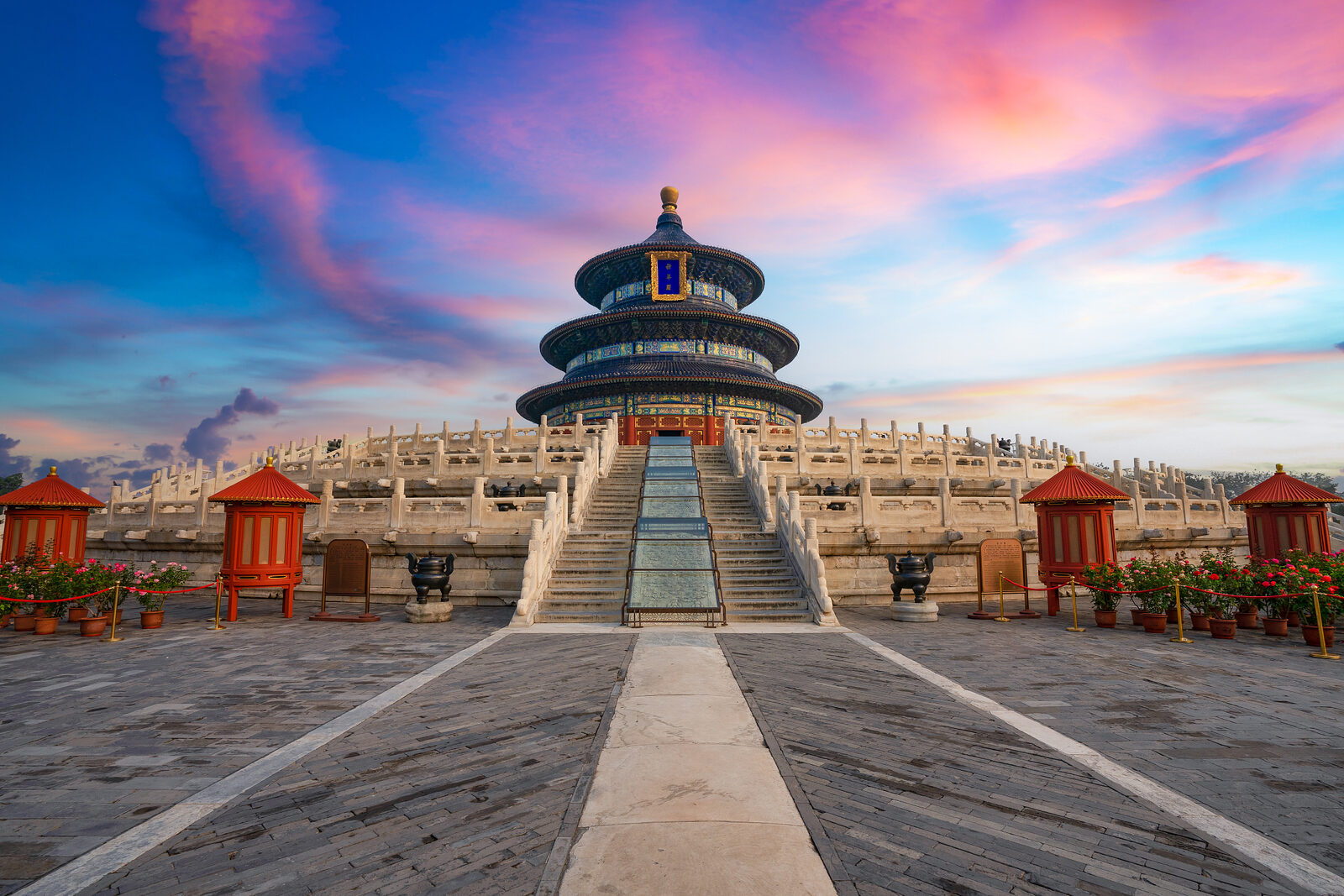
A perfect Ming circular hall surrounded by parkland where locals dance, sing and play chess at dawn.
Summer Palace
An imperial lake retreat with a covered walkway, marble boat and hills that fill with colour in autumn.
798 Art District
Bauhaus factory halls converted into China's most significant contemporary art cluster.
Hutong Wandering in Gulou
Grey lane courtyards, cricket sellers and tiny bars behind unmarked doors north of the Drum Tower.
Off the Beaten Path
Live like a local. Special, lesser known experiences for adventurers who want real local flavor.
Baita Temple and Miaoying
A white Yuan dynasty stupa hidden in a working neighbourhood west of the centre.
Fayuan Temple
Beijing's oldest temple, still a Buddhist academy, with lilac courtyards and almost no tourists.
Shijia Hutong Museum
A small free museum inside a restored courtyard that explains how hutong life actually worked.
Jiankou Wild Wall
Unrestored and steep, for experienced hikers only, with the most dramatic wall views anywhere.
Liulichang Street
Traditional ink, brush and seal carving shops serving Chinese calligraphers rather than souvenir hunters.
Chuandixia Village
A Ming era stone village in the mountains two hours west, preserved almost intact.
Cost of Living
1-Bedroom Apartment (City Center)
$870/mo
3-Bedroom Apartment (City Center)
$2100/mo
Restaurant Meal
$6
Monthly Groceries
$300/mo
Monthly Transportation
$30/mo
Monthly Healthcare
$130/mo
Climate
Continental monsoon with cold dry winters, brief springs, hot humid summers and crisp autumns
Best Time to Visit
September and October for blue skies and mild days, or April and May before the heat
Visa & Residency
Written for US citizens
Most visitors need a visa arranged in advance, though many nationalities now qualify for visa free entry of up to 30 days and a 240 hour transit exemption applies at Beijing airports. Long stays run through the Z work visa or X student visa, both requiring an invitation from a registered entity.
These notes assume a US passport. If you hold a different nationality, your visa options and timelines may vary. Always confirm current rules with the official embassy or consulate before you commit.
Safety
Street crime is very low and late night walking is normal. Air quality is the real health variable and worth tracking daily in winter.
Healthcare
Public hospitals are capable but crowded and Mandarin only. Foreign residents usually use international clinics such as United Family, which require private insurance.
Culture & Lifestyle
Culture
Beijingers are famously direct and quick with humour. Guanxi, the web of personal relationships, shapes almost everything, and a mobile payment app is essential for daily life.
Lifestyle
Cycling the hutongs at dawn, lunch from a noodle window, evenings at a gallery in 798 or a courtyard bar. Weekends mean the Great Wall, western hills or a high speed train to Shanghai.
Language
Mandarin Chinese, with limited English outside business districts
Currency
Chinese Yuan Renminbi (CNY)
Timezone
CST (UTC+8)