
Apia
 Samoa
Samoa
South Pacific ease with island city charm
Overview
Apia is the clear base for expats and digital nomads in Samoa, combining the country’s main business district, government services, best dining options, and easiest access to everyday essentials. Set on the north coast of Upolu, it feels more like a relaxed island town than a big city, with a waterfront, produce markets, churches, and green mountains rising behind it. Life moves slowly here, but Apia is where you will find the most reliable internet, the widest choice of housing, and the best transport links for exploring the rest of Samoa. It is an appealing choice for people who want tropical living and a close-knit community rather than a fast-paced urban scene.
Why Expats Love It
Expats choose Apia because it is the most practical place in Samoa to live long term, with the best access to supermarkets, banks, hospitals, schools, and government offices. Digital nomads who can work with moderate island internet and a slower rhythm appreciate the friendly community, ocean access, and easy weekend trips to beaches, waterfalls, and villages around Upolu.
Must Dos
The essential, top gem experiences for the full tourist experience.
Papaseea Sliding Rocks
Swim and slide through the natural rock chutes at Papaseea, just outside central Apia. Go after rain only if conditions are safe, because water flow can change quickly.
Robert Louis Stevenson Museum
Visit Vailima, the former home of Robert Louis Stevenson, in the hills above Apia. The house museum and peaceful grounds give one of the best cultural and historical introductions to Samoa.
To Sua Day Trip
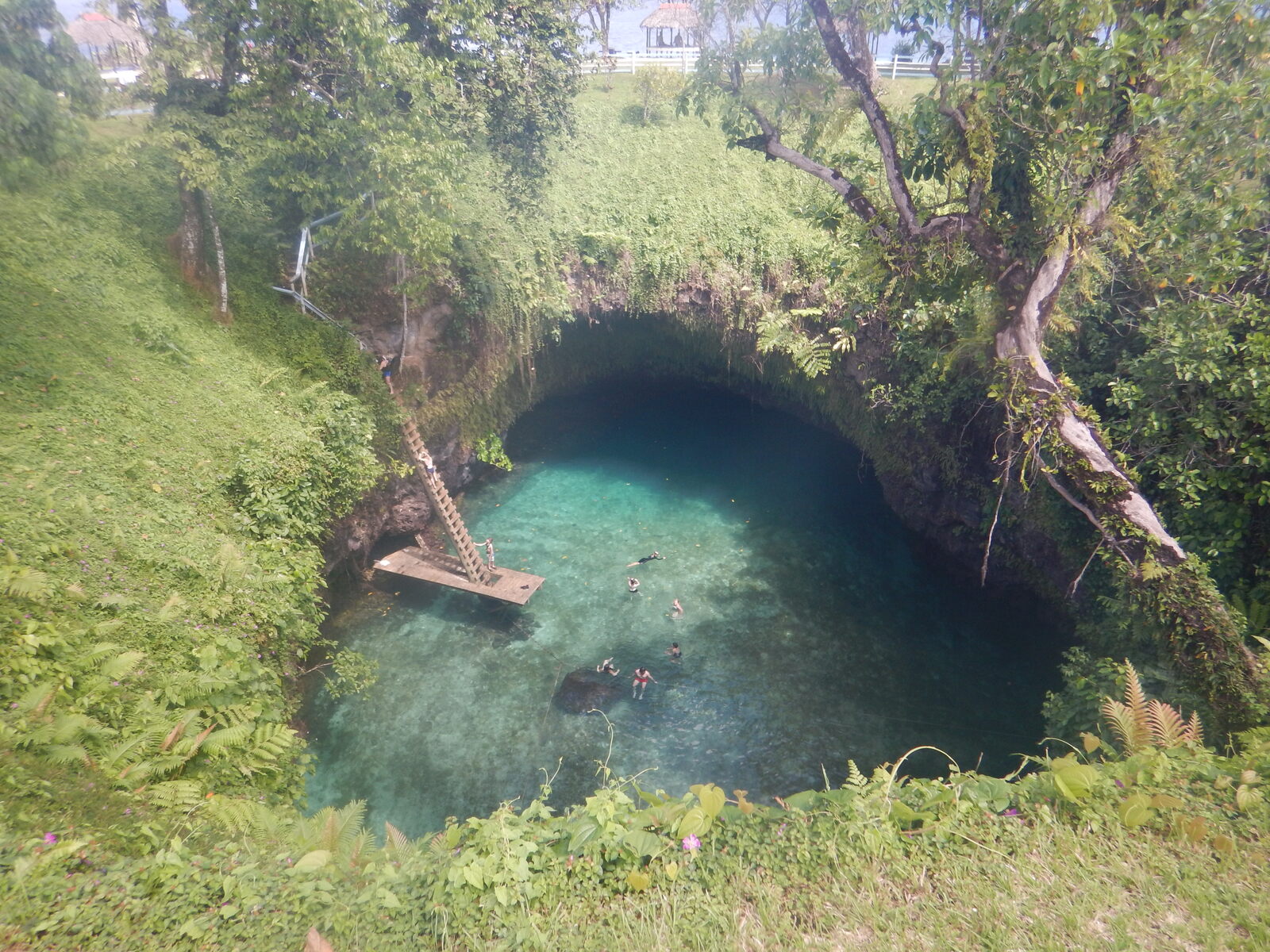
Make the classic full-day trip from Apia to To Sua Ocean Trench on Upolu’s south coast. The ladder descent into the turquoise swimming hole is one of Samoa’s signature experiences.
Palolo Deep Marine Reserve
Snorkel at Palolo Deep, only minutes from town, where coral, reef fish, and clear water are easily accessible. It is one of the most convenient marine outings based from Apia.
Maketi Fou Market
Walk through Maketi Fou, Apia’s main produce market, for tropical fruit, taro, fresh fish, and local snacks. It is the best place to see the everyday rhythm of the city.
Piula Cave Pool
Head east from Apia to Piula Theological College for a swim in the freshwater cave pool. The grounds are beautiful and the pool is a favorite with both locals and visitors.
Off the Beaten Path
Live like a local. Special, lesser known experiences for adventurers who want real local flavor.
Fugalei Produce Rows
Go early to the vendor rows around Fugalei for a more local market feel than a quick tourist stop. You will see baskets of breadfruit, giant taro, coconut cream, and seasonal island produce.
Mulinu'u Peninsula Walk
Walk out to Mulinu'u, west of downtown, where parliament buildings, old monuments, and sea views create a quieter side of Apia. It is especially pleasant around sunset when locals come for the breeze.
Amanaki Seawall Evenings
Spend an evening along the waterfront near Beach Road and the Amanaki area, where locals gather for drinks and casual meals. It is a good spot to watch daily life rather than plan a formal night out.
Vaiala Beach Stretch
Explore the Vaiala side of Apia for a more residential coastal feel, with small guesthouses, neighborhood shops, and easy access to the sea. It gives a better sense of what living in Apia actually feels like.
Apia Fish Market Mornings
Visit the fish-selling areas near the port early in the day to see the fresh catch being traded before it disappears into restaurants and family kitchens. It is a practical, unpolished slice of local commerce.
Vailima Foothill Roads
Drive or walk the quieter roads around Vailima beyond the museum grounds to see lush neighborhoods, large family compounds, and mountain views above town. This area shows Apia’s greener, more residential side.
Cost of Living
1-Bedroom Apartment (City Center)
$850/mo
3-Bedroom Apartment (City Center)
$1600/mo
Restaurant Meal
$18
Monthly Groceries
$320/mo
Monthly Transportation
$35/mo
Monthly Healthcare
$140/mo
Climate
Apia has a tropical rainforest climate, warm and humid year round, with daytime temperatures usually around 80 to 88 F. The drier season is generally from May to October, while November to April is wetter and more cyclone-prone.
Best Time to Visit
May to October
Visa & Residency
Written for US citizens
US passport holders can usually enter Samoa visa-free for short stays, typically up to 90 days, with proof of onward travel and sufficient funds. For longer stays, extensions may be possible through Samoa Immigration, but rules can change, so check official requirements before arrival. If you plan to work locally, you will need the appropriate permit rather than relying on visitor status.
These notes assume a US passport. If you hold a different nationality, your visa options and timelines may vary. Always confirm current rules with the official embassy or consulate before you commit.
Safety
Apia is usually safe for everyday life, but petty theft, opportunistic break-ins, and late-night alcohol-related incidents do occur. Cyclones, flooding, and rough ocean conditions are real risks in season, so weather awareness matters.
Healthcare
Apia has Samoa’s main hospital and the country’s best access to doctors and pharmacies, but specialist care is limited. Many expats carry evacuation-capable insurance for serious treatment in New Zealand, Australia, or Fiji.
Culture & Lifestyle
Culture
Samoa is deeply shaped by fa'a Samoa, the traditional way of life, which emphasizes family, respect, church, and village customs. Dress modestly away from resort areas, be polite and patient, and remember that Sunday is especially quiet and observant.
Lifestyle
Life in Apia is low-rise, social, and outdoorsy, with early mornings, market shopping, sea swims, and casual community connections. The tradeoff is limited nightlife, modest shopping, and a pace that rewards flexibility.
Language
Samoan and English
Currency
Samoan tala (WST)
Timezone
WSST (UTC+13)